
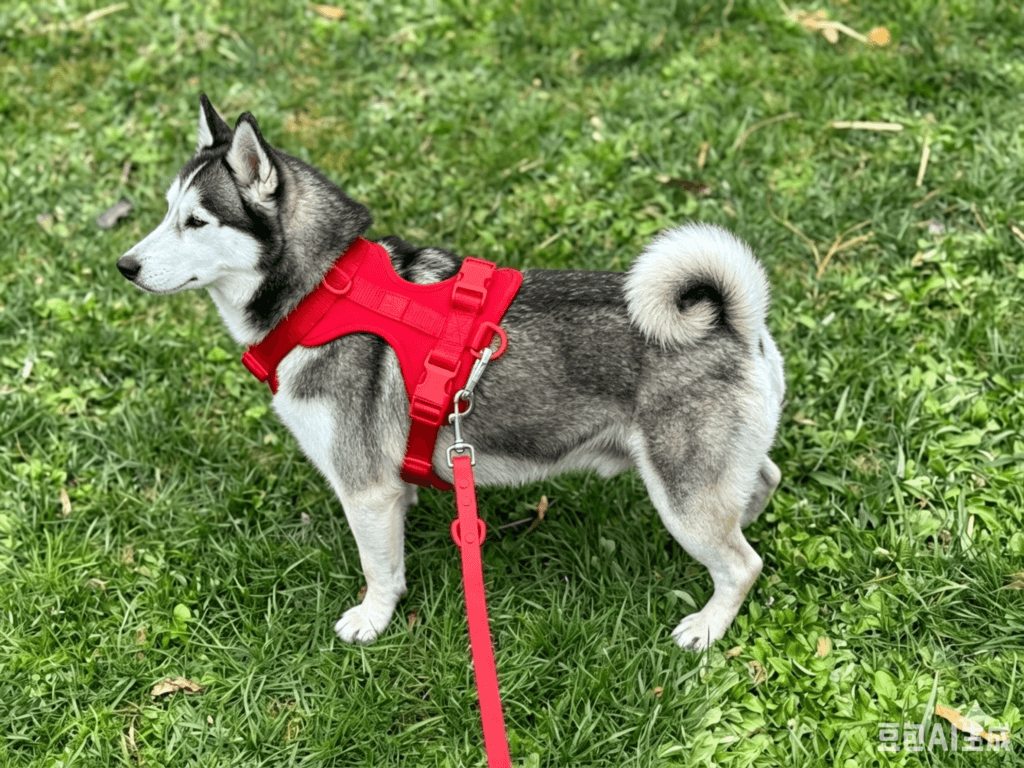
Huskies are the breed that makes no-pull harness marketing copy look naive. They were selectively bred for centuries to pull — sustainably, efficiently, and with enthusiasm — and a front-clip harness alone is rarely enough to transform a Husky into a calm loose-leash walker overnight. But it is still the most effective single tool available, and with the right harness and consistent use, walks with a Husky become significantly more manageable.
The specific challenges with Huskies go beyond raw pulling force. Their thick double coat makes measuring and fitting more complicated than on short-coated breeds. Their lean, athletic body shape — narrow waist, deep chest, strong neck — presents fit challenges that standard sizing does not always address. And their intelligence and drive means they are more likely than most breeds to figure out how to back out of a poorly fitted harness.
This guide covers what makes a harness genuinely effective on a Husky, how to measure and fit correctly through a thick coat, and what to look for in terms of hardware and escape-proofing.

Why Huskies Are Uniquely Challenging to Harness
Most dogs pull opportunistically — they pull toward something interesting, then ease off. Huskies pull as a default state. The sled dog instinct is to maintain forward tension on the line at all times, which means the front-clip redirecting mechanism is engaging on virtually every step rather than on occasional lunges. The harness is under sustained load, not intermittent load, which is a different kind of stress on the hardware and construction.
Huskies are also notably good at backing out of equipment. Their strong neck, flexible body, and problem-solving intelligence means a harness that fits a Labrador of the same size may come off a Husky within minutes of the first escape attempt. The neck loop needs to be snug enough that the dog cannot lower their head and reverse out of it — which requires the two-finger rule to be applied correctly, not approximately.
The Husky Fit Challenge
Thick double coat that compresses under the harness
A Husky’s double coat can add 2–3cm of apparent girth that compresses significantly under a tightened harness strap. A measurement taken through the fur rather than to skin contact will produce a harness that is too large — the strap sits against fur that compresses during use, leaving the harness loose and unstable. Always measure to skin contact, and always apply the two-finger fit check to skin level rather than fur level. The harness will feel snug when first applied and settle into the correct position as the fur compresses naturally during the walk.
Athletic build with narrow waist
Huskies have a deep chest and a noticeably narrow waist. A belly strap that sits correctly on a Labrador of the same chest girth may sit too loosely on a Husky whose belly is significantly narrower than the chest measurement suggests. Independent belly adjustment is important — tighten the belly strap independently of the chest adjustment to account for the taper.
Seasonal coat changes
Huskies blow their coat twice a year — a dramatic seasonal shed that temporarily increases coat volume before the new coat grows in. A harness fitted correctly in winter may need adjustment in summer when the coat is shorter and thinner, and vice versa. Re-check the fit at each seasonal coat change and adjust all three straps accordingly.
Hardware Requirements for a Husky
Given the sustained pulling force Huskies generate, hardware quality matters more than on almost any other breed:
Zinc alloy D-rings — non-negotiable
The front D-ring on a Husky’s harness is under almost constant tension during a walk. Plastic D-rings deform under sustained load — not in a single dramatic failure, but gradually over weeks of use, losing their shape and allowing the ring to rotate out of the centered position. Once the D-ring is off-center, the no-pull mechanism stops working effectively. Zinc alloy D-rings maintain their shape and position under sustained tension indefinitely.
Metal tri-glide sliders that hold under tension
Adjustment sliders on a Husky’s harness are under sustained load throughout every walk. Plastic sliders gradually allow the strap to creep through under this sustained tension, meaning the harness slowly loosens during the walk without any obvious adjustment being made. Metal sliders grip the strap firmly under load and maintain the set adjustment throughout the walk.
Reinforced quick-release buckle
The buckle needs to open easily for daily use but resist opening under lateral stress — a Husky twisting and pulling sideways applies significant lateral force to the buckle. An ABS-reinforced or metal-core buckle that clicks firmly into a locked position is what to look for. A buckle that feels loose or wobbles when locked is not adequate for sustained Husky use. For a full breakdown of what to look for in large-dog hardware, see our guide to no-pull harnesses for large dogs.

How to Measure a Husky for a Harness
Measuring a Husky requires a few extra steps compared to short-coated breeds:
Measure to skin contact, not fur surface
Gently press the tape measure through the coat to skin level at the chest — the widest point just behind the front legs. Read the measurement at skin contact. Repeat at the neck. These are the numbers to use for sizing, not the surface fur measurement.
Most Huskies fit XL
Male Huskies typically have a chest girth of 28–36 inches at skin level, placing them in size XL on the MoonianPet harness. Female Huskies run slightly smaller and may fit L. Measure both chest and neck and cross-reference with the size chart rather than assuming by sex. Full chart in our dog harness size guide.
When between sizes, go up
If your Husky measures at the top of L or bottom of XL, choose XL. The three-point adjustment means the larger size can be tightened to a precise fit, and having adequate adjustment range at the neck — particularly important for escape-proofing — is worth the extra room.
Making the Harness Escape-Proof
Huskies back out of harnesses by lowering their head and reversing — the harness slides forward over the skull if the neck loop is too loose. These are the steps to prevent it:
The neck loop must pass the snug two-finger rule
Two fingers flat under the neck loop — light resistance, both fingers slide through but not freely. Not three fingers. Not loosely. A neck loop that allows three fingers is loose enough for a determined Husky to back out of. This is the most important single fit point for escape prevention.
Check that the neck loop cannot be pulled forward over the skull
With the harness correctly fitted, gently try to slide the neck loop forward toward the dog’s ears. It should not be able to pass the widest point of the skull. If it can, tighten the neck strap one notch and retest. This is the escape test — do it before every walk until you have confirmed the fit is correct, then check monthly as the coat changes seasonally.
Keep the belly strap snug, not just the neck
A loose belly strap allows the whole harness to shift and rotate during a backward escape attempt, giving the dog more room to manoeuvre. Snug all three straps — neck, chest, and belly — to the two-finger rule. Three firmly fitted straps create multiple anchor points that make escape significantly harder than a single snug neck loop with loose straps elsewhere. Full fitting guidance in our no-pull harness fitting guide.
Using the Front Clip Effectively on a Husky
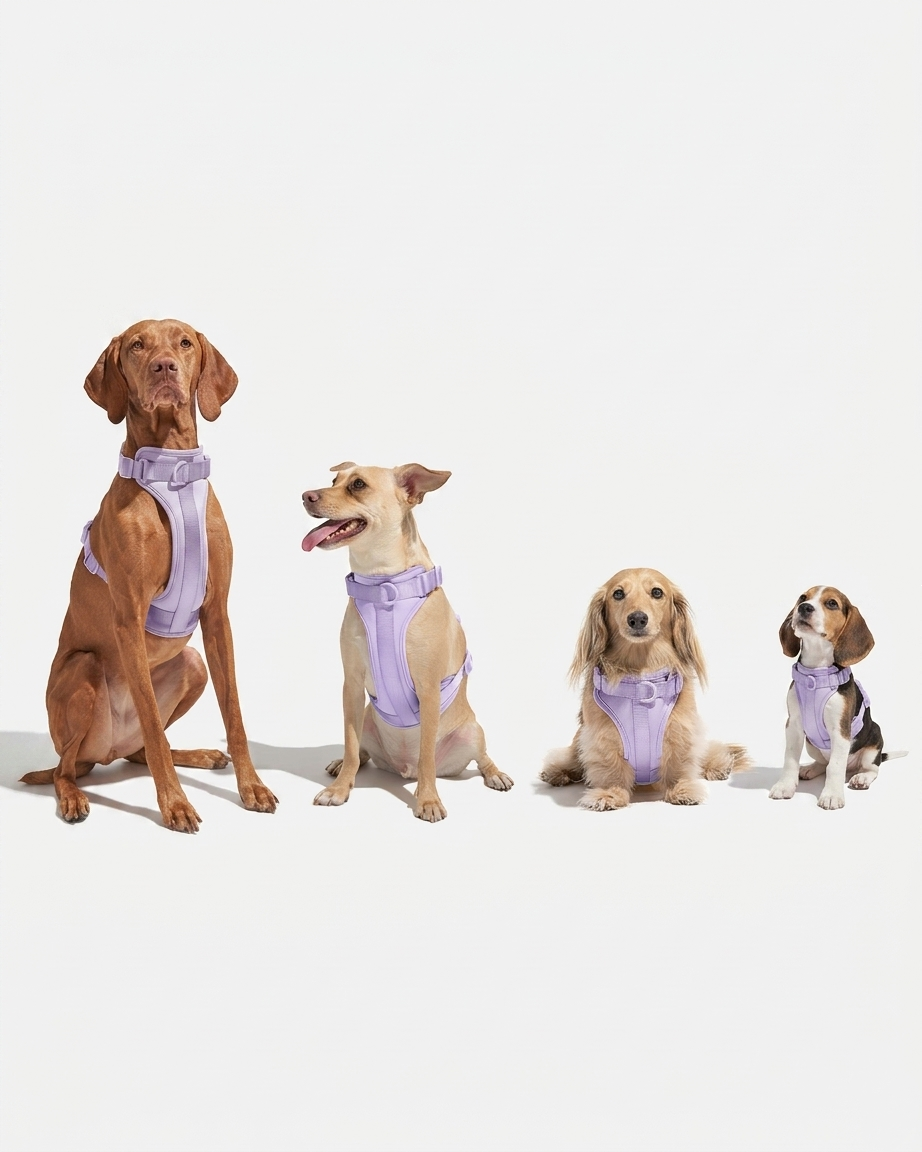
The front clip redirects pulling momentum sideways — which works on Huskies, but requires consistent application and realistic expectations. A Husky that has been pulling its entire life will not become a loose-leash walker in a week. The front clip makes walks manageable while training is ongoing, not instant.
Keep the leash short to engage the mechanism early
On a long loose leash, a Husky builds momentum before the front clip engages — at which point the redirecting force is harder to manage. A shorter leash means the mechanism engages before significant speed builds, making the redirection gentle. Keep the leash short enough that it goes taut within the first metre of forward movement.
Use the back clip for running and exercise
For running, hiking, or any activity where natural free movement is the priority, use the back clip. The turning force of the front clip is helpful for managing pulling on walks but disruptive to natural gait at running pace. Switch back to the front clip for regular walks.
Combine with reward-based training for lasting results
Huskies are intelligent and respond to reward-based training, though they can be selectively motivated — find a high-value reward that genuinely engages your dog. Stopping and rewarding loose leash walking consistently, combined with front clip use, produces better long-term results than the harness alone. Most Husky owners see meaningful improvement within four to six weeks of consistent combined use.
Built for Dogs That Were Bred to Pull
The MoonianPet No-Pull Dog Harness covers the requirements for Husky use: zinc alloy hardware throughout, metal tri-glide sliders that hold adjustment under sustained tension, three-point independent adjustment for neck, chest, and belly, and a reinforced ABS quick-release buckle. The neoprene construction does not absorb moisture from a working dog’s coat and stays dimensionally stable through seasonal coat changes. Available in XL for most adult Huskies across 11 colors.
For a matched waterproof walking setup, the Harness & Leash Set pairs the harness with a heavy-duty PVC-coated leash rated for large dog pulling force — odour-proof and easy to wipe clean after wet or muddy walks.

Frequently Asked Questions
Will a no-pull harness work on a Husky?
Yes — the front-clip redirecting mechanism works on Huskies as it does on any other breed. The difference is that Huskies pull more consistently and with more drive than most dogs, so the harness needs to be used consistently and combined with reward-based training for the best results. Most owners see meaningful improvement in walk manageability within the first few weeks of consistent front-clip use.
My Husky keeps escaping from harnesses. What should I do?
Escape almost always comes from a neck loop that is too loose — the dog lowers their head and reverses out. Tighten the neck strap until two fingers fit snugly but the strap cannot be pulled forward over the skull. Test this before every walk until confident in the fit. Also ensure the belly strap is snug — a loose belly strap gives the dog more room to manoeuvre during an escape attempt.
What size harness does a Husky need?
Most male Huskies fit XL; females often fit L or XL depending on their build. Always measure chest girth at skin level — pushing through the double coat to the body — rather than surface measurement. The double coat can add significant apparent girth that does not reflect actual body size. Full size chart in our dog harness size guide.
Should I use the front or back clip on my Husky?
Use the front clip on regular walks — it redirects pulling momentum and makes walks more manageable. Use the back clip for running, hiking, or exercise where natural free movement is the goal. Many Husky owners keep the front clip in use consistently until pulling reduces significantly through training, then introduce the back clip gradually on quieter routes.
How do I adjust a harness fit after my Husky blows their coat?
After a seasonal coat shed, recheck the fit on all three straps — neck, chest, and belly. The reduced coat volume means the harness will be slightly looser than before the shed. Tighten each strap back to the two-finger rule at skin level. Repeat when the new coat grows in fully and adds volume back. Seasonal coat changes are one of the main reasons Husky harness fit needs to be checked more frequently than on short-coated breeds.
Looking for harness advice for other large, strong-pulling breeds? Our Pitbull harness guide covers similar hardware requirements for muscle-heavy breeds. Or for a full overview of large-dog harness options, see our no-pull harness guide for large dogs.
About the Author
Wenyue
Wenyue is the founder of MoonianPet and writes about dog collars, harnesses, waterproof pet gear, and everyday dog care.
Growing up with dogs inspired her lifelong interest in pet care and practical dog gear. Through MoonianPet, she researches dog collars, harnesses, waterproof materials, and everyday solutions that help active dogs stay comfortable during daily adventures.