
Carhartt has built its entire reputation on durability — duck canvas workwear that survives decades of actual labour. So it’s no surprise that when Carhartt makes a dog collar, people assume it carries the same toughness. And for dry, everyday use, it largely does. The question worth asking is what happens to that durable canvas once it meets the conditions most active dogs actually live in: mud, rain, rivers, and the occasional roll in something unidentifiable.
Canvas and PVC-coated webbing are built on fundamentally different principles. One is a tough woven fabric that’s treated to resist water. The other is a synthetic material that doesn’t absorb water at all. For a tool used outdoors every day, that distinction matters more than it might seem at first.
This guide compares Carhartt-style duck canvas collars against PVC-coated webbing across the conditions that actually wear collars out — water exposure, mud, odour, and long-term maintenance — so you can choose based on how your dog actually spends their time outdoors.

What Carhartt-Style Collars Are Actually Made Of
Carhartt’s dog collars are built around their signature duck canvas — a tightly woven cotton fabric, often treated with a water-repellent finish, the same family of material used in their jackets and workwear. Duck canvas is genuinely tough against abrasion: it resists tearing, holds up against scraping on rough surfaces, and has the rugged look that fits the brand.
The water-repellent treatment on canvas is a surface coating, not a fundamental property of the material. It works well against light rain and splashes — water beads and rolls off initially. But the treatment wears down with repeated washing, sun exposure, and friction, and once it’s compromised, the cotton underneath behaves like cotton: it absorbs water, and absorbed water in cotton takes a long time to fully dry, especially in the dense, layered construction of a collar.
What PVC-Coated Webbing Is Made Of
PVC-coated webbing — the BioThane-style material — starts with a polyester webbing core that’s fully encased in a PVC coating. The waterproofing isn’t a surface treatment that can wear off; it’s the material itself. Water simply cannot penetrate the coating, regardless of how long the collar is submerged or how many times it’s washed.
The tradeoff that often gets mentioned is flexibility and feel — early coated webbing products had a stiffer, more rubbery hand-feel compared to soft canvas. Modern coated webbing has improved significantly here, with a smoother surface texture and more flexibility, while keeping the core advantage: the material’s waterproofing doesn’t degrade with use.

Head to Head: Where Each Material Wins
Dry, everyday use
For a dog that’s mostly walked on dry pavement and rarely encounters mud or water, duck canvas performs well and has a soft, classic look that many owners prefer aesthetically. Both materials are durable enough for years of dry use — this is where the difference matters least.
Rain and wet weather
A new or recently re-treated canvas collar sheds light rain reasonably well. After the water-repellent coating wears down — typically after months of regular use and washing — canvas absorbs rain and stays damp against the dog’s neck for hours. PVC-coated webbing repels water indefinitely; rain beads off the surface the same way on day one and year five.
Swimming and full submersion
This is where the materials diverge most clearly. A canvas collar that goes for a swim soaks through completely — the cotton fibres absorb water throughout, and the collar can take a full day to dry depending on humidity and construction thickness. A PVC-coated collar comes out of the water exactly as it went in: surface wet, but the material itself never absorbed anything. Wipe it down and it’s effectively dry in seconds. For dogs that swim regularly, this single difference often decides the choice. See our best dog collar for swimming guide for more.
Mud and dirt
Mud works into the weave of canvas and is genuinely difficult to fully remove — it can require scrubbing, and aggressive scrubbing accelerates wear on the water-repellent treatment. PVC-coated webbing has a smooth, non-porous surface that mud simply doesn’t adhere to in the same way; a wipe with a damp cloth removes most of it, and what remains rinses off cleanly under a tap.
Odour development over time
Cotton canvas, even with a water-repellent finish, is a porous material — and porous materials that get wet repeatedly develop odour over time as bacteria establish themselves in the fibres. This is a gradual process and often isn’t noticeable until a collar is a year or two old, at which point it can be difficult to fully reverse even with washing. PVC-coated webbing has no pores for bacteria to colonise; odour doesn’t develop in the material itself regardless of how often it gets wet. For more on why this happens and how it’s prevented, see our guide to why dog collars smell.
Long-Term Maintenance: What Each Material Asks of You
A canvas collar’s longevity depends partly on how it’s maintained. The water-repellent treatment can be refreshed with reapplication products designed for outdoor gear — but this is an ongoing task, not a one-time fix, and most owners never get around to it. Without reapplication, a canvas collar used regularly outdoors gradually loses its water resistance over its first year or two of use, even as the canvas itself remains structurally sound.
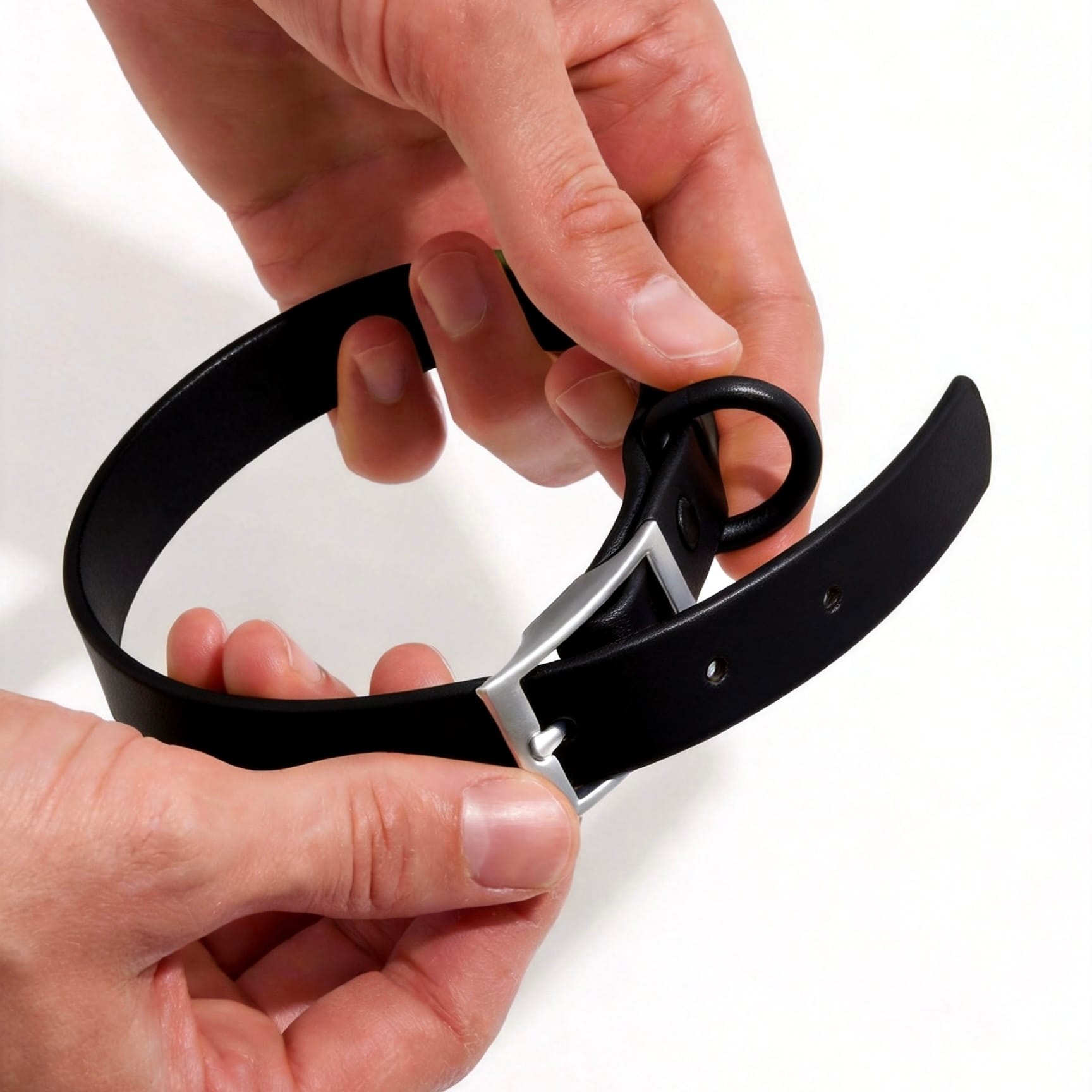
PVC-coated webbing requires essentially no maintenance to retain its waterproofing — the property is built into the material and doesn’t degrade with washing, sun exposure, or time. The main maintenance consideration is checking hardware (D-rings, buckles) periodically for wear, which applies to any collar material. For a collar that’s genuinely low-maintenance over years of regular outdoor use, the absence of any treatment to maintain is a meaningful practical advantage.
Don’t Overlook the Hardware
Whichever material you choose, the D-ring and buckle matter just as much for long-term durability. Standard steel hardware rusts with repeated water exposure — and on a canvas collar that’s regularly damp, rust develops faster and stains the fabric around the ring. Rubber-coated, rust-proof zinc alloy hardware avoids this regardless of collar material, but it’s particularly worth checking for if the collar will be exposed to water often. A collar with excellent fabric but corroding hardware ends up needing replacement just as quickly as one with poor fabric.
A Collar That Doesn’t Need Maintenance to Stay Waterproof
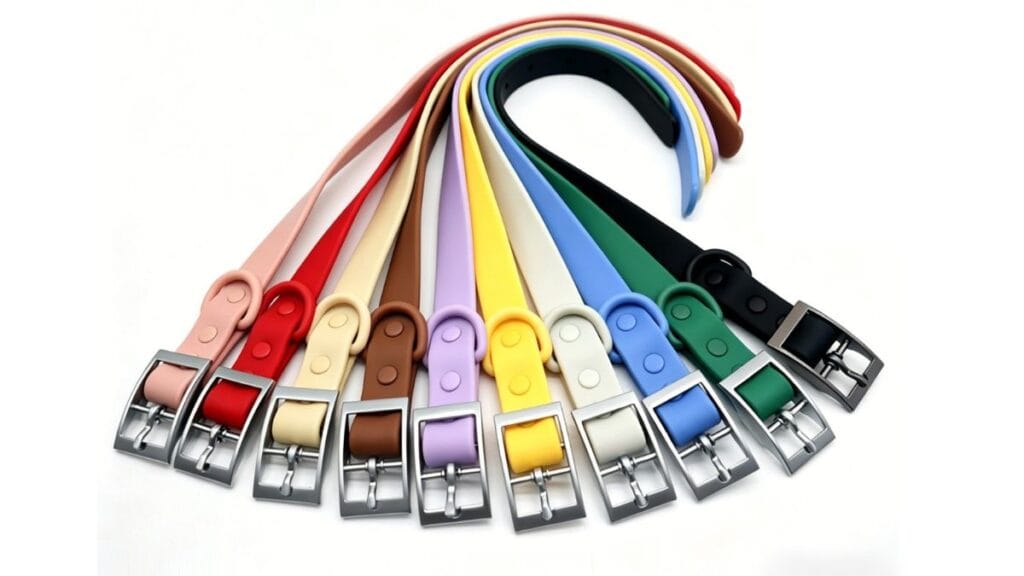
The MoonianPet Waterproof Dog Collar uses PVC-coated webbing with the same look and feel as premium coated leather, but fully waterproof and odour-proof for the life of the collar — no reapplication, no treatments, no degrading water resistance over time. Rubber-coated, rust-proof D-ring hardware holds up to regular swimming and wet-weather use. Adjustable across five sizes, available in 11 colours.
For a matched everyday setup, the Waterproof Collar & Leash Set pairs the collar with a heavy-duty PVC-coated leash in a matching colour.
Frequently Asked Questions
Is a Carhartt dog collar waterproof?
Carhartt dog collars are made from duck canvas with a water-repellent surface treatment — this resists light rain and splashes when new, but it’s a surface coating that wears down over time with washing and use. Once the treatment degrades, the canvas absorbs water like any cotton fabric. This is different from a fully waterproof material like PVC-coated webbing, where water resistance is built into the material itself and doesn’t wear off.
Which lasts longer — canvas or coated webbing?
For dry use, both materials are durable for years. For dogs that regularly encounter water, mud, or swimming, PVC-coated webbing tends to outlast canvas in practical terms — not because the canvas fabric itself fails, but because repeated wetting and drying gradually degrades the water-repellent treatment and can lead to lingering odour that’s difficult to fully remove. Coated webbing’s waterproofing doesn’t degrade with use.
Can I re-waterproof a canvas dog collar?
Yes — water-repellent sprays and waxes designed for outdoor canvas gear can be reapplied periodically to restore some water resistance. This needs to be done regularly to remain effective, typically every few months with regular outdoor use, and most owners don’t keep up with it consistently. It’s a maintenance task rather than a permanent fix.
Does PVC-coated webbing feel different from canvas?
Yes, though the difference has narrowed significantly with modern coated webbing. Canvas has a soft, fabric texture. Coated webbing has a smoother, slightly rubbery surface — though quality coated webbing today is flexible and comfortable, designed to mimic the look and feel of coated leather rather than feeling stiff or plasticky as older versions sometimes did.
My dog’s canvas collar smells even after washing — what’s happening?
This is common with canvas collars that have been wet repeatedly over time. The cotton fibres can develop bacteria deep within the weave that surface washing doesn’t fully remove. At this point, the odour often returns within a day or two of the collar getting damp again, even after thorough cleaning. A material that doesn’t absorb water in the first place — like PVC-coated webbing — avoids this issue from the start.
For a full breakdown of every collar material and how they compare, see our guide to what dog collars are made of. To see how coated webbing compares to leather specifically, our BioThane vs leather comparison covers similar ground from a different angle.

Wenyue
Wenyue is the founder of MoonianPet and writes about dog collars, harnesses, waterproof pet gear, and everyday dog care. Growing up with dogs inspired her lifelong interest in pet care and practical dog gear. Through MoonianPet, she researches dog collars, harnesses, waterproof materials, and everyday solutions that help active dogs stay comfortable during daily adventures.