
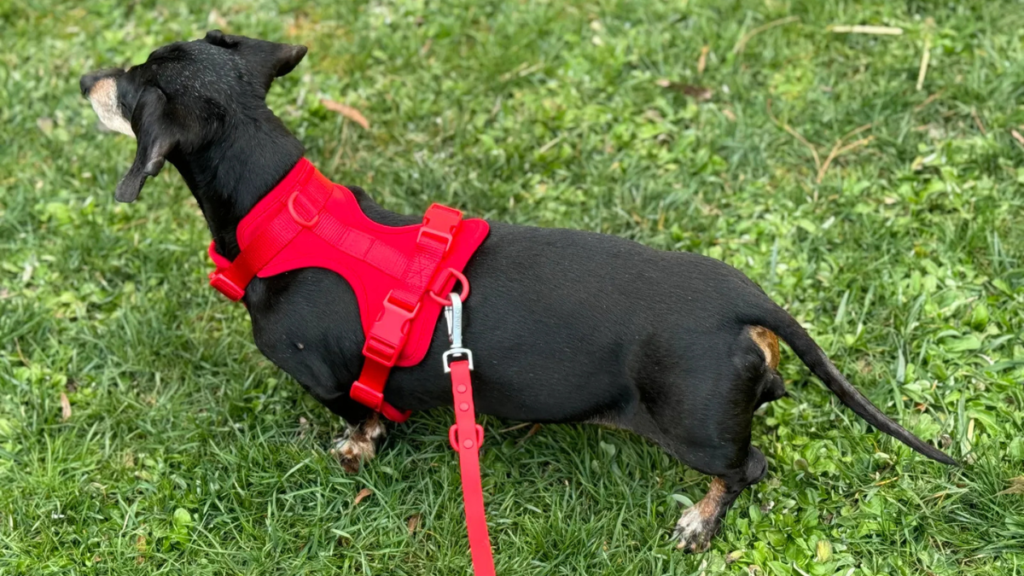
The case for a harness over a collar is stronger for Dachshunds than for almost any other breed. Their long spine and short legs create a unique vulnerability to intervertebral disc disease (IVDD) — a condition that affects a significant proportion of Dachshunds at some point in their lives. A collar that puts leash tension directly on the neck and upper spine during pulling is a genuine concern for a breed already predisposed to spinal problems.
But choosing a harness for a Dachshund isn’t as simple as just “not a collar.” Their long, low body shape creates specific fit challenges — a harness designed for a dog with a more standard length-to-height ratio often sits wrong on a Dachshund, with straps in the wrong positions or a belly strap that drags uncomfortably along the ground. And despite their small size, Dachshunds are strong-willed, sometimes fierce pullers, and escape artists in the right circumstances.
This guide covers why a harness matters more for Dachshunds than most breeds, how to fit their unique body shape correctly, and what to look for in a design that keeps them secure without putting any load on the spine.
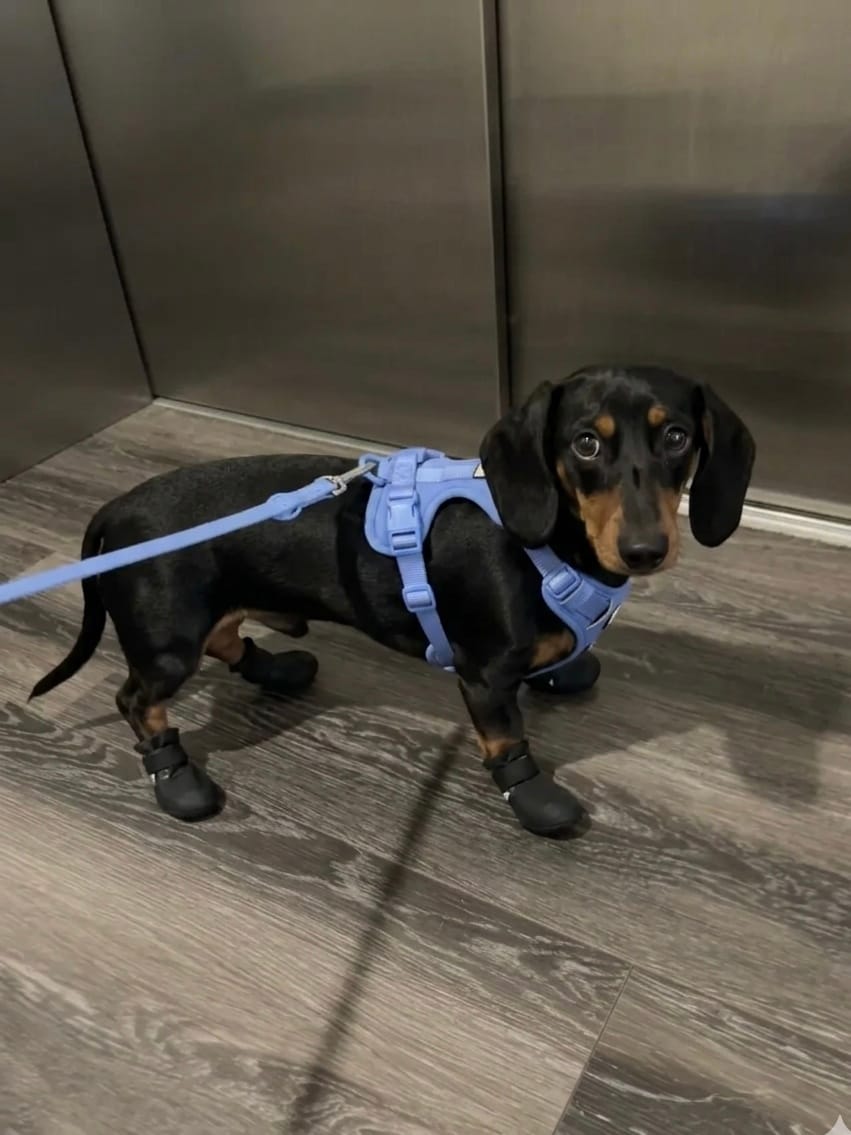
Why a Collar Is Riskier for Dachshunds Than Other Breeds
IVDD in Dachshunds occurs when the discs between vertebrae deteriorate or rupture, putting pressure on the spinal cord. The breed’s elongated spine makes them structurally more susceptible than most breeds — studies suggest up to 25% of Dachshunds experience some form of disc-related issue during their lifetime.
A collar concentrates leash tension at the neck and upper cervical spine. For a breed already carrying structural vulnerability in the spine, repeated pulling force transmitted directly through the neck is worth avoiding even if it hasn’t caused a problem yet. A harness distributes that same force across the chest and shoulders instead — no tension reaches the neck or spine.
This doesn’t mean a Dachshund in a collar will inevitably develop back problems — but vets who work with the breed consistently recommend a harness as the primary walking attachment, keeping the collar only for ID tags. For a full comparison of how harness and collar force distribution differs, see our dog collar vs harness guide.
Fitting a Long, Low Body: The Dachshund Fit Challenge
A standard harness sizing chart is built around a dog with roughly proportional length and height. Dachshunds break that assumption — their body is significantly longer relative to their height than most breeds, and their short legs mean the belly strap sits much closer to the ground than on a taller dog of similar chest girth.
The belly strap needs to clear the ground
On a standard-size Dachshund, the belly strap of a harness sits very close to the ground — in grass or uneven terrain, a strap that’s positioned too far back or sits too low can drag, catch on vegetation, or cause the dog to trip. Look for a harness where the belly strap wraps snugly behind the front legs rather than sitting further back toward the midsection.
Wide chest relative to height
Dachshunds have a broad, deep chest for their overall size — proportionally wider than many small breeds at similar weights. A harness that fits a slender small breed of the same chest measurement can sometimes sit incorrectly on a Dachshund’s wider ribcage, with the chest strap pulling up toward the armpits. The chest strap should sit across the widest point of the ribcage, just behind the front legs, not riding up.
Measure carefully — standard and miniature sizes differ significantly
Standard Dachshunds typically have a chest girth of around 16–22 inches; miniature Dachshunds sit significantly smaller at around 12–16 inches. The difference can span two harness sizes, so always measure your individual dog rather than assuming by “Dachshund = small.” Full size chart in our dog harness size guide.
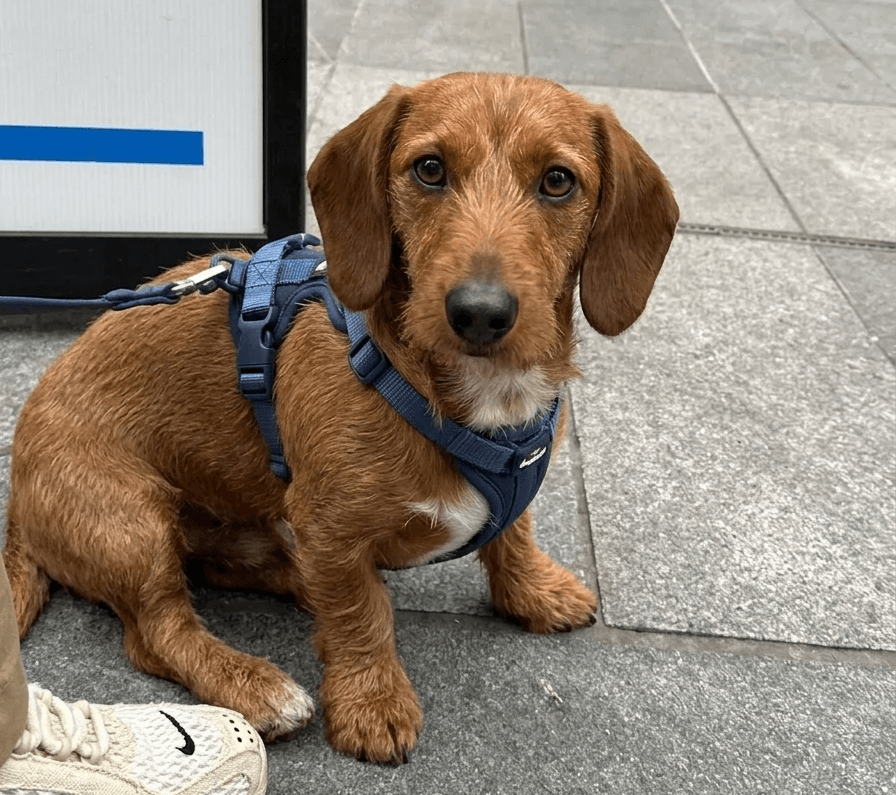
Escape Prevention for a Determined Small Dog
Dachshunds were bred to follow prey into burrows — they’re physically flexible, surprisingly strong for their size, and not easily discouraged when they’ve decided they want to go somewhere. A harness that fits loosely is one a Dachshund can and will escape from, especially when following a scent or reacting to another animal.
Neck loop escape test
With the harness correctly fitted, gently try to slide the neck loop forward over the skull. It should not be able to pass the widest point of the head. Two fingers should fit under the neck strap with light resistance — not freely. On a Dachshund, whose head is not dramatically wider than their neck, this test is particularly important because the margin between “snug enough” and “escapable” is narrower than on breeds with wider skulls.
Snug belly strap prevents rotation
A Dachshund’s flexible body means a loose belly strap gives them room to twist and manoeuvre during an escape attempt in a way a less flexible dog couldn’t manage. Keep the belly strap at the two-finger rule — snug enough that the whole harness can’t rotate significantly when the dog twists.
Pulling Control: Small Body, Surprisingly Strong Opinion
Dachshunds are not always easy walkers. They were bred to be persistent and independent, and that personality shows up on the leash — they often have a strong view about which direction the walk should go and aren’t shy about acting on it. A small dog pulling isn’t the physical safety issue that a large dog pulling is, but it’s still uncomfortable and can make walks genuinely unpleasant.
A front-clip harness helps here just as it does for larger breeds — the chest redirect makes sustained straight-line pulling harder and gives you a gentler way to steer without putting any tension on the neck or spine. For more on training loose-leash walking alongside harness use, see our leash training guide.
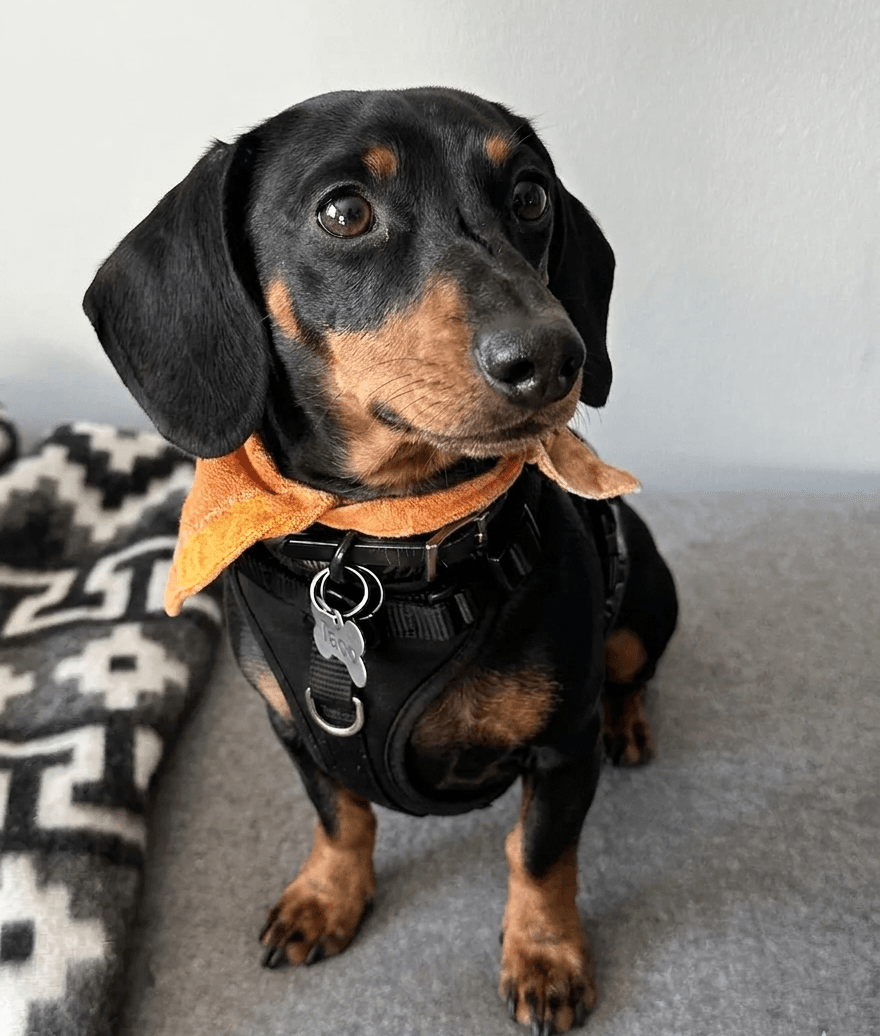
Designed for the Whole Body — Not Just the Chest
The MoonianPet No-Pull Dog Harness uses three-point independent adjustment — neck, chest, and belly set separately — which is exactly what a Dachshund’s wide chest and short leg proportions require. The neck strap adjusts independently so you can tighten it to the escape-proof two-finger rule without affecting the chest fit. Lightweight neoprene construction sits comfortably against the body without adding unnecessary weight on a small frame, and the front clip keeps all leash tension off the neck and spine. Available in XS and S for miniature and standard Dachshunds across 11 colours.
For a matched everyday setup, the Harness & Leash Set pairs the harness with a lightweight PVC-coated waterproof leash — easy to wipe clean after muddy low-to-the-ground walks.
Frequently Asked Questions
Do Dachshunds really need a harness instead of a collar?
Most vets who specialise in Dachshunds recommend a harness as the primary walking attachment. The breed’s elongated spine creates a structural predisposition to IVDD, and a collar concentrates leash tension directly on the cervical spine during pulling. A harness distributes that tension across the chest and shoulders instead. Keep a collar for ID tags and use the harness for every walk.
What size harness does a Dachshund need?
It depends on whether your dog is standard or miniature. Standard Dachshunds typically fit a size S; miniature Dachshunds often fit XS. But individual body shapes vary — always measure chest girth at the widest point and neck girth at the base of the neck rather than going by variety alone. Full chart in our dog harness size guide.
Can a harness cause back problems in a Dachshund?
A correctly fitted harness does not put pressure on the spine — the straps distribute force across the chest and shoulders. The concern is the opposite: a collar putting tension on the neck and cervical spine during pulling is the risk to avoid. If you notice any changes in your Dachshund’s gait, posture, or willingness to be harnessed, consult a vet — these can be early signs of disc issues regardless of the equipment used.
My Dachshund’s belly strap drags on the ground — what should I do?
This usually means the belly strap is positioned too far back or the harness is slightly too large. Check that the belly strap sits just behind the front legs rather than further back toward the midsection, and ensure the overall harness size is correct. A harness with independent belly strap adjustment lets you position and tighten this strap separately from the chest, which helps get the right position on a low-to-the-ground body.
My Dachshund keeps escaping their harness — why?
Dachshunds have a relatively narrow head compared to their neck — less difference between head and neck width than on many breeds — which means a neck loop only slightly too loose is enough for them to back out of. Tighten the neck strap until two fingers fit snugly and the loop cannot be slid forward over the widest point of the skull when you test it. Also ensure the belly strap is snug — their flexible body means a loose belly strap gives them room to manoeuvre during an escape attempt.
For step-by-step fitting guidance covering every strap adjustment, see our no-pull harness fitting guide. For more on the collar vs harness decision for dogs prone to neck and back issues, see our collar vs harness guide.
Wenyue
Wenyue is the founder of MoonianPet and writes about dog collars, harnesses, waterproof pet gear, and everyday dog care. Growing up with dogs inspired her lifelong interest in pet care and practical dog gear. Through MoonianPet, she researches dog collars, harnesses, waterproof materials, and everyday solutions that help active dogs stay comfortable during daily adventures.