Dog Gear guides

MoonianPet’s dog gear guides help you choose the right collar, leash and harness for your dog. Practical advice for every breed, size and walking style.

Brown poodle wearing a tan no-pull harness with clear feature callouts: ultra-cushioned comfort, easy on & off buckles, and 3 leash attachment points – studio product photography

Best Harness for Poodles: Fit, Coat Care, and Pulling Control

Poodles have one of the most distinctive coats in the dog world — dense, curly, and continuously growing rather than seasonally shedding. It’s what makes them low-allergen and endlessly stylish. It’s also what makes harness choice more consequential than it is for most breeds, because a harness strap sitting against a curly Poodle coat for

Best Harness for Poodles: Fit, Coat Care, and Pulling Control Read More »

Dachshund wearing a red MoonianPet no-pull dog harness and matching leash on grass — correctly fitted small dog harness showing back D-ring and belly strap position

Best Harness for Dachshunds: Back Support, Escape Prevention, and the Right Fit

The case for a harness over a collar is stronger for Dachshunds than for almost any other breed. Their long spine and short legs create a unique vulnerability to intervertebral disc disease (IVDD) — a condition that affects a significant proportion of Dachshunds at some point in their lives. A collar that puts leash tension

Best Harness for Dachshunds: Back Support, Escape Prevention, and the Right Fit Read More »

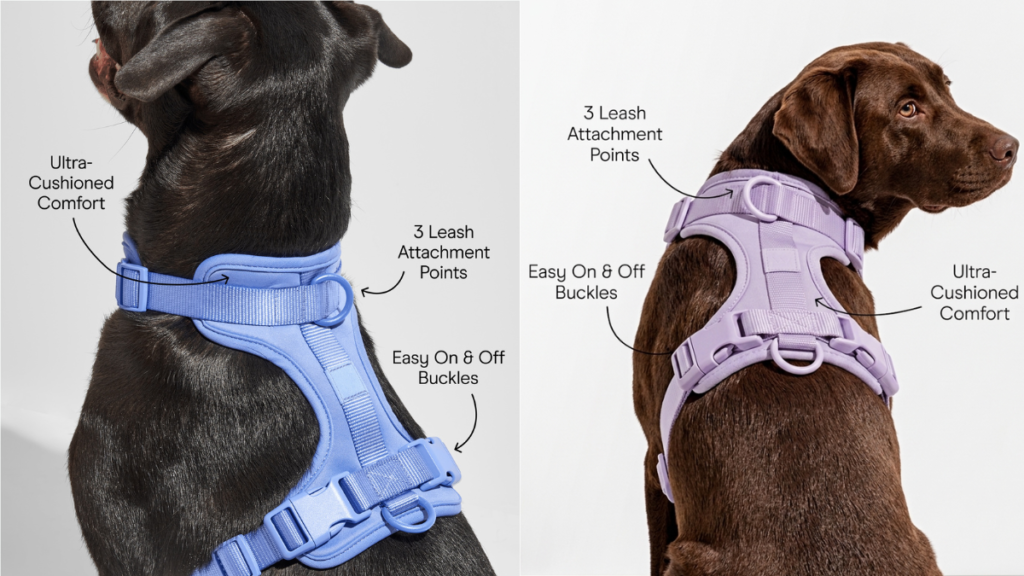
Two Labradors wearing MoonianPet no-pull harnesses in blue and purple, showcasing ultra-cushioned comfort, easy on & off buckles, and multiple leash attachment points – ideal for strength, fit, and pulling control

Best Harness for Labradors: Strength, Fit, and Pulling Control

Labradors are deceptively strong. They’re friendly, food-motivated, and generally easygoing — which makes it easy to underestimate just how much force a 30kg Lab can put through a leash when something interesting shows up. A harness that’s slightly underbuilt doesn’t usually fail dramatically; it just slowly stops doing its job, sliding around, loosening over a

Best Harness for Labradors: Strength, Fit, and Pulling Control Read More »

Dual view of a German Shepherd in a blue padded no-pull harness, demonstrating comfort, adjustability and control for strong large dogs

Best Harness for German Shepherds: Control, Fit, and Escape Prevention

German Shepherds are working dogs at heart, and they walk like it. They’re alert, strong, and built for sustained effort — which on a daily walk means a dog that’s constantly assessing its environment and occasionally deciding something requires urgent investigation at full speed. A harness that can’t handle that combination of intelligence and physical

Best Harness for German Shepherds: Control, Fit, and Escape Prevention Read More »

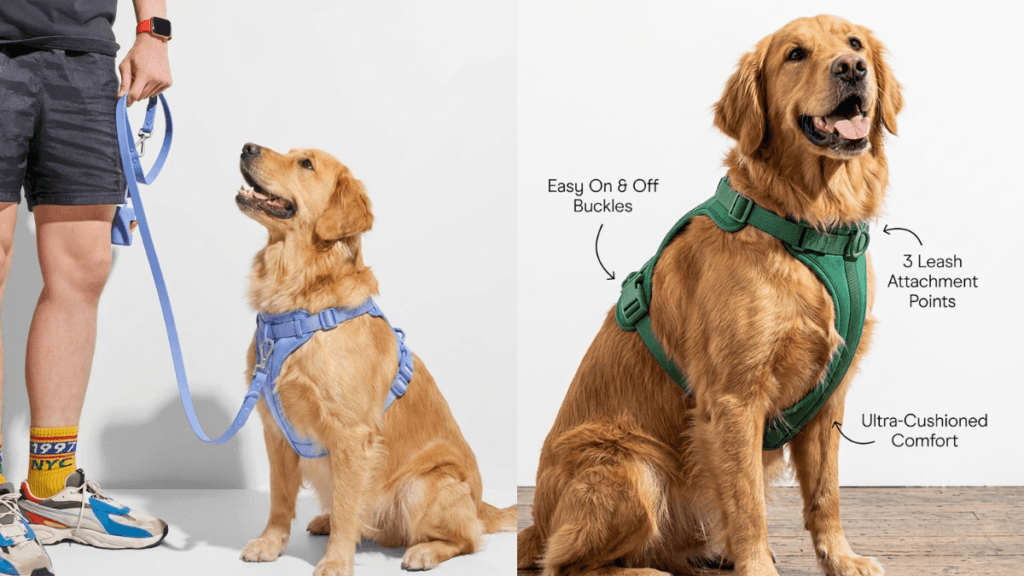
MoonianPet no-pull dog harness navy shown on golden retriever with features labeled — dual D-ring no-pull harness review

Best Harness for Golden Retrievers: Fit, Pulling Control, and What to Avoid

Golden Retrievers have a way of making everything look effortless — except, often, the walk. That same enthusiasm that makes them such warm, people-focused dogs also means a lot of forward momentum on the leash, especially in the first few years. A Golden that spots another dog, a jogger, or anything remotely interesting tends to

Best Harness for Golden Retrievers: Fit, Pulling Control, and What to Avoid Read More »

French Bulldogs wearing a navy MoonianPet no-pull dog harness indoors

How to Tire Out a Puppy: 10 Ways That Actually Work

A tired puppy is a good puppy — but getting there without overdoing it is harder than it sounds. Puppies have bursts of intense energy followed by the need for significant rest, and the instinct to run them until they stop is actually counterproductive. Over-exercised puppies develop sleep problems, become hyperactive rather than calm, and

How to Tire Out a Puppy: 10 Ways That Actually Work Read More »

Shopping Cart