
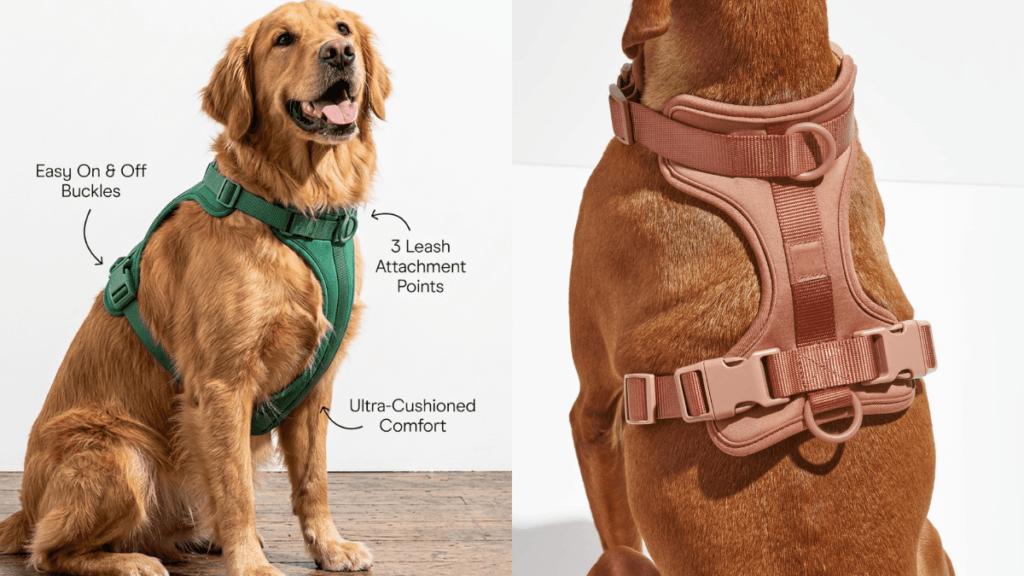
If you have ever struggled to coax a reluctant paw through a small loop, or watched your dog back away as you try to fasten a complicated step-in vest, you might want to consider an over head dog harness. The overhead design—often called a slip-on or overhead harness—is exactly what it sounds like: a harness that slips over the dog’s head and then fastens securely around the body. It is one of the oldest and most reliable harness designs, but modern materials and three-point adjustment systems have turned it into one of the most sophisticated walking tools available today.
I learned the value of this design the hard way. Years ago, I had a shy rescue spaniel who would flatten his ears and slink away the moment I produced his step-in harness. Putting it on involved maneuvering his front legs while he shifted his weight nervously, often resulting in a twisted strap or an uncomfortable fit. Switching to an overhead slip harness changed our routine entirely. Sliding it over his head felt less intrusive, the chest strap fell naturally into place, and a single buckle under the belly secured him in seconds. The daily battle disappeared.
In this guide, we’ll break down exactly why an over-the-head harness is so effective, how it compares to other styles, and how to ensure you get the perfect fit for your dog’s unique body shape.

What Is an Over Head Dog Harness?
An overhead harness features a continuous chest panel that slides over the dog’s head, followed by one or more straps that fasten underneath the dog’s belly. Unlike step-in harnesses, which require the dog to literally step into two separate leg holes, the overhead design relies on the natural contour of the dog’s chest to keep the harness in place.
The structure of the harness
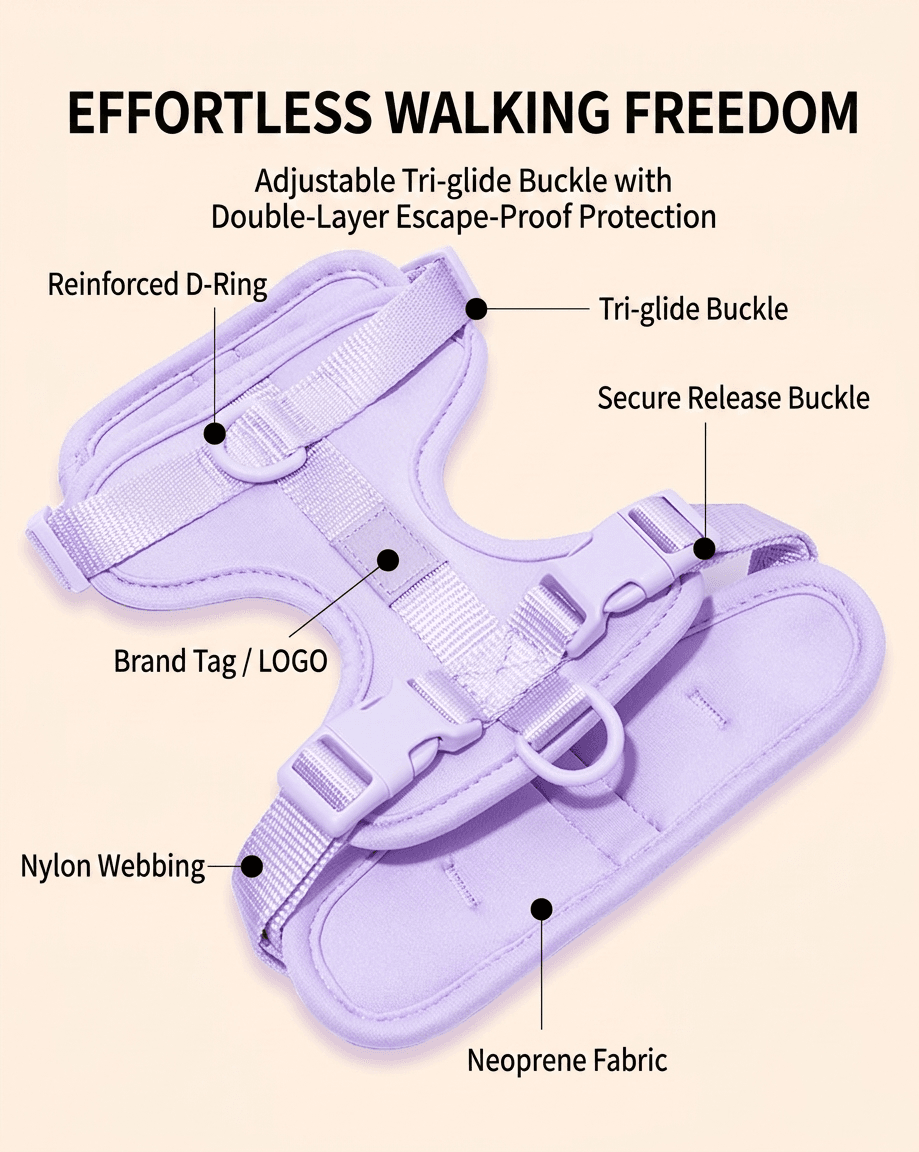
A typical overhead harness consists of a neck opening (which must be large enough to pass over the skull but tight enough to sit high on the chest), a chest plate that rests over the sternum, and an adjustable belly strap. High-quality models feature neoprene padding on the chest plate to distribute pressure evenly, preventing the harness from digging into the dog’s front when they pull.
Why the design works
Because the chest panel is one continuous piece that goes over the head, it naturally prevents the harness from shifting side-to-side during a walk. This makes it significantly easier to attach a leash without hunting for a misaligned D-ring. It also provides a broad surface area across the chest, which is vital for dispersing the force of a pulling dog away from the delicate trachea and neck area.
Overhead vs. Step-In Harness: Which Is Better?
The choice between an overhead and a step-in harness is the most common dilemma dog owners face. Both have their place, but the overhead design generally wins out for security and structural integrity.
Ease of use
A step-in harness can be great for calm dogs who will stand still while you fasten a strap over their back. However, for wiggly dogs or those who dislike having their paws handled, an overhead harness is far less intrusive. You simply slip it over the head and snap one buckle under the belly. For more on the pros and cons, see our step-in vs overhead harness comparison.
Security and escape prevention
Step-in harnesses often have a single strap that snaps over the dog’s back. If that buckle fails or the dog backs out of it, they are free. An over head dog harness, particularly one with a wider chest plate and a securely positioned belly strap, is notoriously difficult for a dog to escape from. The neck opening acts as a secondary safeguard—if the belly strap loosens, the harness still catches around the neck rather than falling off completely.
Pulling control
If your dog is a puller, an overhead harness with a front D-ring is one of the most effective training tools available. The front attachment point redirects the dog’s momentum back toward you when they pull, rather than allowing them to lean their full weight into a back-clip harness. A well-designed overhead harness keeps the front D-ring perfectly positioned on the chest, maximizing this redirecting effect.
How to Measure for an Over Head Harness
Because an overhead harness must pass over the widest part of your dog’s head, sizing is slightly different than for a step-in harness. You cannot rely on weight alone. Follow these steps for a precise fit:
Step 1: Measure neck girth
Use a soft tape measure to find the circumference of your dog’s neck where the harness will naturally sit—usually just above the shoulder blades. Crucially, if your dog has a very wide skull (like a Staffordshire Bull Terrier or a chunky Labrador), ensure the neck opening of the harness will expand enough to slip over their head comfortably.
Step 2: Measure chest girth
Wrap the tape measure around the widest part of your dog’s chest, which is typically just behind the front legs. This is the most important measurement for any harness. The chest girth determines whether the belly strap will fasten securely without being overly tight or having too much slack. Refer to our full dog harness size guide for exact ranges.
Step 3: Account for adjustment range
When between sizes, it is usually safer to size up with an overhead harness. The belly strap can always be tightened, but if the neck opening is too small to pass over your dog’s head, the harness simply won’t go on. A harness with three-point adjustment (neck, chest, and belly) allows you to fine-tune the fit even if you size up.
Why Neoprene Padding Matters
The material of your over head dog harness is just as important as the design. Because overhead harnesses sit directly over the sternum and under the armpits—areas of high friction—thin nylon or mesh can quickly cause chafing. This is where Neoprene becomes essential.
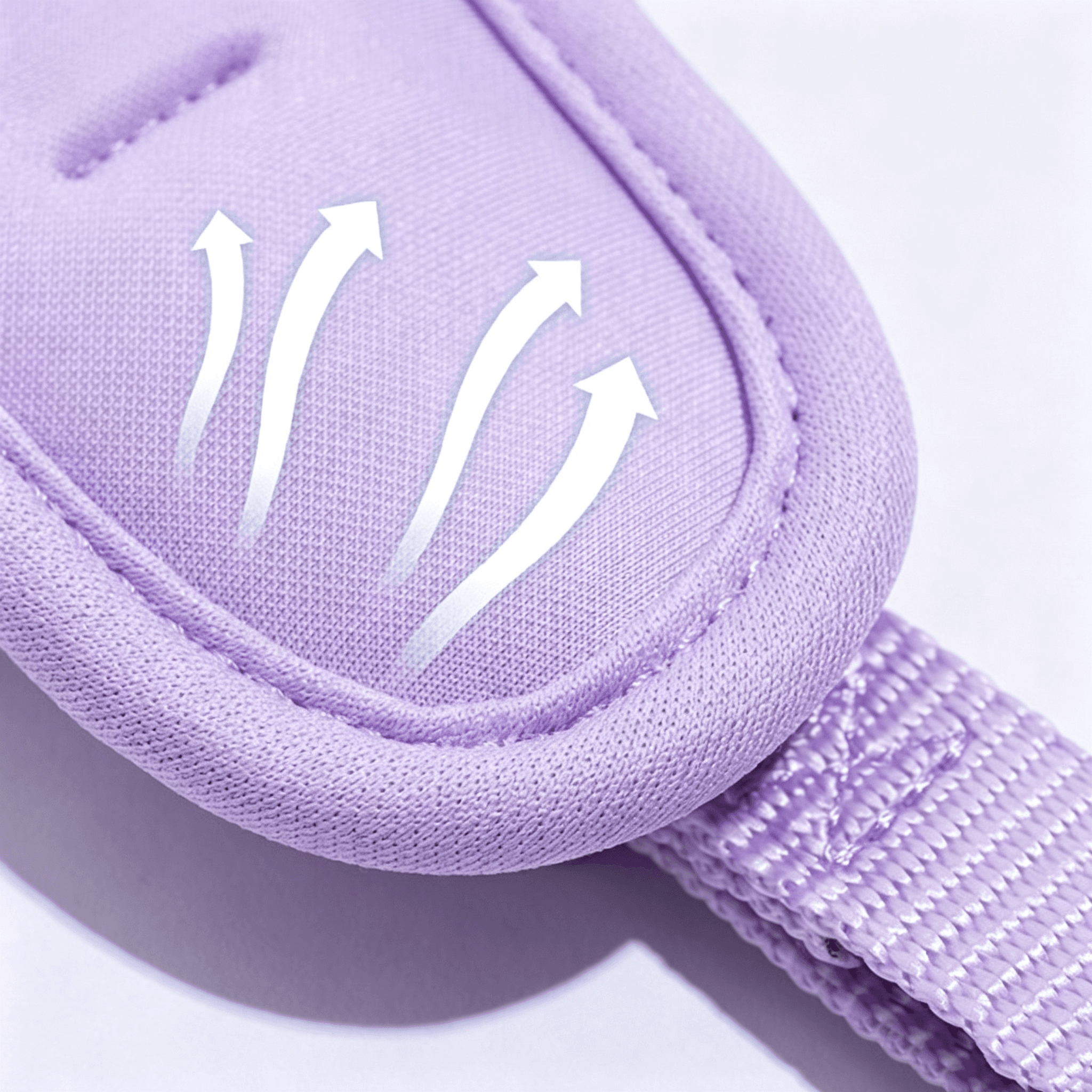
Neoprene is the same material used in wetsuits. It is lightweight, highly breathable, and most importantly, it doesn’t compress over time. When a dog pulls, the chest plate absorbs the force. Neoprene acts as a cushion, protecting the dog’s chest from impact and preventing the webbing underneath from sawing into the underarm area. For dogs that walk daily or pull occasionally, this padding is the difference between a harness that lasts comfortably for years and one that causes hair loss and skin irritation after a few weeks. To understand the difference in materials, check out our lightweight dog harness guide.
Fit Checks: How to Put On an Overhead Harness
Once you have the right size, putting the harness on correctly is crucial. Here is the quick routine I use to ensure a safe, comfortable fit:
1. Slip over the head
Open the belly buckle completely. Slide the neck loop over your dog’s head, positioning the chest plate so it sits centered over their breastbone, not off to one side.
2. Position the belly strap
Bring the belly strap under your dog’s chest, just behind the front legs. Make sure it isn’t sitting too close to the armpits, as this will restrict movement and cause rubbing during walking.
3. Buckle and test
Snap the buckle securely. Use the two-finger test: you should be able to comfortably slide two fingers between the strap and your dog’s chest. If you can fit more than that, tighten it; if you can’t fit any, loosen it. For a detailed walkthrough, read our guide on how to put on a no-pull harness.
The MoonianPet Overhead No-Pull Harness
When we designed the MoonianPet No-Pull Dog Harness, we chose the overhead slip-and-clip design for its superior security and ease of use. It features a wide, Neoprene-lined chest panel that slides smoothly over the head, protecting the trachea and sternum.
The three-point adjustment system allows you to customize the fit for the neck, chest, and belly independently—crucial for dogs with unusual proportions, like deep-chested Greyhounds or barrel-shaped French Bulldogs. With dual front and back D-rings for leash attachment and a secure safety buckle, it provides complete control without compromising on comfort.
For a complete walking setup, pair it with our Harness & Leash Set. It features a matching waterproof PVC-coated leash that is odor-proof and wipes clean in seconds.

Frequently Asked Questions
Is an overhead harness safe for dogs?
Yes, overhead harnesses are considered one of the safest designs. Because the harness goes over the head and fastens around the belly, it provides a secure fit that is very difficult for a dog to back out of. By distributing pressure across the chest rather than the neck, it also prevents tracheal damage, making it safe for daily walking and pulling dogs.
Can a dog slip out of an overhead harness?
It is very difficult for a dog to slip out of a properly fitted overhead harness. The key is ensuring the neck opening is snug enough that the dog cannot back out of it, and the belly strap is tight enough to keep the chest plate in place. Always perform the “two-finger test” under the straps to ensure a secure but comfortable fit.
What is the difference between an overhead harness and a step-in harness?
An overhead harness slips over the dog’s head and fastens under the belly, while a step-in harness requires the dog to step their front legs into two loops before a strap is fastened over their back. Overhead harnesses generally offer better structural security, more chest padding, and are easier to put on dogs who dislike having their paws handled. See our step-in vs overhead comparison for details.
Do I need a front clip or back clip on my overhead harness?
If your dog pulls, a front clip (located on the chest plate) is highly recommended, as it gently redirects their momentum sideways when they lunge. If your dog walks nicely on a leash, a back clip is great for casual walks and prevents the leash from tangling in their legs. Many overhead harnesses feature both for maximum versatility.
How tight should an overhead harness be?
You should be able to slip two fingers comfortably between the harness straps and your dog’s body. The belly strap should sit just behind the front legs, not up in the armpits. If you can fit your whole hand under the strap, it is too loose and needs tightening.
Want to learn more about choosing the right gear for your dog? Check out our complete dog harness size guide, or if you are still deciding between walking tools, read our collar vs harness guide.
Wenyue
Wenyue is the founder of MoonianPet and writes about dog collars, harnesses, waterproof pet gear, and everyday dog care. Growing up with dogs inspired her lifelong interest in pet care and practical dog gear. Through MoonianPet, she researches dog collars, harnesses, waterproof materials, and everyday solutions that help active dogs stay comfortable during daily adventures.