
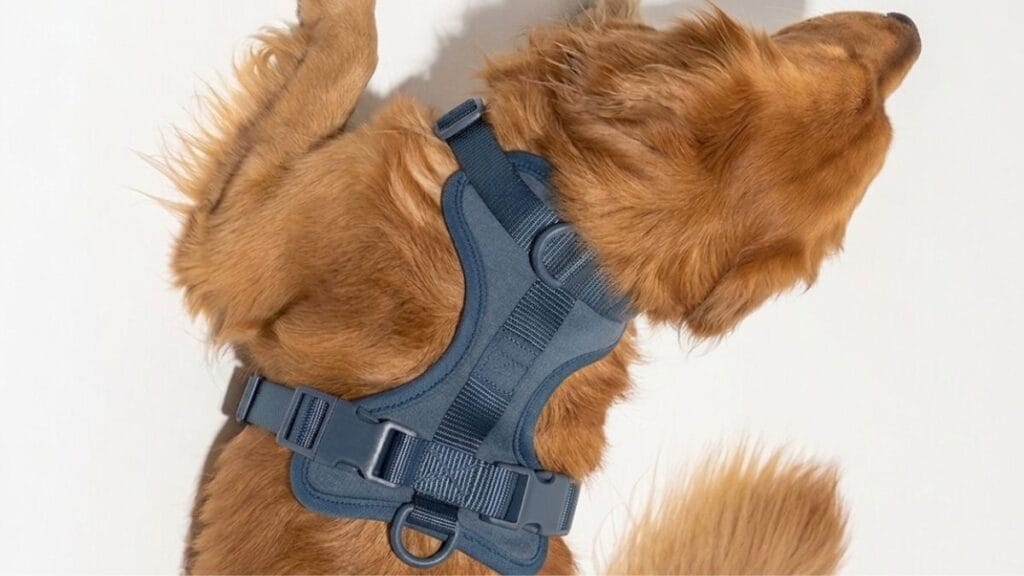
The 2 Hounds Design Freedom Harness comes up in almost every online discussion about no-pull harnesses. It has a loyal following, a long track record, and genuinely good reviews from a subset of owners. It also has a specific set of requirements that many buyers do not fully understand before purchasing — which is why it also generates a notable number of returns, size exchanges, and disappointed owners who expected it to work differently.
This review covers the Freedom Harness honestly: what it does well, where its limitations are, which dogs and owners it suits, and what to consider if it turns out not to be the right fit for your situation.
If you are already familiar with the Freedom Harness and want a broader comparison of the no-pull harness market, our Freedom Harness vs Easy Walk comparison covers the full picture.

What Is the Freedom Harness?
The Freedom Harness is made by 2 Hounds Design, a small company that has been producing no-pull harnesses since around 2010. It is a dual-clip harness — meaning it has both a front D-ring on the chest and a back D-ring between the shoulder blades — combined with a martingale loop that connects the two attachment points.
The intended use is with a double-ended leash: one clip attaches to the front chest ring for directional control, and the second clip attaches to the back ring. The martingale loop means that when the dog pulls forward and the front clip engages, the back strap tightens slightly, reducing the risk of the harness rotating or slipping. This is a more sophisticated mechanism than a basic front-clip harness, and it is what distinguishes the Freedom Harness from cheaper no-pull options.
It is available in nylon webbing with a velvet-lined chest strap and comes in a wide range of sizes and colours. The price sits in the mid-range for the category, typically around $40–50 depending on size.
What the Freedom Harness Does Well
Genuine pulling control when used correctly
With a double-ended leash and both clips engaged, the Freedom Harness is among the more effective management tools for dogs that pull consistently. The martingale loop adds a self-correcting element that most front-clip-only harnesses lack — when the dog lunges forward, the front ring redirects them sideways while the back clip prevents the whole harness from rotating out of position. For handlers who take the time to learn the dual-clip system, the difference over a single-clip harness is noticeable.
Wide size range
The Freedom Harness comes in a broader size range than many competitors, with options for dogs from small breeds under 10 pounds up to very large dogs over 100 pounds. The extended size availability matters for owners of large and giant breeds who struggle to find harnesses with adequate hardware for their dog’s size and pulling force.
Velvet chest lining is a thoughtful detail
The chest strap on the Freedom Harness is lined with a soft velvet material, which reduces friction on the sternum during walks. For dogs with fine-coated or sensitive skin, this is a meaningful difference from bare nylon webbing. It does not replace proper padding, but it is a better finish than most harnesses in this price range offer at the chest contact point.
Reputable small-brand customer service
2 Hounds Design has a reputation for responsive customer service and a reasonable exchange policy for size issues. Given that sizing the Freedom Harness is genuinely tricky — more on this below — the ability to exchange without friction is worth factoring in. Owners who measure carefully and still end up with the wrong fit report the process is straightforward to resolve.
Where the Freedom Harness Falls Short
It requires a double-ended leash — which many buyers do not realise
This is the single most common source of disappointment with the Freedom Harness. The dual-clip martingale mechanism only functions when both attachment points are in use simultaneously, which requires a double-ended leash. With a standard single-clip leash attached to the front ring, the Freedom Harness works as a basic front-clip harness — effective, but no more so than any other front-clip option at a fraction of the price. Many owners spend $45 and wonder why the results are not noticeably better than their previous harness.
Sizing is inconsistent across body types
The Freedom Harness sizes by girth, but dogs within the same girth range vary significantly in neck size, chest depth, and back length. The harness adjusts at the neck and back, but the adjustment range within a given size is limited enough that dogs with non-standard proportions — deep-chested breeds, dogs with notably thick or thin necks, barrel-bodied dogs — often find the fit awkward even after careful measurement. Exchange rates for sizing are high, and some owners cycle through two or three sizes before finding one that works.
Nylon absorbs moisture and odour over time
The Freedom Harness is made from nylon webbing, which is not waterproof or odour-resistant. Dogs that swim, walk in rain, or simply generate a lot of body heat will find the nylon retains moisture between uses and starts to smell within a few months of regular use. Washing helps but does not fully reset the material after extended use. For active dogs or dogs in wet climates, this is a genuine maintenance consideration.
Plastic hardware limits suitability for large, strong pullers
The Freedom Harness uses plastic side-release buckles and adjustment sliders. For dogs under about 40 pounds, this is adequate. For larger dogs — and particularly for strong pullers whose full body weight goes into a lunge — plastic hardware flexes and deforms under repeated stress. Over months of daily use, the adjustment sliders loosen and the buckles become less reliable. The irony is that the dogs who could benefit most from the dual-clip martingale mechanism are often the dogs for whom the hardware is least adequate.
Who the Freedom Harness Is Right For
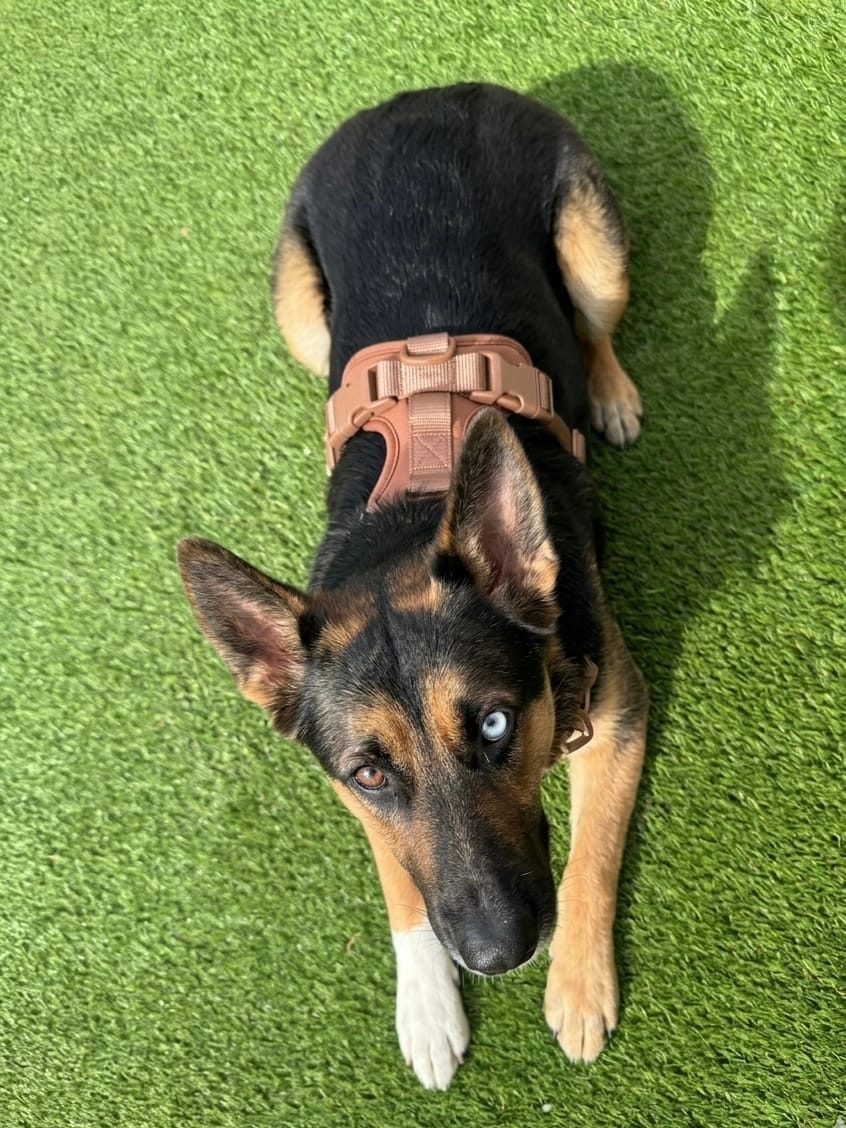
With those strengths and limitations in mind, the Freedom Harness is a good choice for a specific profile of owner and dog:
Owners willing to use a double-ended leash
If you are prepared to buy a double-ended leash and use both clips consistently, the Freedom Harness delivers noticeably better pulling control than a single-clip front harness. Owners who do this and combine it with reward-based training report the best results.
Medium-sized dogs with average body proportions
The Freedom Harness fits most reliably on dogs in the 25–60 pound range with fairly standard proportions. Deep-chested breeds, very lean breeds, and dogs with notably large or small neck-to-chest ratios tend to have fitting difficulties. If your dog has typical Labrador or Golden Retriever proportions, the fit will likely be straightforward.
Dogs that do not swim or spend extended time wet
If your dog’s walks are primarily dry and the harness is removed between walks, the nylon construction will hold up well for a long time. The odour and moisture issue only becomes a practical problem for dogs that get wet regularly.
Who the Freedom Harness Is Not Right For
Large and giant breeds over 60 pounds that pull hard
The plastic hardware is the limiting factor. For a 70-pound Husky or a 90-pound German Shepherd that pulls with full body weight on every walk, the buckles and sliders on the Freedom Harness are not built for that sustained load. You need metal hardware throughout — specifically zinc alloy D-rings and adjustment sliders. Our guide to no-pull harnesses for large dogs covers the hardware requirements in detail.
Owners who want simplicity
If the idea of learning a dual-clip system, buying a separate double-ended leash, and managing two attachment points is unappealing, the Freedom Harness is going to feel complicated. A well-made single harness with a front D-ring, good padding, and reliable hardware will deliver similar results with less equipment to manage.
Dogs that swim, live in wet climates, or stay active year-round outdoors
Nylon webbing and regular water exposure do not work well together long-term. If your dog swims after every walk, you will be washing the harness frequently and replacing it sooner than the price justifies. A waterproof or water-resistant harness material holds up significantly better in these conditions.
What to Look For in a No-Pull Harness
Whether the Freedom Harness is right for your dog or not, these are the features that determine how well any no-pull harness performs day to day — and where the Freedom Harness itself can be evaluated:
Dual clip options on a single harness
A front D-ring for pulling control and a back D-ring for casual walks once leash manners improve. The Freedom Harness has this. So do most good no-pull harnesses. What matters is that the front D-ring stays centered on the sternum under load — not migrating to the shoulder joint. See our front clip vs back clip guide for a full explanation of when to use each.
Three-point adjustment
Neck, chest, and belly adjustment points give a harness the range to fit different body shapes within a size range. The Freedom Harness adjusts at neck and back, but lacks a dedicated belly adjustment, which is why it fits standard-proportioned dogs well and struggles with non-standard ones.
Neoprene padding, not velvet or thin mesh
Velvet lining on the chest strap is a thoughtful finish, but neoprene padding on both the chest strap and underarm straps provides meaningfully better long-term comfort. Neoprene does not compress flat with use, does not retain moisture the way nylon does, and reduces chafing on daily walks better than any surface treatment of nylon webbing.
Metal hardware throughout for medium and large dogs
Zinc alloy D-rings and adjustment sliders, not plastic. For dogs over 30–40 pounds who pull on every walk, the hardware is the component that wears out first. Metal hardware maintains its shape and function through years of daily use; plastic hardware deforms and loosens over months.
A No-Pull Harness That Addresses the Freedom Harness Gaps
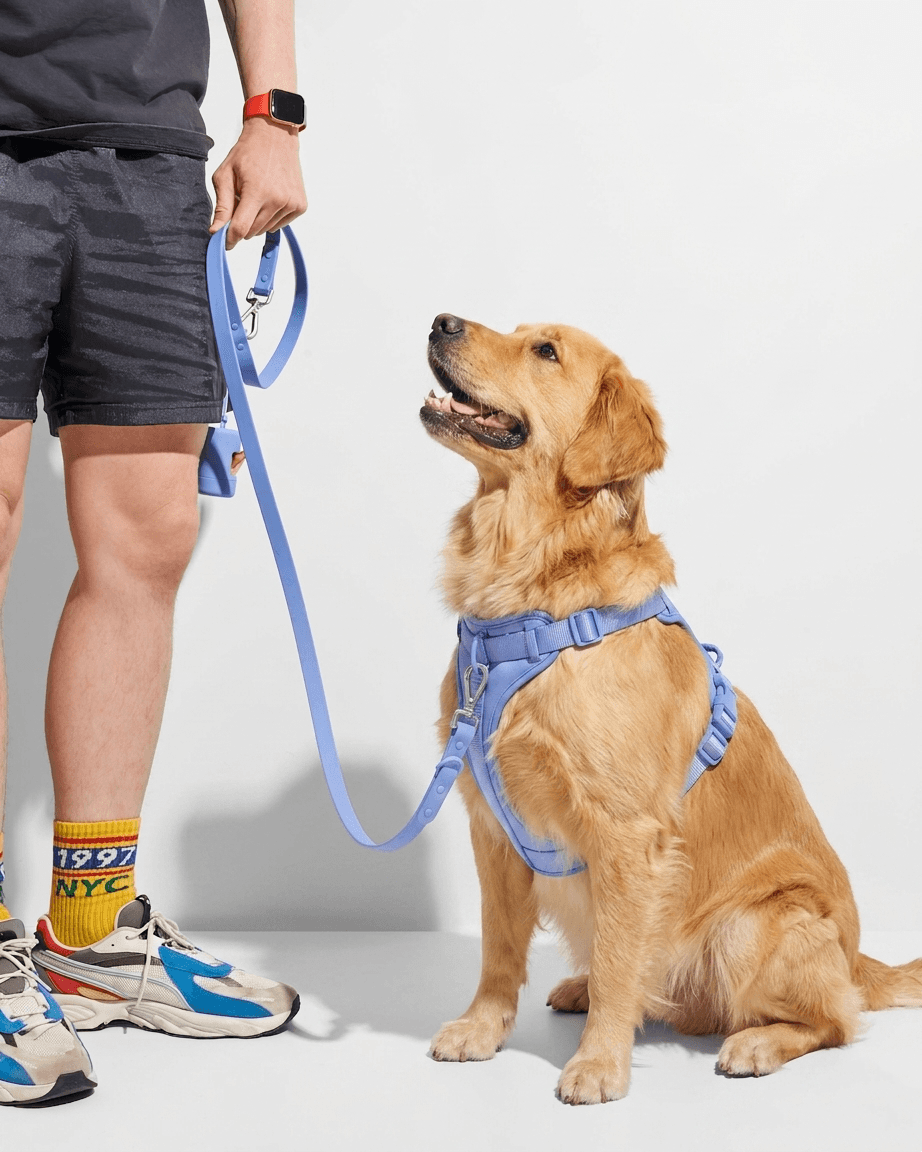
The MoonianPet No-Pull Dog Harness covers the areas where the Freedom Harness falls short: neoprene padding on the chest and straps (not velvet-lined nylon), zinc alloy hardware throughout, a three-point tri-glide adjustment system, and dual front and back D-rings on a single harness. Works with a standard leash — no double-ended leash required — or with a double-ended leash if you want to use both clips simultaneously.
Available in XS to XL across 11 colors. If you want a matched walking setup, the Harness & Leash Set pairs it with a waterproof PVC-coated leash — odour-proof, easy to wipe clean, and built to handle wet conditions.
Frequently Asked Questions
Does the Freedom Harness really stop pulling?
Yes — when used correctly with a double-ended leash and both clips engaged. The front clip redirects pulling momentum sideways, and the martingale loop prevents the harness from rotating out of position. Used with a standard single-clip leash on the front ring only, it functions as a basic front-clip harness, which is effective but not meaningfully different from less expensive options.
What size Freedom Harness should I buy?
2 Hounds Design sizes by girth measurement — measure the widest point of the chest, just behind the front legs. However, because the adjustment range within each size is limited, dogs with non-standard proportions (deep-chested breeds, lean breeds, dogs with large or small necks relative to chest) often need to exchange. Measure carefully and check the size chart on the product page before ordering. If your dog is between sizes, size up rather than down.
Do I need a special leash for the Freedom Harness?
To use the full dual-clip martingale system, yes — a double-ended leash with a clip at each end is required. A standard single-clip leash will work on either the front or back ring but will not engage both attachment points simultaneously, which means the martingale loop is not active.
How do I put on the Freedom Harness correctly?
Slip the loop over the dog’s head so the chest piece sits on the sternum, bring the belly strap under and clip the side-release buckle on the dog’s left side. Check that the chest D-ring is centered flat on the sternum — not rotated sideways onto the shoulder joint. For general no-pull harness fitting technique, our guide on how to put on a no-pull dog harness covers each step with fit checks.
Is the Freedom Harness good for large dogs?
The Freedom Harness is available in large sizes, but the plastic hardware is a genuine limitation for dogs over about 60 pounds that pull consistently. For large and giant breeds, metal hardware throughout is the more important feature than the clip mechanism. Our no-pull harness guide for large dogs covers what to look for by breed and weight range.
Want to see how the Freedom Harness stacks up against the Easy Walk and other no-pull options side by side? See our full Freedom Harness vs Easy Walk comparison. Or if you are still deciding between a collar and a harness altogether, our collar vs harness guide covers every scenario.
About the Author
Wenyue
Wenyue is the founder of MoonianPet and writes about dog collars, harnesses, waterproof pet gear, and everyday dog care.
Growing up with dogs inspired her lifelong interest in pet care and practical dog gear. Through MoonianPet, she researches dog collars, harnesses, waterproof materials, and everyday solutions that help active dogs stay comfortable during daily adventures.