
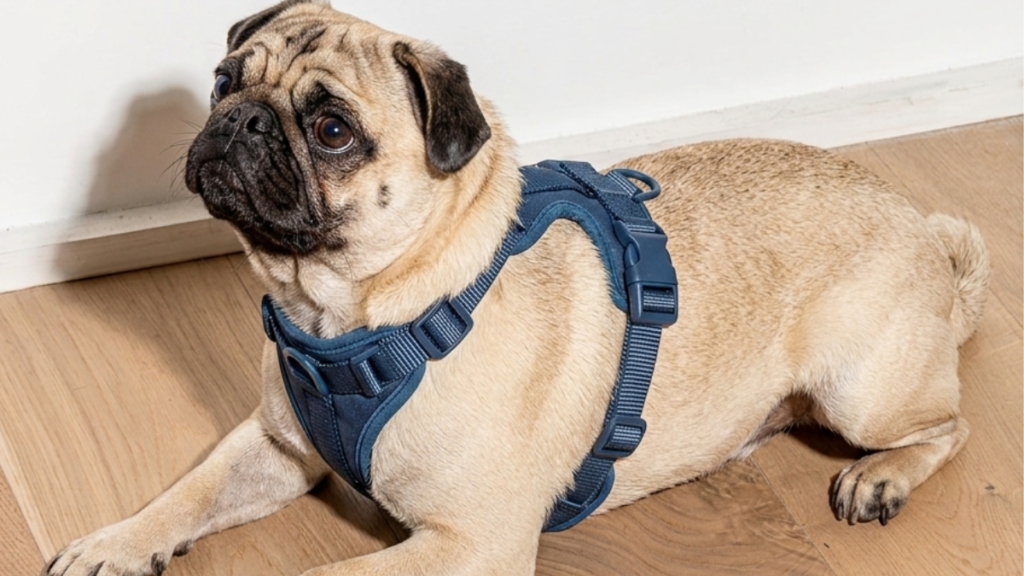
A tired puppy is a good puppy — but getting there without overdoing it is harder than it sounds. Puppies have bursts of intense energy followed by the need for significant rest, and the instinct to run them until they stop is actually counterproductive. Over-exercised puppies develop sleep problems, become hyperactive rather than calm, and — for larger breeds — risk joint damage from too much high-impact activity before growth plates close.
The goal is not exhaustion. It is the right kind of tiredness — the calm, settled state that comes from a mix of physical activity, mental stimulation, and structured routine. Puppies that get this combination sleep better, are easier to train, and tend to be less destructive during the hours they are awake and unsupervised.
Here are ten methods that actually work, with notes on how to adjust for age and breed size.
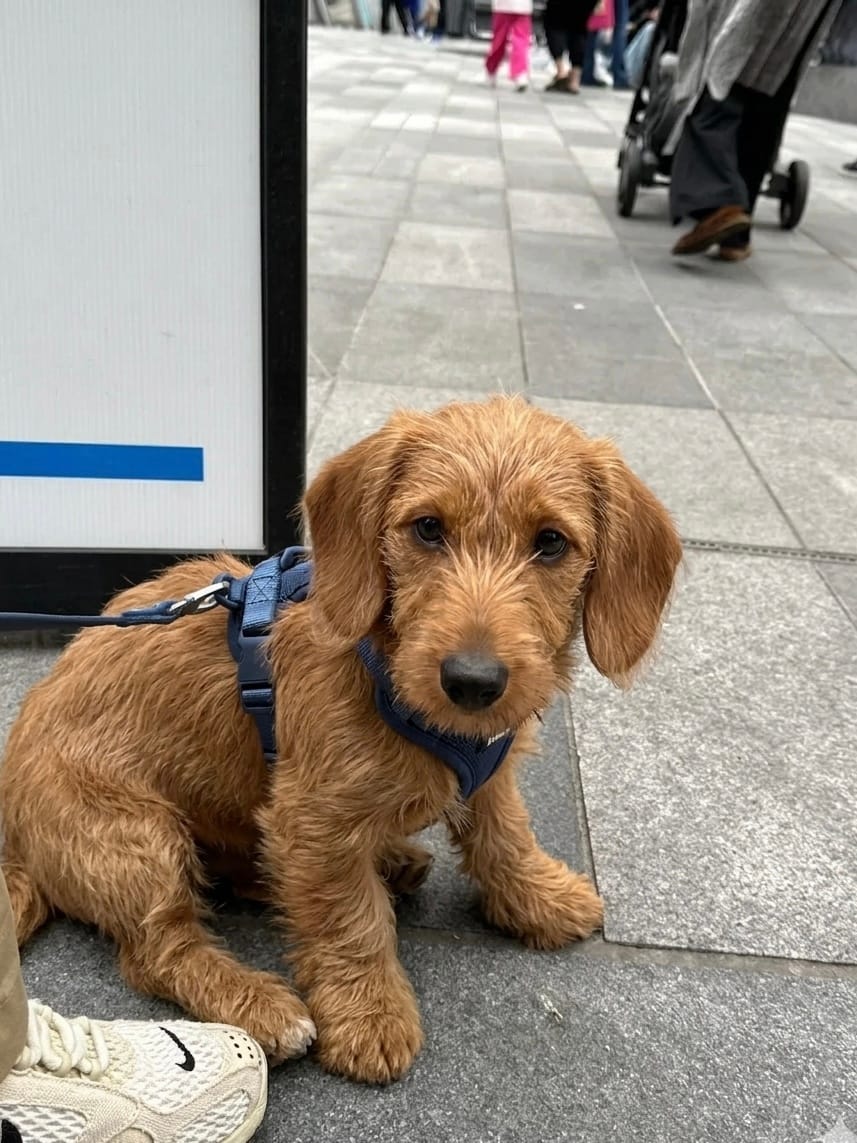
The 5-Minute Rule — What It Means and Why It Matters
Before getting into specific methods, the five-minute rule provides the practical ceiling for physical exercise. The guideline — five minutes of leash walking per month of age, up to twice a day — is a rough but useful starting point for preventing joint damage in growing puppies. A three-month-old puppy should not be on a sustained leash walk for more than fifteen minutes at a time. A six-month-old, thirty minutes.
This rule applies to sustained, repetitive exercise on hard surfaces — leash walks, running, fetch on pavement. Free play on soft surfaces like grass, where the puppy self-regulates pace and rest, is less restricted. Mental stimulation has no equivalent physical limit and can be used freely to supplement the physical exercise budget.
10 Ways to Tire Out a Puppy
1. Structured leash walks
A leash walk is not just physical exercise — the mental stimulation of processing new smells, sounds, and environments tires puppies significantly more than the walking itself. Keep walks within the five-minute-per-month guideline and vary the route as much as possible. A new environment is more tiring than the same route repeated. This is also the time to start building leash manners — a puppy learning to walk calmly on a leash is working harder mentally than one that is simply following its nose. For puppies that pull, a front-clip harness is significantly more appropriate than a collar, both for training and for protecting the developing trachea. Our collar vs harness guide covers when to use each.
2. Sniff walks — slow and deliberate
A sniff walk is the opposite of a structured walk — the puppy leads, stops whenever they want, and spends as long as they like investigating smells. Research consistently shows that allowing dogs to sniff freely on walks produces more tiredness per unit of time than covering distance at pace. A twenty-minute sniff walk often tires a puppy more than a thirty-minute brisk walk. Let the puppy set the agenda; stop every time they stop. It is slower and less satisfying for the human, but significantly more effective for the dog.
3. Training sessions
A five-minute training session — sit, down, stay, come, leave it — tires a puppy more than fifteen minutes of running. The concentration required to learn and perform behaviours on cue is genuinely exhausting for young dogs. Keep sessions short: two to three minutes for very young puppies, five minutes maximum for older ones. End on a success. Multiple short sessions throughout the day are more effective and tiring than one longer session. Puppies trained daily are also consistently calmer than undertrained dogs of the same age.
4. Puzzle feeders and food toys
Feeding meals from a puzzle feeder — a Kong, a licki mat, a snuffle mat, or a scatter feed in the grass — turns eating into mental work. A puppy that works for fifteen minutes to extract its breakfast is noticeably calmer afterward than one that ate from a bowl in thirty seconds. This is one of the simplest and most effective tools available for managing puppy energy with zero additional exercise time required. Start simple and increase complexity as the puppy gets better at problem-solving.
5. Controlled play with humans
Tug, fetch, hide and seek — structured play with a human tires puppies both physically and mentally. The key word is controlled: play that escalates into biting, jumping, or zoomies is counterproductive and reinforces behaviours that become problems in adult dogs. Keep play sessions short (five to ten minutes), end them before the puppy becomes over-aroused, and build in brief calm periods during play. Teaching the puppy to disengage from play on cue is as valuable as the play itself.
6. Socialisation outings
Taking a puppy to a new environment — a pet-friendly café, a busy car park, a friend’s garden — and asking nothing more than to sit and observe is surprisingly tiring. The volume of new information a puppy processes in an unfamiliar environment requires significant mental effort. This is also the most valuable use of the socialisation window (eight to sixteen weeks) — exposure to people, surfaces, sounds, and situations during this period shapes behaviour for life. A puppy that has had three good socialisation outings this week is a noticeably calmer and more settled dog.
7. Supervised free play with other puppies
Well-matched puppy play — similar size, similar energy, compatible play styles — is one of the most effective ways to burn energy. Puppies play at an intensity with each other that most human play sessions cannot match. The key is supervision: play that escalates into bullying or becomes consistently one-sided needs to be interrupted. Keep sessions short (ten to fifteen minutes) and watch for signs of over-arousal — squealing, persistent chasing, or inability to disengage. End play while both puppies are still happy and willing.
8. Nose work and scent games
Hide a treat under one of several cups and let the puppy find it. Hide treats around a room and release the puppy to search. Introduce a scent on a toy and then hide the toy. Nose work engages the part of the dog’s brain that is most active and most tiring — the olfactory processing system. Dogs that do regular nose work are consistently calmer than those that only do physical exercise. It is also one of the few activities that has no upper age or physical limitation.
9. Swimming (for water-confident breeds)
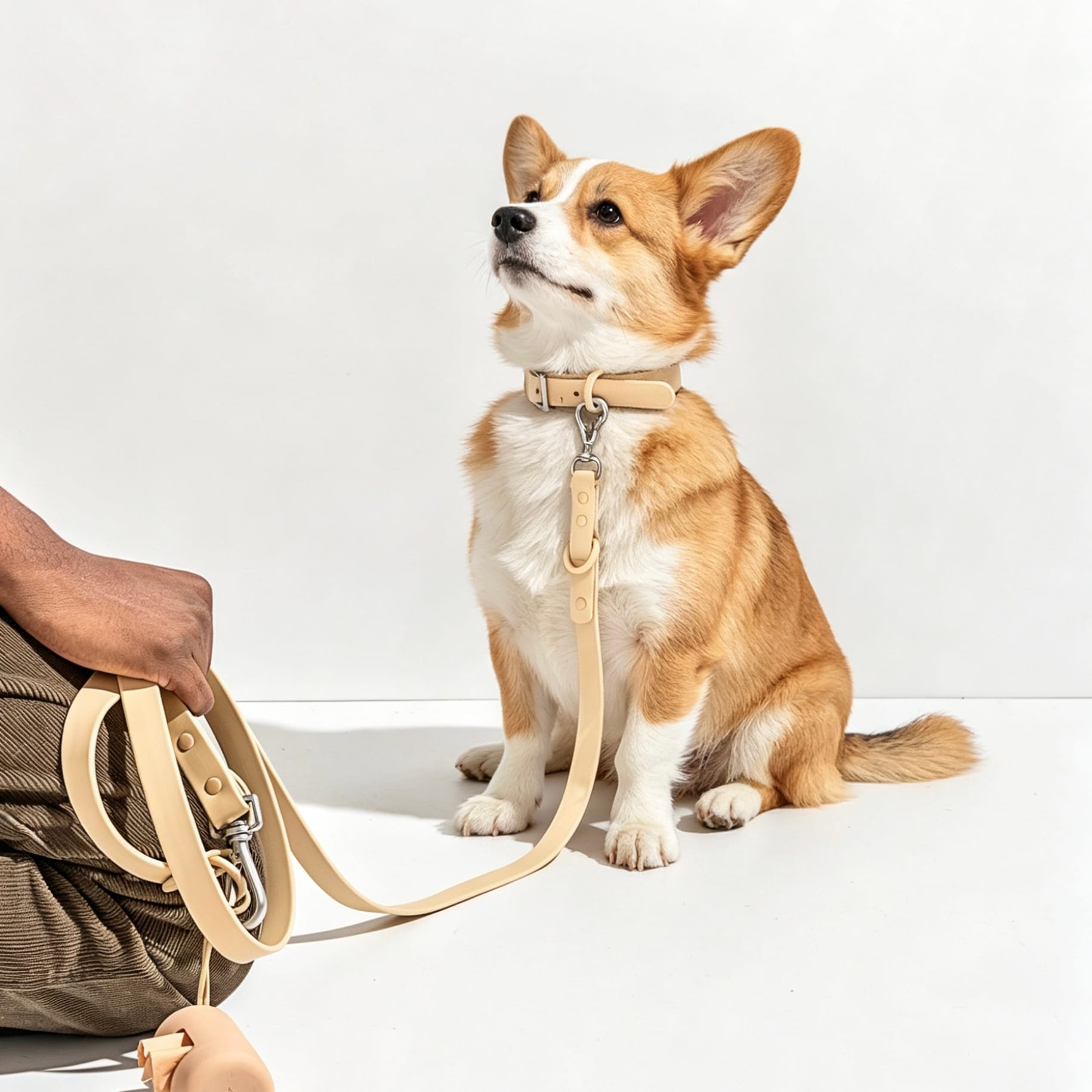
For breeds with natural water affinity — Labradors, Golden Retrievers, Spaniels, Poodles — supervised swimming in calm, shallow water tires puppies very quickly with low joint impact. Five minutes of swimming is equivalent to considerably more walking in terms of energy expenditure. Always supervise closely, keep first sessions very short, and choose still water over moving water. Make sure the puppy can exit the water easily at any point. A waterproof collar and leash handles the wet conditions without developing odour — see our guide on the best waterproof collar and leash set for what to use near water.
10. Enforced rest and crate time
This one surprises many new puppy owners: puppies often need to be helped to rest rather than allowed to continue activity until they crash. An overtired puppy becomes hyperactive, bitey, and unable to settle — the opposite of tired. Building enforced rest periods into the day — twenty to thirty minutes of crate time after activity — teaches the puppy that calm and quiet is a normal state. A puppy that learns to settle in a crate is easier to manage for life. The crate should be a positive space, not a punishment — feed meals in it, leave puzzle toys in it, and never use it as a consequence for behaviour.
Adjusting for Age and Breed Size
8–12 weeks
Very short bursts of activity with frequent rest. The priority at this age is socialisation, not exercise. Sniff walks, brief training sessions, and puzzle feeders are more appropriate than sustained physical activity. Leash walks should be extremely short and low-impact — the goal is to start building positive leash associations, not to cover distance.
3–6 months
The most energy-intensive period for most breeds. The five-minute rule is the physical ceiling; mental stimulation fills the gap. Training sessions become more productive as the puppy’s attention span grows. This is the period where a consistent daily routine — activity, rest, activity, rest — pays the biggest dividends in behaviour.
6–12 months
Physical exercise can increase gradually as the puppy grows. Large and giant breeds should remain conservative with high-impact exercise until at least twelve months — eighteen months for giant breeds like Great Danes and Saint Bernards — as growth plates close later. Small breeds mature faster and can generally handle more activity from around nine months.
High-energy breeds — working and herding dogs
Border Collies, Huskies, Malinois, Springer Spaniels, and similar working breeds have significantly higher baseline energy needs than companion breeds. For these dogs, mental stimulation is not optional — it is essential. A Border Collie puppy that only gets physical exercise will not be a calm dog. One that gets structured training, nose work, puzzle feeders, and controlled physical activity will be noticeably more settled.
Getting Your Puppy Set Up for Walks
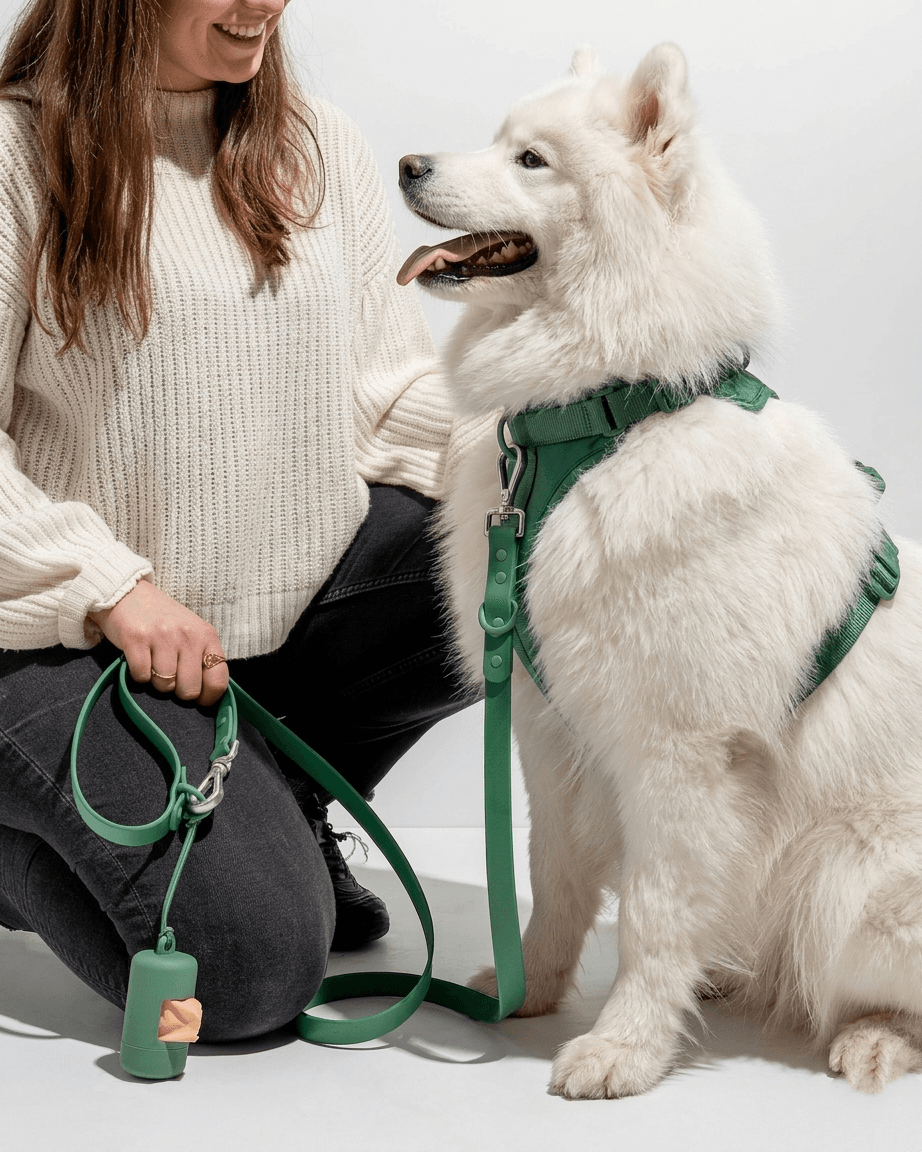
A harness is strongly recommended for puppies rather than a collar for leash attachment — their tracheas are developing and even light collar pressure from an enthusiastic puppy learning to walk can cause strain over time. A lightweight, adjustable harness with a front D-ring starts the leash manners foundation correctly while protecting the neck. The MoonianPet No-Pull Harness starts at XS for puppies from around 3kg, with neoprene padding, three-point adjustment, and a quick-release buckle that goes on in seconds.
For sizing before your first purchase, our harness size guide covers chest and neck measurement in under two minutes. Re-check the fit every two to four weeks for fast-growing puppies — a harness that fits correctly in month two may need adjustment in month three.
For collar sizing for ID tag purposes, our collar measuring guide covers the two-finger rule and how to measure correctly for a growing puppy.
The Right Gear for Puppy Walks
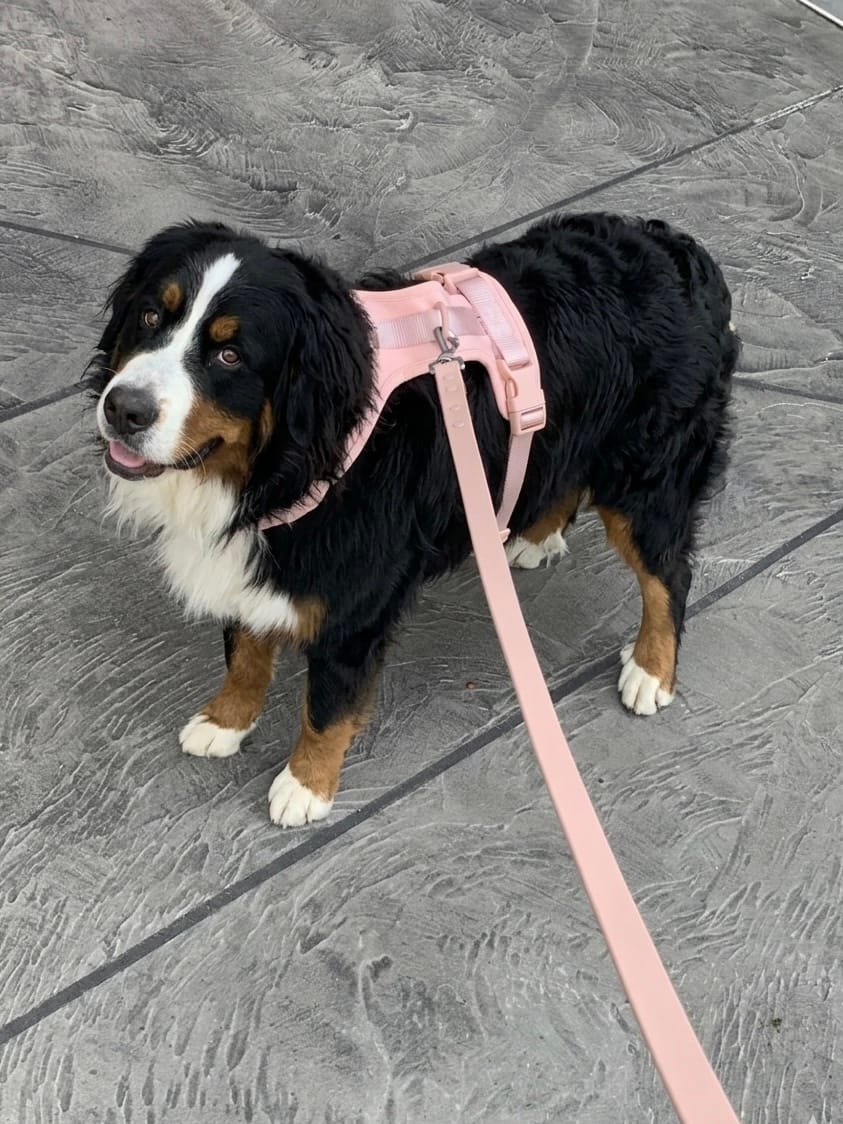
The MoonianPet No-Pull Harness is lightweight enough for daily puppy walks and adjustable enough to keep pace with growth — available from XS to XL in 11 colors, with neoprene padding and a front D-ring for starting leash training the right way from day one.
For a matched waterproof walking setup as your puppy grows into an active outdoor dog, the MoonianPet Waterproof Collar pairs with the harness for ID tag wear — odour-proof, wipe-clean, and built to last through years of active outdoor life.
Frequently Asked Questions
How much exercise does a puppy need per day?
The five-minute rule is the practical guide for leash walking: five minutes per month of age, up to twice daily. A four-month-old puppy should have no more than twenty minutes of leash walking per session. This applies to sustained physical exercise on hard surfaces — free play on soft grass is less restricted because the puppy self-regulates pace and rest. Mental stimulation through training, puzzle feeders, and nose work has no equivalent limit and should be used to supplement the physical exercise budget.
Why is my puppy still hyper after a long walk?
Paradoxically, an overtired puppy often becomes more hyper rather than calmer. When puppies exceed their physical capacity, the stress hormones produced by over-exercise create a state of hyperarousal that looks like excess energy. The solution is to enforce rest rather than add more exercise. If your puppy becomes more frantic rather than calmer after a walk, the walk may be too long — reduce duration and add mental stimulation instead.
Is it better to use a harness or collar for puppy walks?
A harness is strongly recommended for puppies for leash attachment. Puppy tracheas are developing and any collar pressure from pulling — which most puppies do initially — can cause strain over time. A harness moves the leash attachment to the chest or back, away from the neck entirely. A collar is still appropriate for wearing ID tags, just not for the leash attachment point. Our collar vs harness guide covers the full comparison.
At what age can I start running with my puppy?
For most medium breeds, light jogging can begin around twelve months when growth plates are largely closed. For large and giant breeds, wait until eighteen months. Small breeds mature faster and can generally begin light running from around nine to ten months. High-impact sustained running — long distances, hard surfaces — should wait until full skeletal maturity in all breeds. Short bursts of running during play are fine before this — it is sustained repetitive impact that carries joint risk.
How do I stop my puppy being destructive when I am not home?
Destructive behaviour when left alone is almost always a combination of excess energy and insufficient settling skills. The most effective combination: a twenty-minute training session or sniff walk before you leave, followed by a puzzle feeder or Kong to occupy the puppy as you leave, in a safe crate or puppy-proofed space. A puppy that has worked mentally and physically before being left is significantly less likely to be destructive than one left with a full tank of energy and nothing to do.
Setting up for your first walks? Our harness size guide covers measuring a puppy in under two minutes. Or if you are deciding between collar and harness for your puppy, see our collar vs harness guide for the full picture.
Wenyue
Wenyue is the founder of MoonianPet and writes about dog collars, harnesses, waterproof pet gear, and everyday dog care. Growing up with dogs inspired her lifelong interest in pet care and practical dog gear. Through MoonianPet, she researches dog collars, harnesses, waterproof materials, and everyday solutions that help active dogs stay comfortable during daily adventures.