
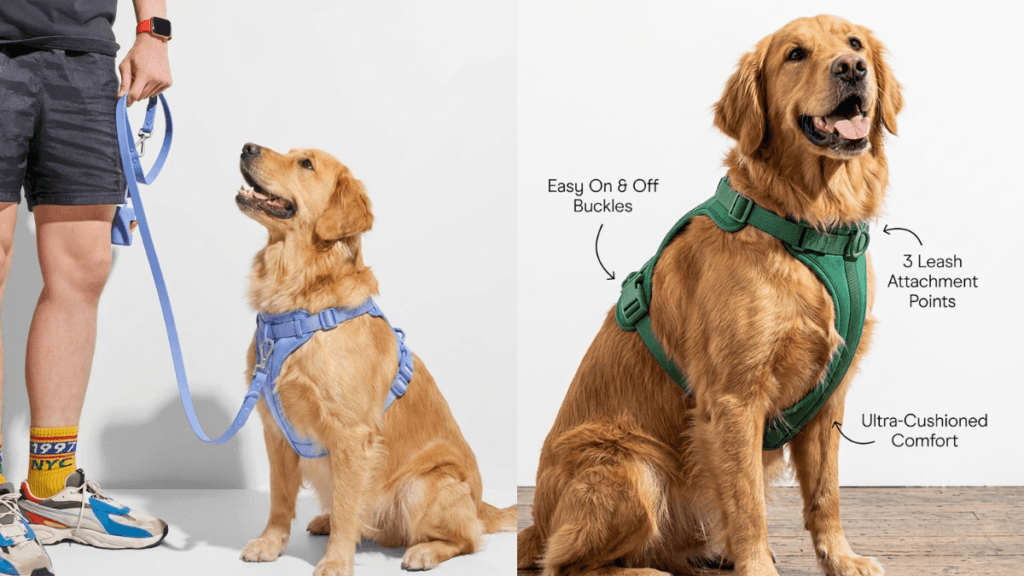
A harness handle is a simple thing — a loop of webbing sewn onto the top of the harness, sitting above the dog’s shoulders. But it does something no other part of the harness can do: it lets you lift, guide, or physically restrain the dog from directly above, without bending down to grab the collar or wrestling with a tight leash.
For some dogs and some owners, this is an occasional convenience. For others — large reactive dogs, dogs that lunge, dogs that need to be lifted over obstacles, dogs being trained in protection sports — it is a genuine safety requirement. Understanding which category you fall into helps you decide whether a handle is a must-have feature or simply a nice-to-have.
This guide covers what the handle actually does, the situations where it adds real value, what to look for in a harness where the handle is structurally sound, and the dogs that benefit most.

What a Harness Handle Actually Does
The handle on a harness serves three distinct functions, and understanding which one applies to you is the key to knowing whether you need it:
Immediate close control
When a dog lunges, the handle gives you a direct physical connection to their body that does not require pulling on the leash. You can apply downward pressure through the handle to bring a lunging dog back to ground level, or use it to hold the dog stationary while the leash is still attached. This is particularly useful in reactive dog situations — when another dog appears suddenly at close range, the handle gives you an immediate control point that bypasses the mechanics of leash tension entirely.
Lifting assistance
Getting a large dog into a vehicle, over a stile, up stairs after surgery, or out of a situation where they cannot move themselves — a handle rated for lifting distributes the weight across the harness body rather than concentrating it on the collar or a single strap. This is a genuine daily-use benefit for owners of older large dogs, dogs recovering from orthopaedic surgery, or dogs that regularly travel in vehicles that require a lift.
Handler connection in working or sport contexts
In protection sports, service dog work, and some training contexts, the handle allows the handler to maintain physical contact with the dog during specific exercises without using the leash. It provides a secure connection point that the dog learns to respond to as a distinct handling cue — different from leash pressure and different from voice commands.
When a Handle Makes a Real Difference
Reactive dogs on busy streets
A dog that lunges at other dogs, cyclists, or strangers gives you very little warning before the full force of the lunge hits the leash. A handle that you can grab in the instant before the lunge lands lets you interrupt the movement before it becomes a full-body commitment. Many owners of reactive dogs find the handle more useful for prevention than the leash is for correction — getting the hand on the handle a half-second before the trigger appears is easier than trying to check a lunge already in progress.
Large dogs near roads
At road crossings, near traffic, or in any situation where you need the dog close and controlled immediately, the handle provides a second contact point in addition to the leash. You hold the leash in one hand and have the option of grabbing the handle with the other if the dog starts to move toward the road. This is more useful than it sounds — leash control alone requires a significant jerk to stop a 35kg dog mid-stride, whereas downward handle pressure with body weight behind it stops the movement much more cleanly.
Elderly or post-surgical dogs
A dog recovering from hip replacement, cruciate repair, or spinal surgery often needs physical assistance with stairs, getting into vehicles, or navigating slippery surfaces. A harness with a handle rated for the dog’s full weight allows the owner to provide lift and stability without the awkward back strain of trying to physically support a large dog from underneath or by the collar. This is one of the most practically impactful uses of a harness handle for everyday owners who are not in a sporting or working context.
Outdoor adventures with terrain challenges
Hiking on technical terrain, scrambling over rocky sections, or helping a dog negotiate a steep step that they cannot quite make — a handle gives you a way to assist the dog’s movement without pulling on the collar or trying to scoop up a large animal from underneath. Many hiking-focused harnesses specifically feature a top handle for exactly this reason.
What to Look for in the Handle Itself
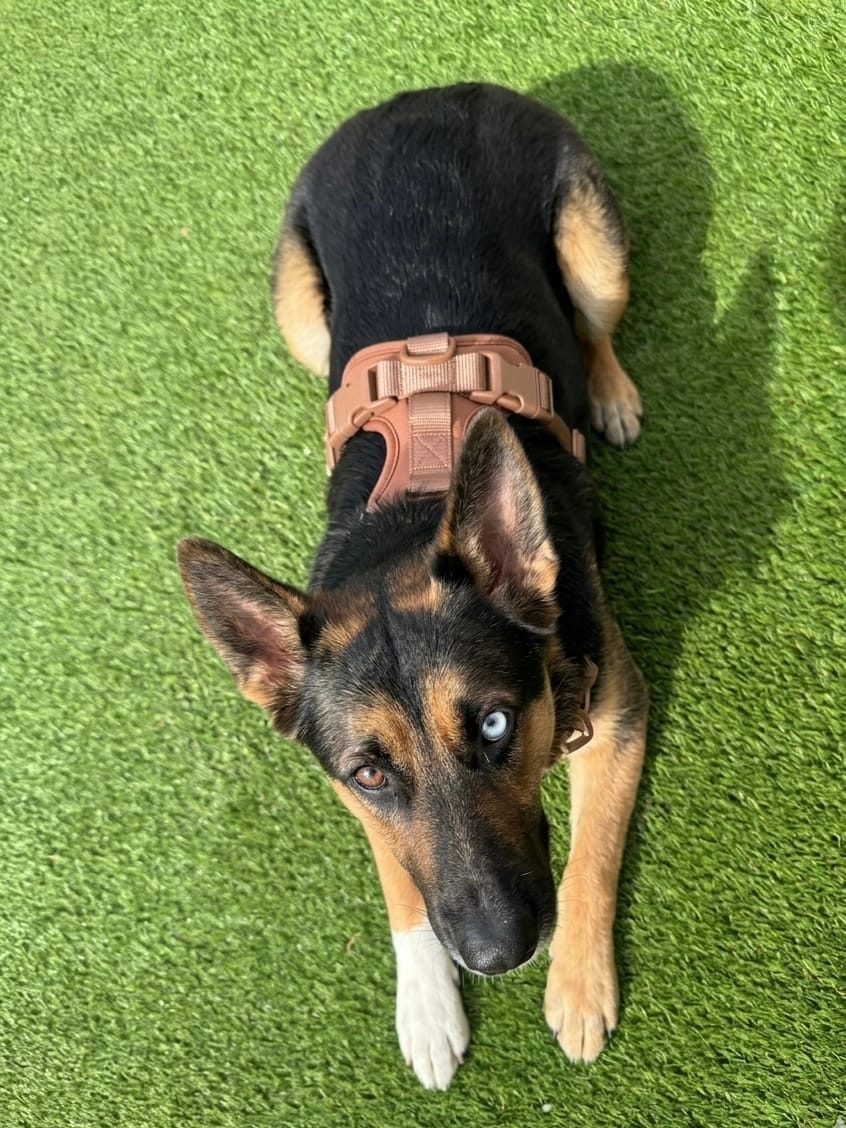
Not all harness handles are equal — and the handle is the point of maximum stress on any harness when it is used for lifting or restraint. These are the things to check:
Bar-tacking at both attachment points
The handle attaches to the harness body at two points — typically at the front and back of the loop. Each attachment point should be reinforced with bar-tacking: multiple rows of stitching running perpendicular to the handle, crossing the webbing at the join. A handle that is only straight-stitched along its length will eventually peel away from the harness body under the shear force of lifting a heavy dog. Bar-tacking distributes the force across a wider area of the harness and resists peeling significantly better.
Padding or grip material on the handle
A bare webbing loop is functional but uncomfortable under load — particularly if you are gripping it hard while a large dog is pulling or being lifted. A handle with neoprene or rubber padding gives a more secure, less uncomfortable grip, and reduces the risk of the handle slipping from your hand during a reactive incident. This matters more for large dogs and for owners with smaller hands where a bare loop sits awkwardly in the grip.
Handle positioning over the shoulders
The handle should sit above the dog’s shoulder blades — roughly centred between the neck and the back of the harness. A handle positioned too far forward (near the neck) creates an awkward angle when lifting and puts force on the neck end of the harness. A handle too far back is harder to reach quickly in a reactive situation. Centre-back positioning is the most functional placement for both lifting and close control.
Integration with the back D-ring
Many harnesses position the back D-ring near or within the handle loop. This is practical — the leash can attach to the D-ring while your hand can also reach the handle without the two getting in each other’s way. Check that the D-ring is easily accessible even when the handle is being gripped, and that the leash clip does not interfere with a comfortable handle grip.
Is the Handle on a Standard No-Pull Harness Rated for Lifting?
This is worth checking specifically before attempting to lift a large dog by the handle on a standard harness. Most standard no-pull harnesses include a handle — but many are designed for close control and guiding rather than full-weight lifting. The difference is in the bar-tacking and webbing weight at the attachment points.
For dogs under 20kg, most well-made harness handles will cope with the occasional assisted lift. For dogs over 30kg — where the lifting force is significant — check the manufacturer’s specifications. A harness that states a maximum weight rating for lifting is giving you real information; one that does not specify is likely designed for guiding and close control rather than full-weight support.
If you need a harness specifically for lifting assistance with a large dog — post-surgery support, regular vehicle lifts — look for harnesses marketed specifically for mobility assistance, which are designed and rated for full weight-bearing use. These are a different category from standard no-pull harnesses with handles.
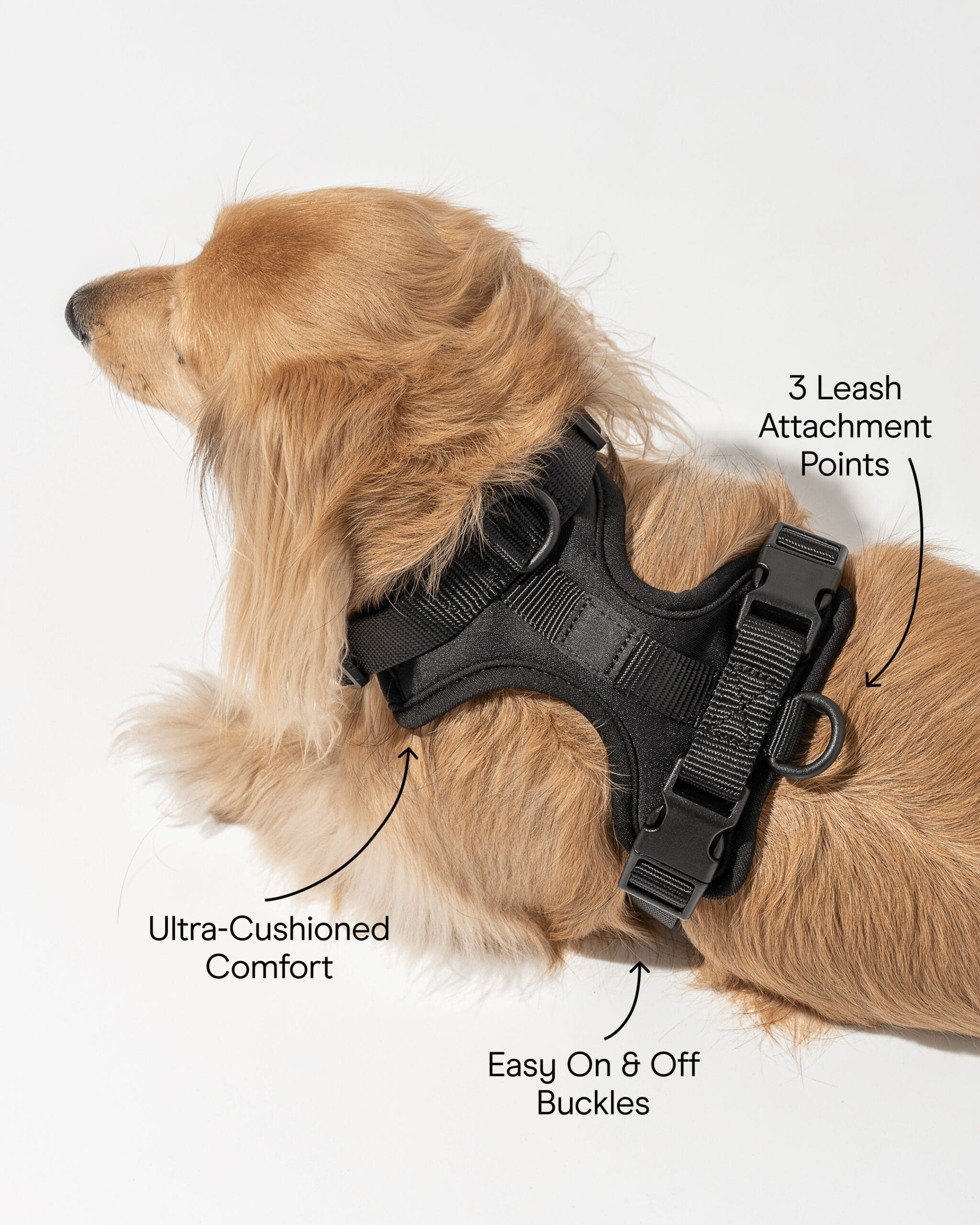
Dogs That Benefit Most from a Harness Handle
Large reactive breeds
German Shepherds, Belgian Malinois, Rottweilers, Dobermanns, and similar breeds that are powerful, alert, and prone to reactive responses to environmental triggers. The handle gives the owner a direct physical intervention point that is faster and more precise than leash correction in a reactive moment.
Senior large dogs with mobility challenges
Older Labradors, Golden Retrievers, and other large breeds that develop hip dysplasia, arthritis, or spinal issues often need daily physical assistance. A harness handle is part of the practical management toolkit for keeping a large senior dog mobile safely.
Working and sport dogs
Protection sport dogs, service dogs in training, and search and rescue dogs where the handle serves a specific training or operational function as described above.
Adventure dogs on technical terrain
Dogs that regularly hike, scramble, or navigate technical outdoor terrain where physical assistance over obstacles is part of the activity. A handle gives the owner a way to assist without improvising with the leash or the collar in situations where control matters.
When a Handle Is Not Necessary
For calm dogs that walk well on a loose leash, never need to be lifted, and do not have reactive tendencies — a handle is a minor convenience at most. It does not hurt to have one, but it should not be a primary buying criterion if the use cases above do not apply to your dog.
A handle also does not substitute for training. A reactive dog managed primarily through the handle — grabbed and held every time a trigger appears rather than learning to respond differently — is a dog that is being managed rather than trained. The handle buys you control in the moment; what you do with that moment is what changes the behaviour over time. For the training side, our guide on how to stop a dog from pulling on the leash covers the techniques that reduce reactive pulling over time.
The MoonianPet No-Pull Harness for Close Control
The MoonianPet No-Pull Dog Harness includes a reinforced top handle above the back panel, positioned centrally over the shoulders for both close control and assisted lifting. The handle is bar-tacked at both ends with additional reinforcement stitching at the joins, and the neoprene padding on the handle provides grip under load.
The dual D-rings — front clip for no-pull walking, back clip for standard walking — are positioned so the leash attaches cleanly without interfering with the handle grip. Available in 11 colors and five sizes XS through XL. For reactive or large dogs specifically, sizes L and XL have the widest webbing and the most reinforced handle construction.
Not sure which size? Use our dog harness size guide to measure chest and neck girth before ordering. Pair with the MoonianPet Waterproof Leash or save with the Harness & Leash Set.

Frequently Asked Questions
Can I lift my dog by the harness handle?
For occasional assisted lifts — helping a medium dog into a vehicle, supporting a dog over a step — a well-constructed handle on a quality harness handles this safely. For frequent full-weight lifting of a large dog, check whether the harness specifies a weight rating for lifting. Harnesses designed for mobility assistance are rated and built differently from standard no-pull harnesses with handles. For dogs over 30kg being lifted regularly, a dedicated mobility harness is the safer long-term choice.
Does a harness handle help with a reactive dog?
Yes — the handle gives you a direct physical contact point that is faster to use in a reactive moment than leash adjustment. The most effective way to use it is to rest a hand lightly on or near the handle when approaching known triggers, so that the contact is already in place before the dog reacts. This requires practice but becomes natural quickly for owners who use it regularly. The handle manages the moment; training changes the pattern over time.
Is a handle harness comfortable for the dog on long walks?
The handle itself adds minimal weight and sits above the back rather than against the skin, so it does not affect comfort during normal walking. The concern is whether the harness body itself is well-padded and fitted correctly — those factors matter far more for long-walk comfort than the presence of a handle. A well-fitted harness with neoprene padding is comfortable for extended walks regardless of whether it has a handle.
Should the leash attach to the handle or the D-ring?
Always to the D-ring — never to the handle. The handle is designed for hand grip, not for sustained leash tension. Attaching a leash to the handle puts repeated dynamic load on the bar-tacking at the handle ends, which is not what that stitching is rated for. Use the D-ring for the leash and the handle for manual close control. On a well-designed harness, both are positioned so they can be used simultaneously without interfering with each other.
What is the difference between a handle and a top D-ring?
A top D-ring on a harness is a metal ring positioned on the back, designed for leash attachment for back-clip walking. A handle is a webbing loop, also on the back, designed for hand grip. Some harnesses have both; some combine them by positioning the D-ring within or adjacent to the handle. If a harness only has a top D-ring and no handle, you can technically grip the D-ring in an emergency, but it is not comfortable under load and not designed for that use. A proper handle is a distinct loop sized and padded for hand grip.
For the full guide on no-pull harness features and how to choose between them, see our best harness for dogs that pull. For sizing your dog before ordering, the dog harness size guide covers measurement in detail.
Wenyue
Wenyue is the founder of MoonianPet and writes about dog collars, harnesses, waterproof pet gear, and everyday dog care. Growing up with dogs inspired her lifelong interest in pet care and practical dog gear. Through MoonianPet, she researches dog collars, harnesses, waterproof materials, and everyday solutions that help active dogs stay comfortable during daily adventures.