

If your vet has mentioned tracheal collapse — or you’ve started noticing that honking cough after walks — one of the first things they’ll tell you is to get your dog off a collar and onto a harness. It’s straightforward advice, but choosing the wrong harness still causes problems. A harness that presses against the chest incorrectly, sits too high on the neck, or shifts around during walking can create its own pressure issues for a dog with a compromised airway.
Tracheal collapse is most common in small and toy breeds — Chihuahuas, Pomeranians, Yorkshire Terriers, Maltese, Shih Tzus, and Pugs are among those most frequently diagnosed. It’s a progressive condition where the rings of cartilage supporting the trachea weaken, causing the airway to flatten partially or fully during breathing. The characteristic sound — often described as a goose honk — is usually triggered by excitement, exercise, or pressure on the throat.
A collar puts direct pressure on the trachea every time the leash goes taut. For a dog with tracheal collapse, that pressure can trigger coughing episodes and, over time, accelerate the deterioration of the cartilage. Switching to a harness removes the leash attachment point from the throat entirely. But not all harnesses do this equally well, and the details matter more for this condition than for a healthy dog on a standard walk.
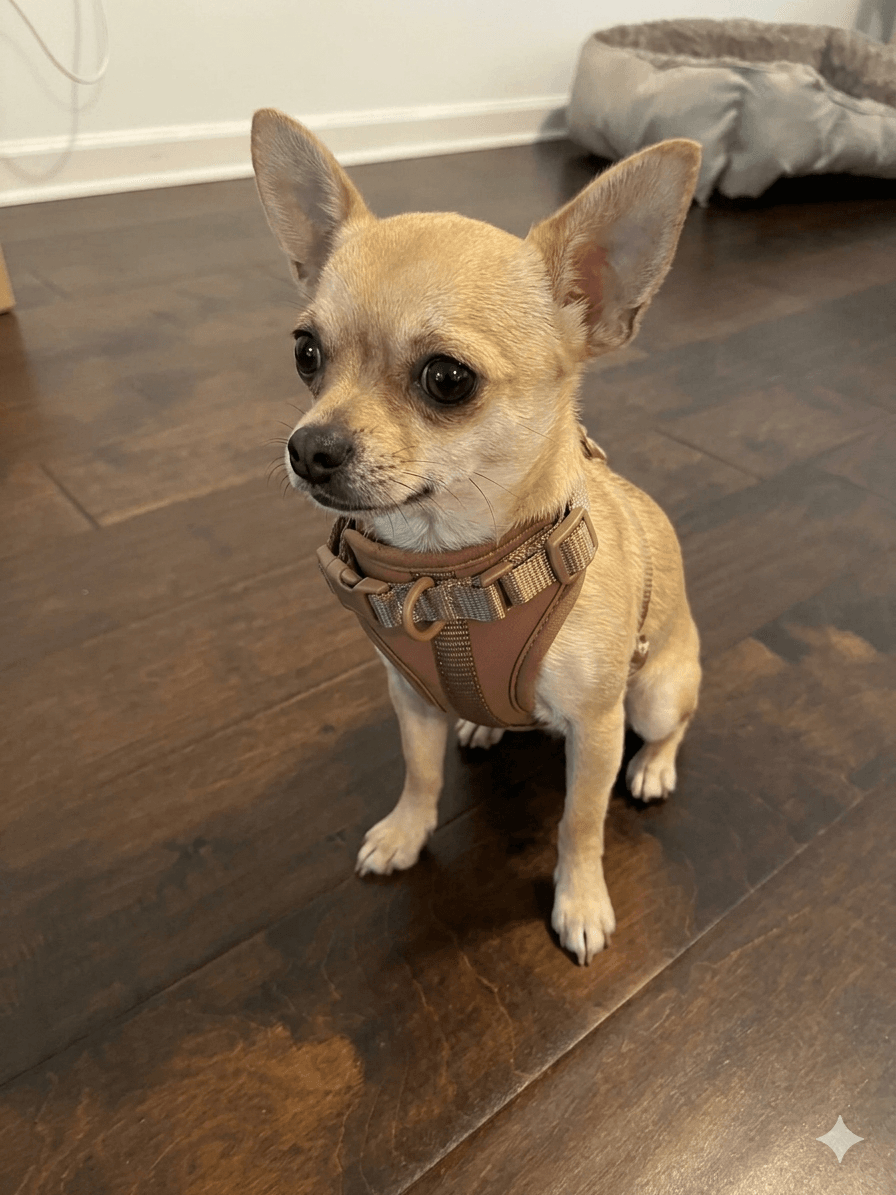
Why Collar Walking Is Specifically Risky for Tracheal Collapse
How tracheal collapse works
The trachea is held open by C-shaped rings of cartilage. In dogs with tracheal collapse, these rings weaken and lose their rigidity — the top wall of the trachea drops down into the airway, reducing or blocking airflow. The condition is graded from 1 (25% airway obstruction) to 4 (complete collapse). Mild cases may only cause occasional coughing; severe cases can result in respiratory distress. Anything that increases pressure or irritation on the trachea makes symptoms worse and can accelerate progression.
What a collar does to the airway
When a dog pulls against a collar — or when the leash goes suddenly taut — the collar compresses the front of the neck directly over the trachea. In a healthy dog with intact cartilage, this is uncomfortable but recoverable. In a dog with weakened tracheal rings, even moderate compression can trigger a coughing episode. Repeated compression over months and years causes inflammation around the trachea and may contribute to further cartilage deterioration. This is why most veterinary guidance recommends harness walking for any dog diagnosed with tracheal collapse, regardless of severity.
The harness difference
A harness transfers leash force to the chest and shoulders — structures designed to handle load-bearing in a way the throat is not. When a dog with tracheal collapse pulls on a harness, the pressure distributes across the ribcage rather than compressing the windpipe. The throat remains completely unloaded. This is the single most important functional change you can make in how you walk a dog with this condition.
What to Look for in a Harness for Tracheal Collapse
Chest-first design with a low neck opening
The neck opening of the harness must sit low enough that it does not press against the trachea when the dog is standing or moving. A harness with a neck opening that rides high — up toward the larynx — defeats the purpose. Look for a harness where the neck loop sits at the base of the neck, well below the throat, so that even if the dog strains forward there is no contact with the trachea. This is the detail that’s most often overlooked when people choose a harness for a tracheal collapse dog.
Soft, lightweight material at the contact points
A dog with tracheal collapse often coughs when excited, and excitement typically happens at the start of a walk or when greeting other dogs. You want the harness to be comfortable enough that putting it on doesn’t itself trigger a coughing episode. Stiff webbing, hard plastic edges, or a bulky chest panel can cause the dog to pull back from the harness during fitting — which creates throat tension. Soft neoprene or a padded chest panel reduces the resistance to fitting and makes the harness comfortable to wear throughout the walk.
A front D-ring attachment
For a dog with tracheal collapse that also pulls, a front clip harness is particularly valuable. The front D-ring sits on the chest panel; when the dog pulls forward, the leash redirects the dog back toward the handler rather than allowing sustained forward tension. This reduces the duration and intensity of each pulling episode — which matters because sustained pulling on any harness still involves effort and exertion, both of which can trigger coughing in dogs with tracheal collapse. Reducing pulling behaviour reduces the overall respiratory load on each walk.
Adjustability at the neck independently from the chest
Getting the neck fit precisely right is more important for a tracheal collapse dog than for a healthy one. A harness with independent neck and chest adjustment lets you dial in the neck opening to sit exactly where you need it — snug enough not to slip over the head, but positioned low enough to avoid any tracheal contact. Fixed-size harnesses or those with adjustment only at the chest make it harder to achieve this precision, especially on small dogs where a centimetre of difference in neck position is significant.
Lightweight overall construction
Most dogs diagnosed with tracheal collapse are small breeds. A harness scaled for larger dogs — with heavy hardware, thick webbing, and substantial padding — adds proportionally significant weight to a 3 to 5kg dog. A heavy harness shifts during walking, which can cause it to ride up toward the neck over the course of a walk. Lightweight construction — narrow, flat webbing or neoprene fabric with appropriately scaled hardware — stays in position better and is less fatiguing for a small dog whose respiratory system is already under some strain.

What to Avoid
Any harness that sits across or near the throat
Some harnesses — particularly older-style figure-eight designs and some step-in designs — have a neck loop that sits higher on the neck, close to the throat. On a healthy dog this is merely suboptimal. On a dog with tracheal collapse it is a problem, because any forward pressure on the leash now translates directly to the same area a collar would press. Check the position of the neck opening carefully before buying; if the harness sits above the point of the shoulder at the front, it is too high for a tracheal collapse dog.
Harnesses that restrict shoulder movement
A chest panel that sits too high and presses against or across the shoulder blades restricts the dog’s front leg extension and shortens the stride. A dog that is walking with restricted movement will compensate by increasing overall effort — and increased exertion is one of the primary triggers for coughing episodes in tracheal collapse dogs. The chest panel of the harness should sit below the shoulder blades, on the sternum, so that the shoulders can move freely through the full range of motion.
Head halters and slip collars
Head halters — which loop around the muzzle and attach at the back of the head — control direction through the head rather than the body. They do not press on the trachea in the same way a collar does, but a sudden lunge against a head halter can cause a sharp neck rotation that is uncomfortable and potentially harmful for a small dog with respiratory vulnerabilities. Slip collars, slip leads, and any collar design that tightens under tension should be avoided entirely for tracheal collapse dogs.
Sizing a Harness for a Small Dog with Tracheal Collapse
Because tracheal collapse primarily affects toy and small breeds, harness sizing is more critical than it would be for a medium or large dog. A harness that is even slightly too large will shift during walking — and a shifting harness means the neck opening moves, potentially drifting higher toward the throat as the walk continues.
Measure chest girth at the widest point behind the front legs. For most affected breeds, this falls between 28 and 45cm. Cross-reference with the brand’s specific size chart — not just the S/XS label — before ordering. If your dog falls between sizes, size down and use the adjustment to fine-tune fit. A snug harness that stays in position is safer than a loose one that shifts.
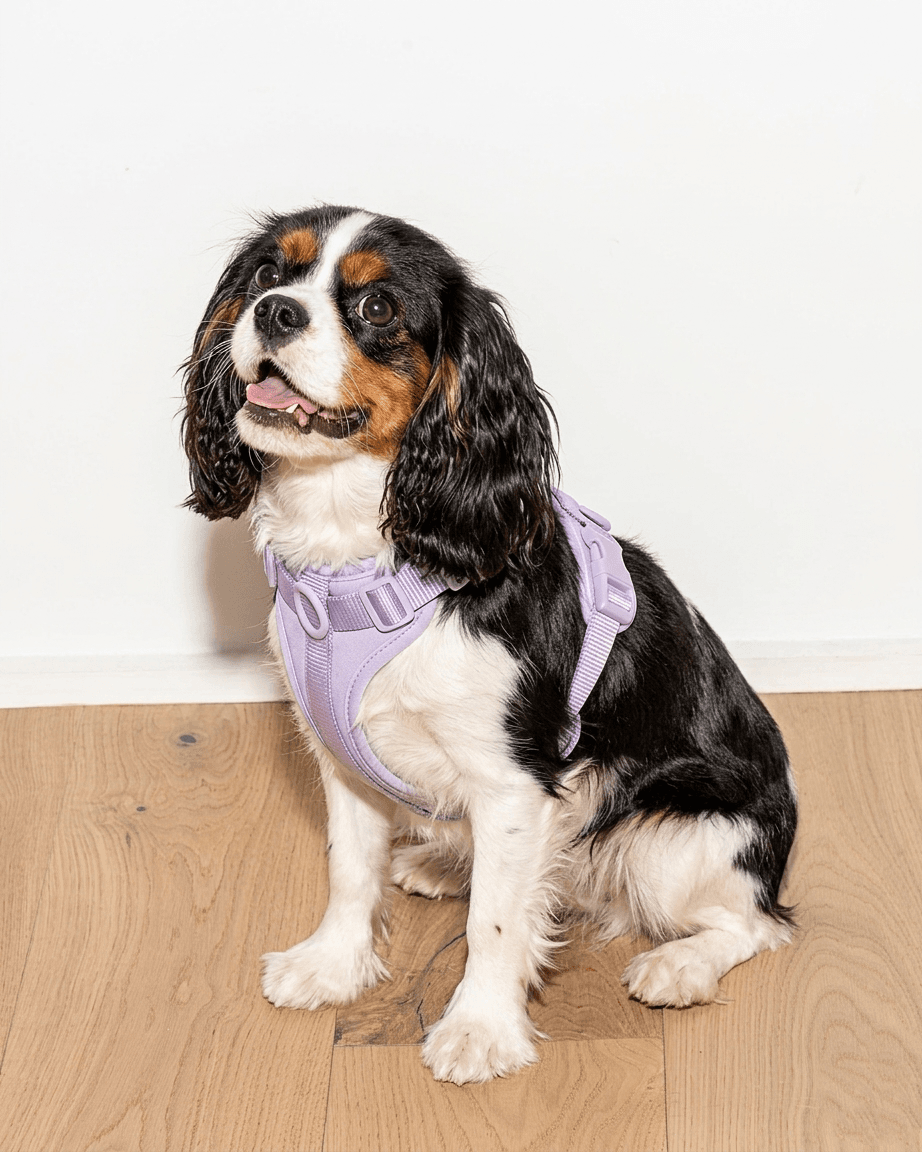
The MoonianPet No-Pull Harness for Tracheal Collapse Dogs
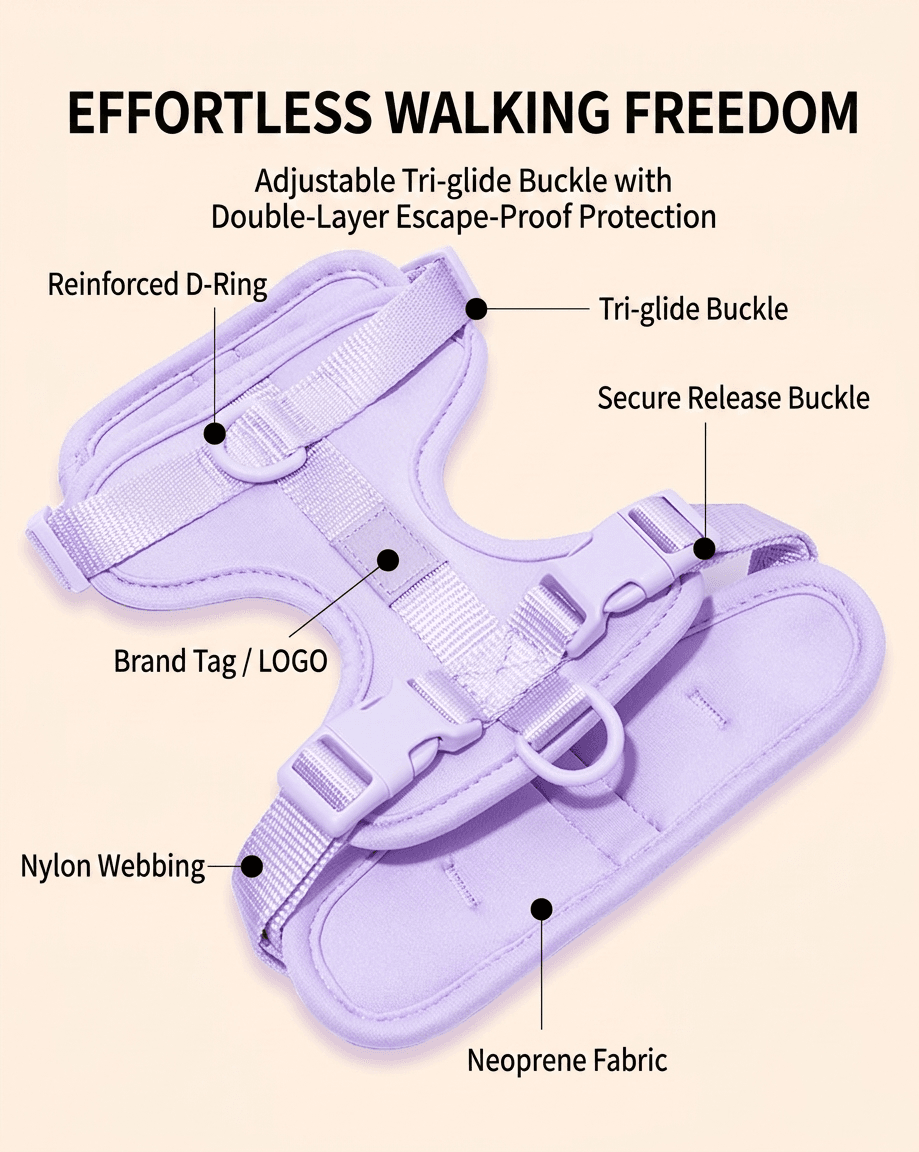
The MoonianPet No-Pull Dog Harness addresses the key requirements for tracheal collapse management. The neoprene body is lightweight and soft — the neck opening sits low at the base of the neck rather than high toward the throat, and the chest panel is positioned below the shoulder blades to allow full front leg movement. Independent three-point adjustment at the neck and chest lets you position the neck opening precisely without compromising the chest fit.
The front D-ring on the chest panel provides a no-pull attachment option — useful for tracheal collapse dogs that still pull, since reducing the intensity of pulling episodes reduces the overall respiratory effort on each walk. The back D-ring is available for calmer walks once the dog has settled into harness walking.
Available in XS through XL across 11 colours, with the Harness & Leash Set adding a matching waterproof leash. For breed-specific guidance on small dogs and harness fit, see our Yorkie harness guide and small dog harness overview.
Frequently Asked Questions
Can my dog still wear a collar if they have tracheal collapse?
Yes — a collar is still appropriate for carrying ID tags, and most dogs with tracheal collapse wear a flat collar for identification purposes without any issue. The problem is specifically with attaching a leash to a collar. Collar pressure from walking and pulling is what risks aggravating the condition; a collar worn for ID only, without a leash attached, does not create tracheal pressure. The standard management approach is a collar for ID plus a harness for all walks.
Will a harness cure or reverse tracheal collapse?
No. Tracheal collapse is a structural condition — the weakened cartilage does not regenerate. A harness removes one of the aggravating factors (throat pressure during walking), which helps manage symptoms and slow progression, but it is not a treatment. Dogs with tracheal collapse benefit from a combination of harness walking, weight management (excess weight increases respiratory effort), avoiding triggers like excitement and heat, and in moderate to severe cases, veterinary medication or surgical intervention.
My dog with tracheal collapse still coughs even with a harness — why?
A harness eliminates collar-related throat pressure, but tracheal collapse has multiple triggers. Excitement, exertion, hot or humid weather, smoke, strong smells, and drinking water quickly can all trigger coughing episodes regardless of what walking equipment you use. If coughing persists frequently despite switching to a harness, the condition may have progressed beyond what equipment changes alone can manage — a vet review is appropriate. Some dogs with grade 3 or 4 collapse benefit from bronchodilators or cough suppressants prescribed by a vet.
Which dog breeds are most at risk for tracheal collapse?
Tracheal collapse is most common in toy and small breeds, particularly Chihuahuas, Yorkshire Terriers, Pomeranians, Maltese, Shih Tzus, Pugs, and Toy Poodles. It can also affect small terriers and Cavalier King Charles Spaniels. Middle-aged to older dogs are most commonly diagnosed, though the condition can appear in younger dogs. If you have a breed on this list, switching to harness walking as a precautionary measure — before any symptoms appear — is generally recommended by vets. See our Yorkie harness guide for breed-specific detail on one of the most commonly affected breeds.
Should I use the front clip or back clip on a harness for my tracheal collapse dog?
Either is appropriate from a tracheal standpoint — both keep the leash force away from the throat. The front clip is more effective for dogs that pull, as it redirects the dog toward you and reduces the intensity of each pulling episode. This matters for tracheal collapse dogs because sustained pulling requires more respiratory effort, which can trigger coughing. For calm dogs that don’t pull, the back clip is comfortable and gives slightly more freedom of movement. The front clip is generally the better starting point if your dog pulls at all.
Is a step-in harness safe for a dog with tracheal collapse?
Step-in harnesses can be safe for tracheal collapse dogs, but design varies significantly. The key question is where the neck opening sits — not whether it’s a step-in design or not. Some step-in harnesses have neck openings that sit high and close to the throat; others sit lower at the base of the neck. Check the neck position specifically on any harness you consider, regardless of the style. An overhead harness with a low neck opening is equally appropriate — what matters is neck position, not the method of putting it on.
For a broader comparison of harness versus collar walking and when each is appropriate, see our dog collar vs harness guide. For small breed-specific harness fit and sizing, see our neoprene dog harness guide.

Wenyue
Wenyue is the founder of MoonianPet and writes about dog collars, harnesses, waterproof pet gear, and everyday dog care. Growing up with dogs inspired her lifelong interest in pet care and practical dog gear. Through MoonianPet, she researches dog collars, harnesses, waterproof materials, and everyday solutions that help active dogs stay comfortable during daily adventures.