
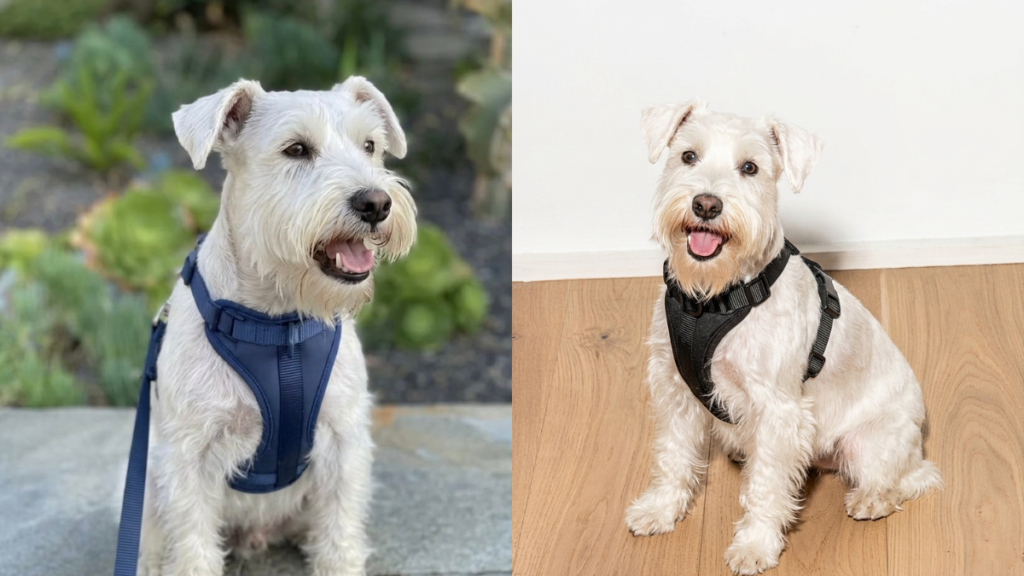
West Highland White Terriers are deceptively solid dogs. At 7 to 10kg, a Westie is heavier and more densely built than its compact size suggests — they have a broad, deep chest, a short thick neck, and a muscular build developed for going to ground after quarry. This body shape creates a specific harness fitting challenge: a harness sized for the chest girth of a Westie often has a neck opening that’s too wide for the short, thick neck, and vice versa. Getting both measurements right — and finding a harness with enough independent adjustment to accommodate both — is the starting point for a harness that actually works on this breed.
Like most terrier breeds, Westies also have strong personalities and a tendency to pull toward anything that interests them — which is most things. They are not intimidated by larger dogs and will lunge and bark with conviction regardless of the size differential. A harness with a front D-ring is more effective at managing this behaviour than a back-clip harness that simply allows the pulling to continue unredirected.
This guide covers the Westie’s specific body proportions and what they mean for harness fit, how to measure correctly, what features matter for this breed, and what to avoid.
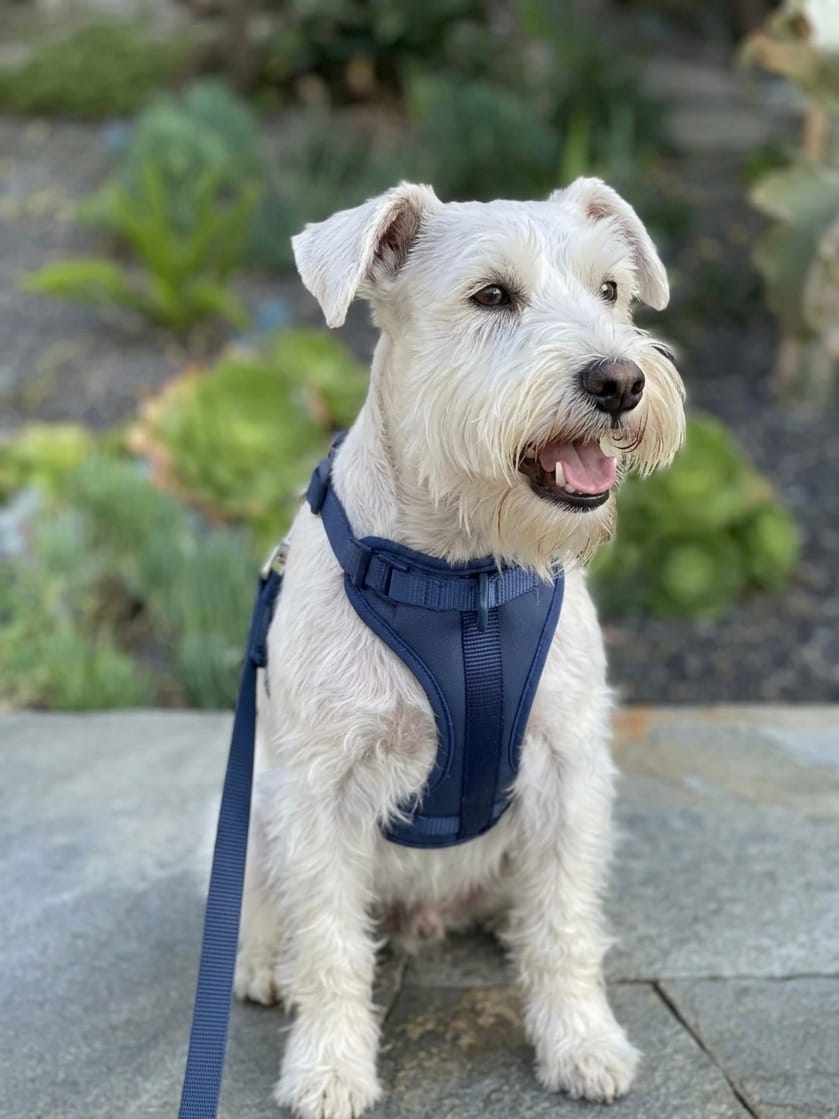
Why Westies Need a Harness Rather Than a Collar
Tracheal and airway concerns
Westies are among the small breeds with a documented predisposition to tracheal collapse and other airway conditions, including pulmonary fibrosis — a progressive lung disease that is particularly prevalent in this breed. While harness choice doesn’t address pulmonary fibrosis directly, removing collar pressure from the throat is a sensible precautionary measure for any dog with known respiratory vulnerability. For a breed where respiratory health is already a monitoring concern, eliminating a known aggravating factor for airway pressure costs nothing and provides a meaningful benefit.
Short thick neck proportions
A Westie’s neck is proportionally shorter and thicker than many small breeds of similar weight. A standard small-breed collar on this neck type sits close to the jaw and close to the shoulders simultaneously — there’s less room for adjustment range before the collar either presses upward against the jaw or downward against the shoulders when the dog moves. This restricted range makes collar fit less stable on a Westie than on a small breed with a longer neck, and a collar that shifts position during walking creates inconsistent pressure on the throat.
Terrier pulling behaviour
Westies were bred to work independently and to pursue quarry with determination. On a walk, this translates to a dog that pulls toward smells, reacts to movement, and lunges at other dogs without much concern for the handler’s preferences. On a collar, each of these pulling episodes concentrates force on the throat. A harness transfers the same force to the chest and shoulders, leaving the throat entirely unloaded — which matters more for a breed with respiratory considerations than it would for a healthy, non-reactive medium-sized dog.
How to Measure a Westie for a Harness
The Westie’s broad chest and short neck mean that both measurements matter more than they would for a more average small-breed proportions. Take both with the dog standing square on a flat surface.
Chest girth — broader than most small breeds
Measure at the widest point of the chest, directly behind the front legs. For most adult Westies, chest girth falls between 38 and 50cm — noticeably broader than a Chihuahua or Yorkie of comparable weight. This wider chest girth often puts Westies into small or even medium sizing in harness ranges, despite being a small-breed dog. A harness sized for the appearance of a small dog without accounting for the broad Westie chest will be too tight at the chest even if it looks right on the neck.
Neck girth — shorter and thicker than expected
Measure around the base of the neck where the harness neck opening will sit. For most adult Westies, neck girth falls between 28 and 36cm. The Westie’s neck is thick and muscular relative to its overall size, but also short — the distance from the base of the skull to the top of the shoulder is less than in longer-necked small breeds. This means the harness neck opening needs to be correctly sized and positioned — too wide and it will slide up toward the jaw; too narrow and it will restrict movement.
Checking fit once on
Two fingers should slide under the chest strap comfortably. The chest panel should sit below the shoulder blades — not across them — to allow full front leg movement. The neck opening should sit at the base of the neck, positioned clear of the trachea, without sitting so low that it digs into the front of the shoulder. Given the Westie’s short neck, there is less margin for positioning error than in longer-necked breeds — check that the neck strap sits flat and stable without pressing against either the jaw or the shoulder junction.
What to Look for in a Westie Harness
Wide adjustment range at the chest
The Westie’s broad chest means that a harness with a narrow chest adjustment range will either not close over the chest or close at the very limit of the adjustment — which typically means poor fit. Look for a harness whose stated chest girth range comfortably includes your dog’s measurement with room to adjust rather than sitting at the top of the range. A harness adjusted to its maximum is at the limit of its designed fit and will typically shift more during walking than one with adjustment range to spare.
Independent neck and chest adjustment
The Westie’s proportions — broad chest, thick short neck — often require different sizes at each adjustment point. A harness with independent neck and chest adjustment allows you to set each to the Westie’s actual measurements. A harness where the neck and chest adjust together via a single strap cannot accommodate this mismatch, and will either fit the chest at the expense of the neck or vice versa.
Front D-ring for pulling management
Westies pull and react — this is breed nature, not a training failure. A front D-ring on the chest panel redirects the dog toward the handler when it lunges, reducing the force and duration of each pulling episode. Over time, front-clip walking reduces pulling behaviour more effectively than back-clip walking, which simply allows the dog to continue pulling with nothing redirecting it. For a dog with a terrier’s conviction about following its nose, the front clip makes a tangible difference to walk quality.
Soft contact surfaces on the chest and armpits
Westies have a double coat — a dense, soft undercoat beneath a harsh outer coat. The harsh outer coat provides some protection against friction at the contact points, but the armpit area where the coat is typically thinner is still susceptible to rubbing from rough webbing edges. A harness with smooth or padded contact surfaces reduces friction at these points and prevents the gradual thinning of the undercoat that rough webbing causes over weeks of daily use.
Durable hardware and construction
Westies are physically robust and their enthusiasm on walks puts real stress on harness hardware. A front D-ring that sees a lunging Westie pulling against it multiple times per walk needs to be properly reinforced at its stitching point — a D-ring attached with thin or loose stitching is a weak point on a dog that pulls with conviction. Check that the D-rings, buckles, and their attachment stitching are proportionally solid relative to the forces the dog will put through them.
The MoonianPet No-Pull Harness for Westies
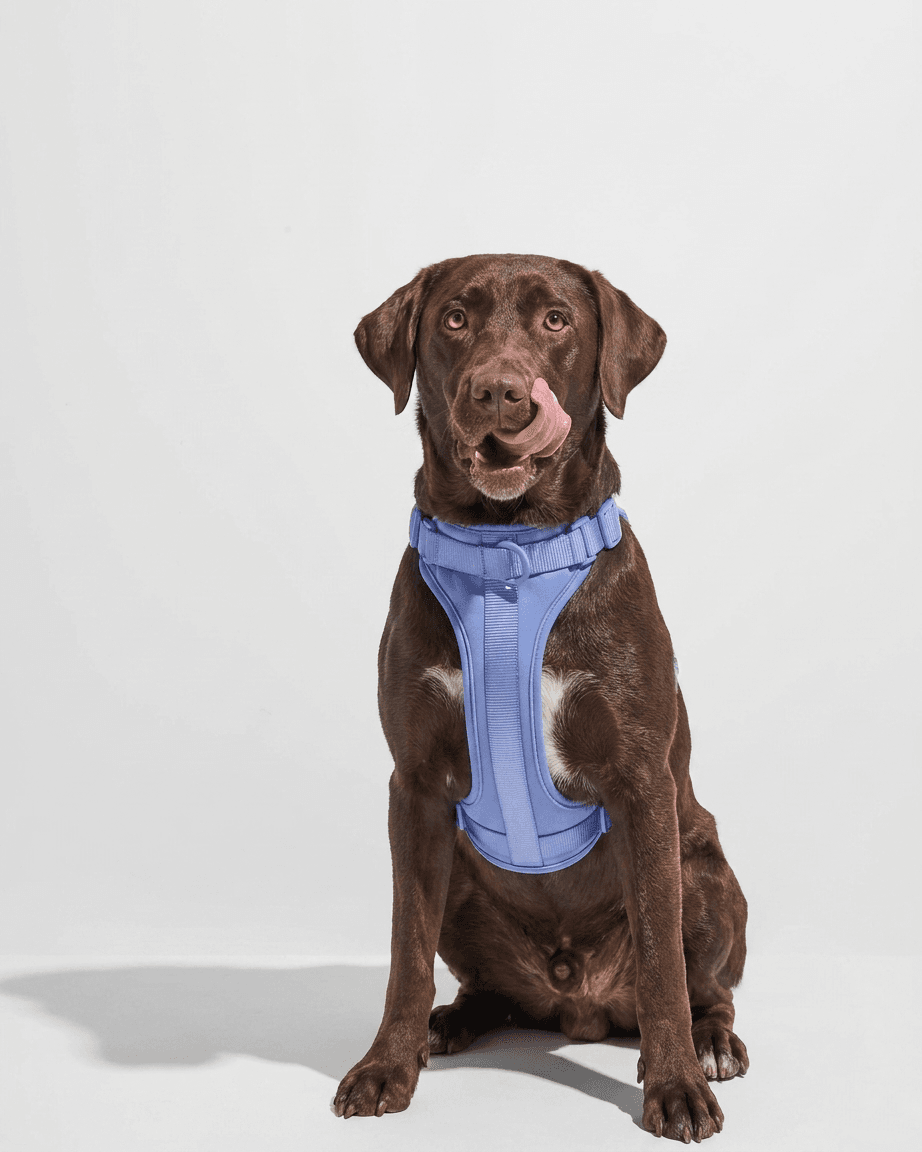
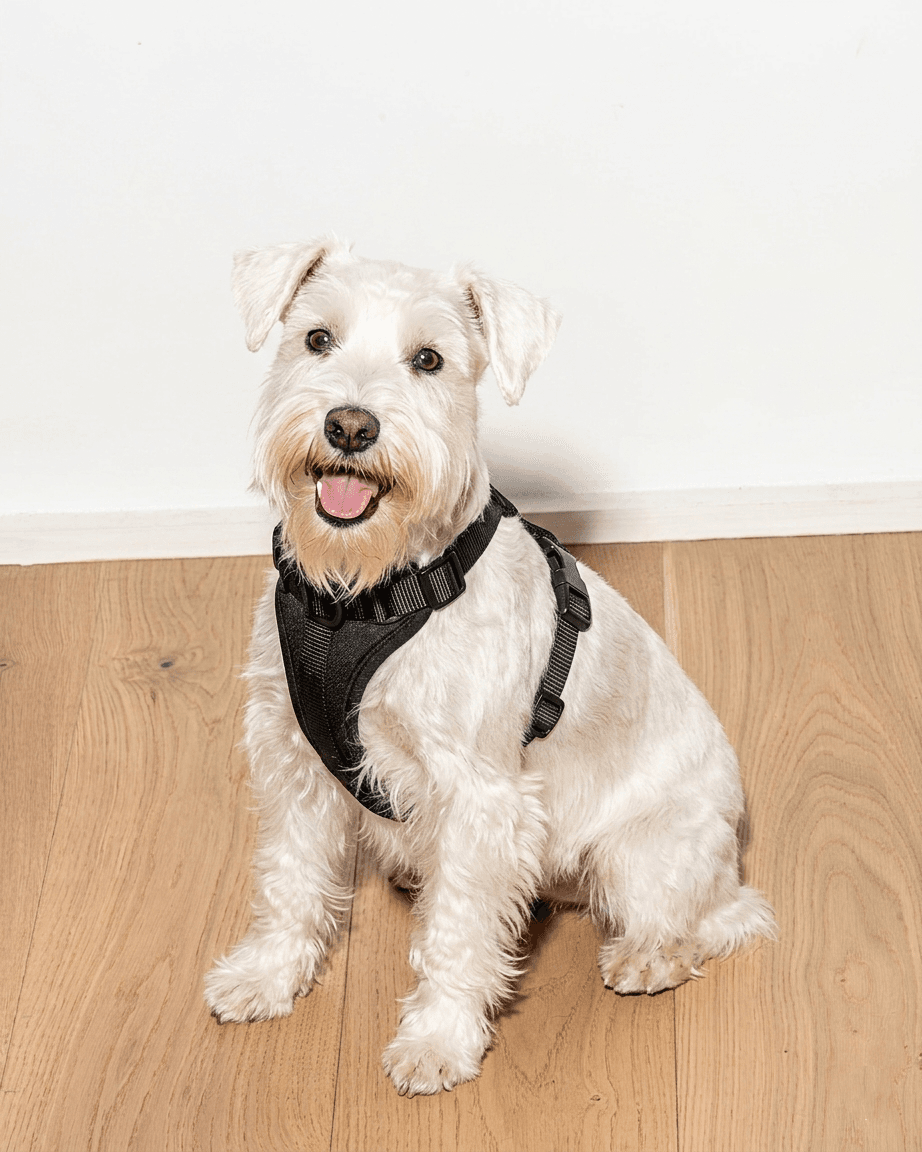
The MoonianPet No-Pull Dog Harness in Small fits a chest girth of 40–50cm — covering most adult Westies whose broad chest places them above the XS range of standard harnesses. The neoprene body is soft at the contact points and the three-point adjustment system allows independent fitting at the neck and chest to accommodate the Westie’s characteristic proportion mismatch between these two measurements.
Both front and back D-rings are included — the front clip for managing the pulling and reactive behaviour typical of terriers, the back clip for settled walking once the dog has calmed. The reinforced ABS safety buckles close with a positive click and hold securely under the load of a pulling small dog. Available in 11 colours and pairs with the matching Harness & Leash Set for a complete coordinated walking setup.
Measure chest girth first — most Westie owners are surprised to find their dog measures into small rather than XS — then use our dog harness size guide to confirm before ordering. If your Westie sits between small and medium on the chart, go with small and use the adjustment to fine-tune the fit.
Frequently Asked Questions
What size harness does a Westie need?
Most adult Westies need a Small harness rather than XS — their broad chest girth of 38–50cm typically places them above the XS range of most harness brands. Always measure chest girth first and match to the brand’s specific size chart. Assuming XS because the Westie is a small dog leads to the most common Westie harness fitting mistake — a harness that’s too tight across the chest even though it looks proportionally appropriate. Use our dog harness size guide to confirm the right size with your measurement.
Can a Westie wear a collar instead of a harness?
A flat collar for carrying ID tags is perfectly appropriate — most Westies wear a collar for identification without any issue. The concern is specifically about leash attachment to a collar for walking, given the Westie’s pulling behaviour and the breed’s predisposition to respiratory conditions including pulmonary fibrosis. Collar pressure during walking and pulling is an additional stressor the trachea and airway don’t need. The standard approach is a collar for ID and a harness for all walks. See our small dog collar guide for what to look for in a collar for a small terrier breed.
My Westie pulls constantly — will a harness help?
A front-clip no-pull harness will make a noticeable difference for most Westies that pull. The front D-ring redirects the dog toward the handler when it pulls forward, which interrupts the pulling pattern rather than allowing it to continue. Over time, most dogs reduce their pulling behaviour when walked consistently on a front clip. It’s not an instant fix and works best combined with basic leash manners training, but it’s significantly more effective at reducing pulling than a back-clip harness, which provides no redirection at all. See our guide on stopping leash pulling for training approaches that work alongside the front clip.
Will a harness restrict my Westie’s movement?
A correctly fitted harness should not restrict movement. The chest panel must sit below the shoulder blades — not across them — so the front legs can move through their full range of motion freely. If a Westie is shortening its stride or showing reluctance to trot freely in a harness, the chest panel is likely sitting too high and pressing against the shoulder blades. Recheck the position of the chest panel and, if it can’t be repositioned by adjustment alone, the harness may be the wrong design for the Westie’s proportions.
How do I get my Westie used to wearing a harness?
Westies are independent-minded and can be resistant to new equipment, particularly anything that involves handling their body. The most effective approach is gradual desensitisation: leave the harness on the floor for several days so the dog can investigate it freely, then reward any calm interaction. Progress to touching the harness to the dog’s body while rewarding, then to brief fittings with immediate rewards, building up to a complete fitting and short walk. Keep the entire process short and positive — a Westie that associates harness fitting with treats and a walk will accept it without resistance within a few days. Avoid restraining the dog firmly during fitting, as this tends to increase resistance.
For more on why small terrier breeds benefit from harness walking, see our dog collar vs harness guide. For harness sizing across small and medium breeds, see our dog harness size guide.
Wenyue
Wenyue is the founder of MoonianPet and writes about dog collars, harnesses, waterproof pet gear, and everyday dog care. Growing up with dogs inspired her lifelong interest in pet care and practical dog gear. Through MoonianPet, she researches dog collars, harnesses, waterproof materials, and everyday solutions that help active dogs stay comfortable during daily adventures.