
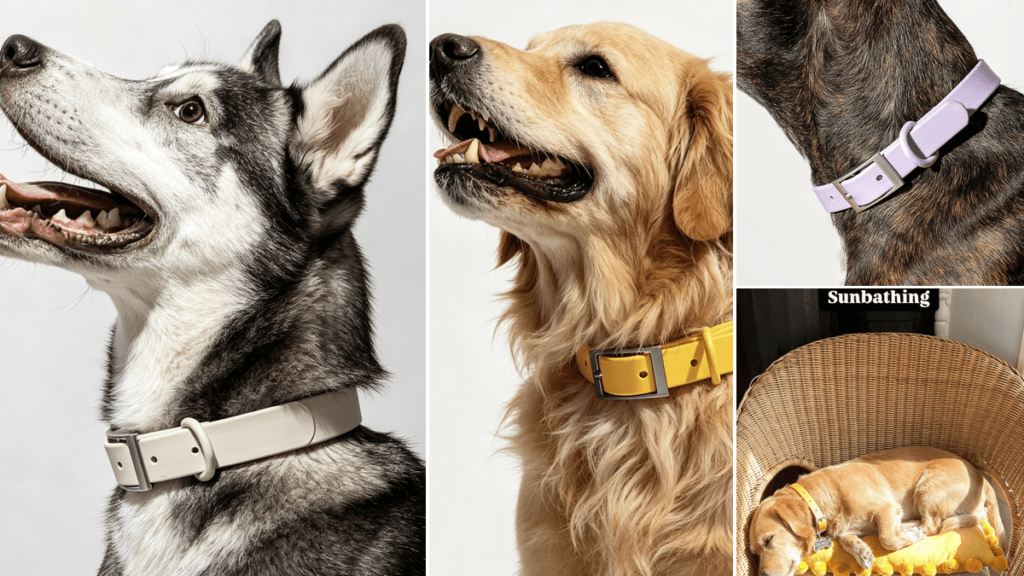
Walk into any pet shop and you’ll find collars at every price point, in every colour, made from materials that look similar on the shelf but behave very differently in real life. The label usually says “nylon” or “genuine leather” — but what does that actually mean for your dog?
The material your dog’s collar is made from affects how it feels against their skin, how long it lasts, how it handles water and dirt, and whether it stays hygienic after months of daily wear. It’s one of the most important decisions in choosing a collar — and most owners make it without thinking about it at all.
This guide covers every major dog collar material — nylon, leather, coated webbing, rope, cotton, and chain — with an honest look at the pros, cons, and which dogs each one actually suits.

Nylon: The Most Common Material and Its Limitations
Nylon is the default dog collar material worldwide. It’s inexpensive to produce, lightweight, and available in an almost infinite range of colours and widths. If you’ve owned a dog, you’ve almost certainly owned a nylon collar.
Nylon’s appeal is its accessibility. A basic nylon collar costs a few dollars, fits dogs of any size, and holds up well enough under light use. For puppies that are still growing through sizes, or for owners who want a low-cost spare collar, nylon makes practical sense.
The problems become apparent with regular outdoor use. Nylon is a woven fabric — which means it has texture, and texture absorbs things. Moisture from rain, swimming, or sweat soaks into the fibers and stays there. Bacteria establish themselves inside the weave and begin producing the distinctive musty odor that nylon collar owners know well. The fibers fray at stress points over time, and colours fade with UV exposure and washing.
For a full breakdown of nylon’s specific effects on dog skin, our guide on whether nylon is safe for dogs covers the detail.
Nylon at a glance
Inexpensive, lightweight, wide colour range
Absorbs moisture, develops odor, frays over time, rough on sensitive skin
Leather: Premium Feel, Significant Maintenance
Leather has been used for dog collars for centuries, and its reputation is partly deserved. A well-made leather collar has a density and smoothness that nylon can’t replicate — it sits flat against the neck, develops a natural patina over time, and feels genuinely premium in a way that fabric collars don’t.
For calm, dry-climate dogs with minimal water exposure, a quality leather collar can last years. But leather has a fundamental weakness: it and water are enemies.
Water causes leather to stiffen, crack, and eventually break down. A dog that swims regularly, lives in a rainy climate, or simply wears their collar through wet grass will accelerate leather’s degradation significantly. Regular conditioning with leather oil helps slow the process, but it can’t stop it — and it adds a maintenance burden that most owners find frustrating.
Leather is also porous, which means it absorbs sweat, skin oils, and bacteria over time. The smell from a well-worn leather collar is distinctive — earthy and organic in a way that some owners don’t mind, but which is difficult to fully clean away. And for owners who prefer vegan or cruelty-free products, leather is a non-starter regardless of performance. For a detailed head-to-head between leather and its modern alternative, see our BioThane vs leather comparison.
Leather at a glance
Premium feel, long-lasting in dry conditions, classic aesthetic
Degrades with water, high maintenance, absorbs odor, not vegan
Coated Webbing: The Modern Standard for Active Dogs
Coated webbing — sometimes called BioThane-style webbing — is the material that solves the problems that nylon and leather were never designed to handle. It starts with a strong nylon or polyester core for structural integrity, then seals it completely inside a smooth PVC coating. The result is a collar that combines the feel of leather with the performance of technical outdoor gear.
The sealed surface is what changes everything. Because there are no exposed fibers, water can’t soak in — it sits on the surface and wipes away. Bacteria have nowhere to anchor. Dirt doesn’t embed itself in texture. The collar that gets submerged in a lake comes out smelling exactly the same as it went in, dries in minutes, and is ready to wear again immediately.
Durability is equally strong. Coated webbing doesn’t fray, doesn’t fade with UV exposure, and doesn’t stretch or deform with repeated soaking the way nylon does. The fit and feel on day one is the fit and feel years later.
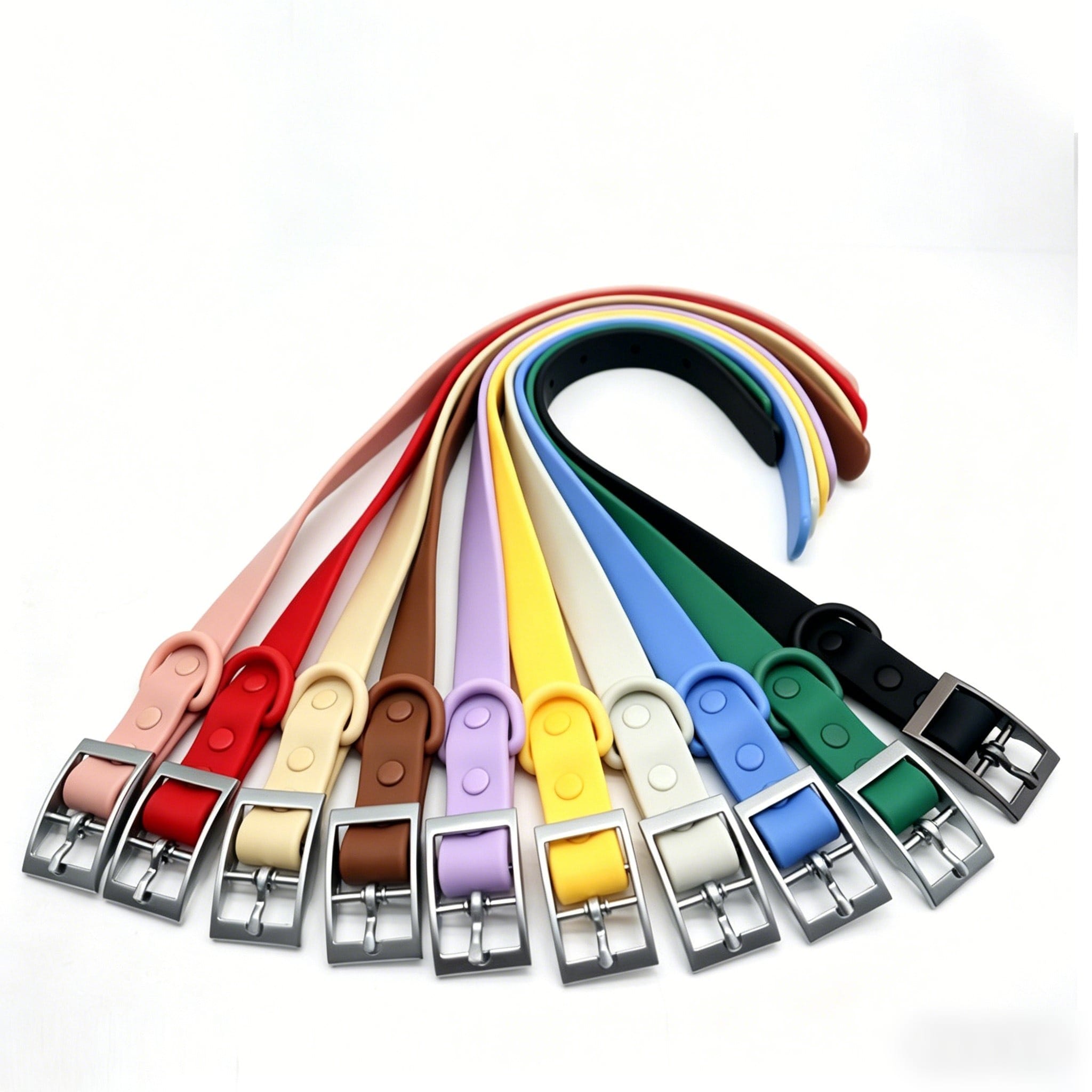
The MoonianPet Waterproof Dog Collar is built from premium coated webbing — available in 11 colours and 5 sizes, with zinc alloy hardware that resists corrosion. It’s the collar we’d recommend for any dog that spends time outdoors, swims, or simply wears their collar all day every day.

Coated webbing at a glance
100% waterproof, odor-proof, easy to clean, leather-like feel, durable, vegan
Higher price point than basic nylon
Rope and Cotton: Casual Use Only
Rope and cotton collars have a relaxed, bohemian aesthetic that suits certain owners and certain dogs. They’re typically softer against the skin than woven nylon, and the natural materials feel gentler at first contact.
But rope and cotton share all of nylon’s moisture problems — and then some. Natural fibers absorb water even more readily than synthetic ones, take longer to dry, and develop odor faster. Cotton degrades significantly faster than nylon under regular outdoor use, and rope collars can cause friction burns on dogs that pull hard.
Rope and cotton collars work best for calm, indoor dogs with minimal water or dirt exposure. For any active outdoor dog, they’re a poor long-term choice.
Rope/Cotton at a glance
Soft feel, natural aesthetic, inexpensive
Absorbs moisture heavily, degrades quickly, not suited for active or outdoor dogs
Chain and Metal: Specialist Use, Not Everyday Wear
Metal chain collars — including slip chains, choke chains, and prong collars — are specialist training tools rather than everyday collars. They function by applying pressure or correction during training, and their use is a matter of ongoing debate in the dog training community.
As everyday wear, metal collars are unsuitable for most dogs. They’re heavy, uncomfortable for extended wear, cold in winter, and can catch and break coat if worn continuously. They also provide no identification attachment in the way that a standard flat collar with a D-ring does.
If you’re using a chain collar for training purposes, it should be used under professional guidance and removed after each session. It should never be left on an unsupervised dog.
Chain/Metal at a glance
Specialist training applications
Not suitable for everyday wear, heavy, can damage coat, requires professional guidance
Full Material Comparison
| Material | Waterproof | Odor-proof | Easy to clean | Durability | Skin-friendly | Best for |
|---|---|---|---|---|---|---|
| Nylon | No | No | Partly | Medium | Partly | Puppies, light use |
| Leather | No | No | No | Medium | Yes | Dry climates, calm dogs |
| Coated Webbing | Yes | Yes | Yes | High | Yes | All dogs, all conditions |
| Rope/Cotton | No | No | No | Low | Partly | Indoor, calm dogs only |
| Chain/Metal | Yes | Yes | Yes | High | No | Training only |
How to Choose the Right Material for Your Dog
The right collar material depends on how your dog actually lives — not what looks nice on a shelf.
Your dog swims or gets wet regularly
Coated webbing only. Nylon and leather both degrade with repeated water exposure and develop persistent odor. A waterproof collar that dries in minutes is the only practical choice for swimming dogs.
Your dog has sensitive skin or recurring neck irritation
Coated webbing or quality leather. The smooth, non-porous surface of coated webbing eliminates the friction and bacterial issues that cause nylon collar irritation. If you’ve been treating skin issues around the neck without success, changing the collar material is worth trying first.
You want something that lasts for years
Coated webbing. It doesn’t fray, fade, or stretch. The collar you buy today will fit and perform the same way in three years.
You have a growing puppy
Nylon is fine as a temporary solution while your puppy grows through sizes. Once they reach adult size, switch to a coated webbing collar that will last.
You prefer a classic aesthetic
Coated webbing has the smooth, leather-like appearance of a quality leather collar — without the maintenance, the water vulnerability, or the animal product. Most people who handle a coated webbing collar for the first time are surprised by how closely it resembles premium leather.


The MoonianPet Collar: Built From the Best Material Available
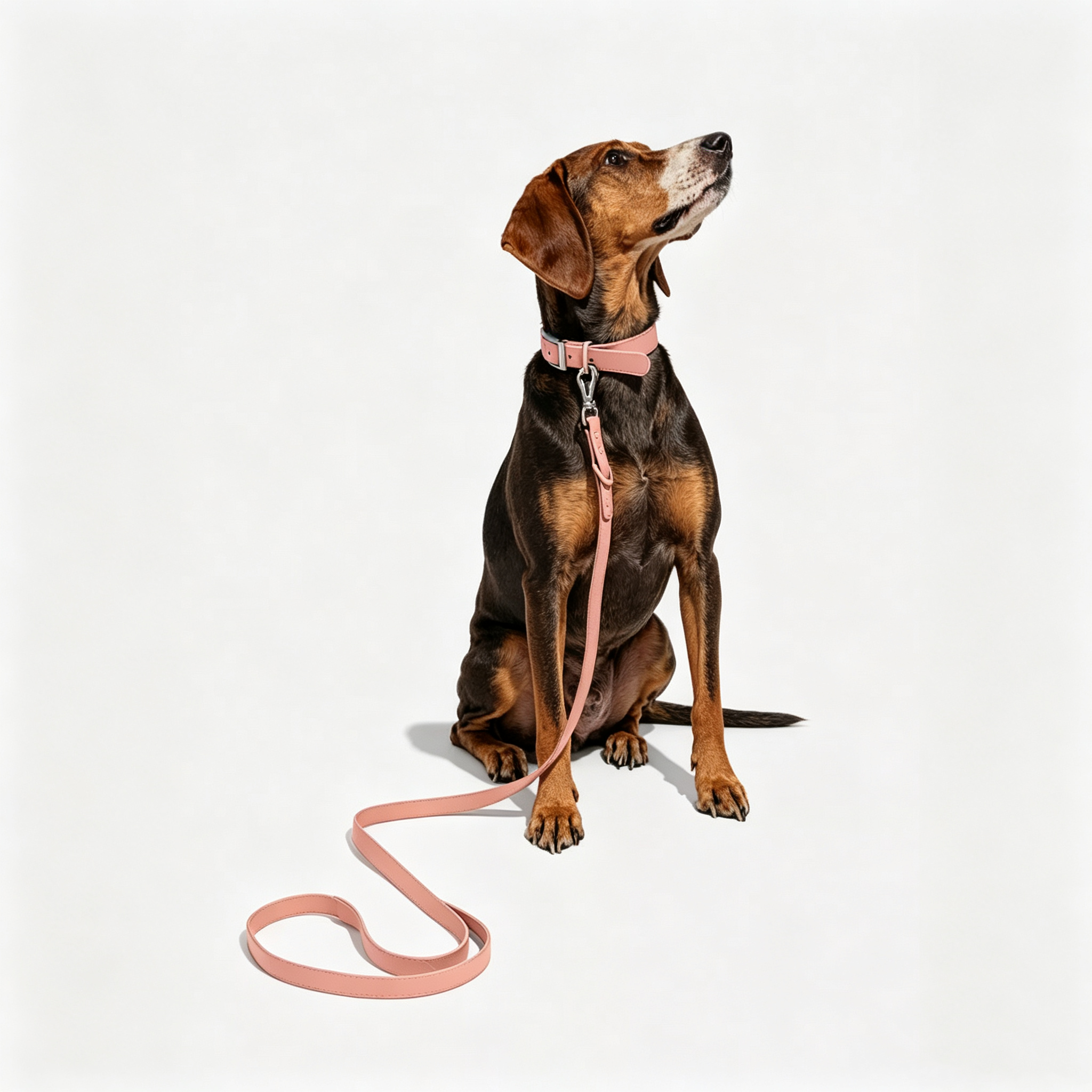
After looking at every major collar material, coated webbing stands out as the clear choice for active, everyday wear — and the MoonianPet Waterproof Dog Collar is built from premium coated webbing from XS to XL, in 11 colours, with zinc alloy hardware that handles everything the elements can throw at it. Complete the setup with the MoonianPet Waterproof Leash — the same coated webbing construction from collar to clip.
Not sure whether a collar or harness is right for your dog? Our guide on collar vs harness helps you decide — or explore the MoonianPet No-Pull Harness if your dog pulls strongly on walks.
Want to know which colour suits your dog best? Our dog collar colour guide covers all 11 options with breed-specific recommendations. And if you’re not sure which size to order, our sizing guide walks you through measuring in under a minute.
Frequently Asked Questions
What is the safest collar material for dogs?
Coated webbing is currently the safest option for everyday wear — particularly for active dogs. Its smooth, non-porous surface eliminates the friction and bacterial problems associated with nylon, and it handles water exposure without degrading the way leather does. For a deeper look at nylon’s specific risks, our post on whether nylon is safe for dogs covers the detail.
What material is best for a dog collar that gets wet?
Coated webbing is the only collar material that is genuinely waterproof. Nylon absorbs water and takes hours to dry. Leather degrades with repeated water exposure. Coated webbing repels water entirely — it dries in minutes and never develops odor from moisture. See our post on dog collar smell after swimming for the full picture.
Is BioThane the same as coated webbing?
BioThane is a registered brand name for coated webbing made by a specific US manufacturer. BioThane-style coated webbing refers to products using the same construction — a strong inner core bonded with a smooth PVC or TPU outer coating — without being made by that specific company. The performance characteristics are the same: waterproof, odor-proof, easy to clean, and durable.
What collar material lasts the longest?
Coated webbing consistently outlasts nylon and leather under real-world conditions. Because it doesn’t absorb moisture, it doesn’t degrade from the inside the way porous materials do. With basic care, a quality coated webbing collar should last several years of daily active use.
What width collar should I choose?
Collar width should scale with dog size. Smaller breeds suit a narrower collar that doesn’t overwhelm their neck. Medium and large breeds benefit from a wider collar that distributes pressure more evenly. Our sizing guide covers both width and length recommendations for every size.
Ready to choose? Browse the full collar range in 11 colours and 5 sizes, or save $8 with the matching Collar and Leash Set. For a detailed head-to-head comparison of the top three materials, read our full dog collar material guide. And if you’re weighing up a collar vs harness for your dog, our collar vs harness guide covers when each makes sense.
About the Author
Wenyue
Wenyue is the founder of MoonianPet and writes about dog collars, harnesses, waterproof pet gear, and everyday dog care.
Growing up with dogs inspired her lifelong interest in pet care and practical dog gear. Through MoonianPet, she researches dog collars, harnesses, waterproof materials, and everyday solutions that help active dogs stay comfortable during daily adventures.