
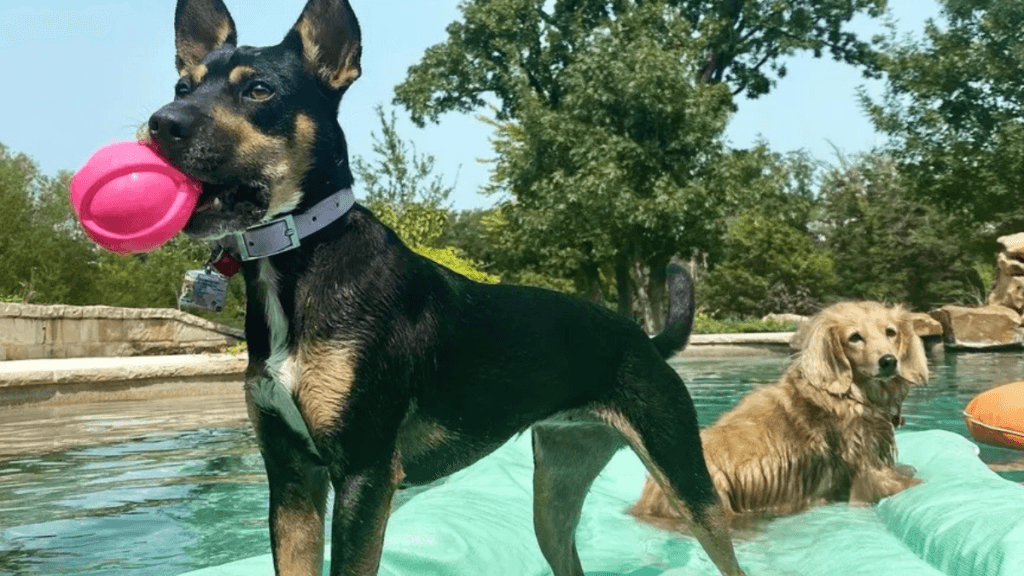
Best Dog Collar for Swimming: What to Look For and Why It Matters
Most dog collars are not designed for dogs that swim. They are designed to look good on a shelf, hold up to a daily walk, and last a season or two before being replaced. A dog that swims regularly puts completely different demands on a collar — and most collars fail those demands within months.
The problems are predictable: the collar absorbs water and takes hours to dry, bacteria establish themselves inside the wet fibers, the material degrades faster than expected, and within a few months you have a collar that smells, looks rough, and needs replacing. Multiply that across a dog that swims three or four times a week through summer and the collar becomes a recurring expense and a recurring hygiene problem.
This guide covers what a swimming dog actually needs from a collar, why most collars fall short, and what to look for if you want one that handles water without any of those problems.

Why Regular Collars Fail in Water
The core problem with most dog collars and water is absorption. Nylon — the material used in the vast majority of dog collars — is a woven fabric. When submerged, it saturates completely, absorbing not just water but everything that comes with it: bacteria from the water, organic matter from the dog’s skin, mud and debris from the environment.
Once wet, nylon dries slowly — typically two to six hours. During that window, the bacteria trapped inside the wet fibers multiply rapidly, producing the musty, sour odor that swimming dog owners know well. By the time the collar feels dry, the bacterial colony is already established. Each subsequent swim makes the problem worse, because the colony grows and the fiber structure degrades with each soaking cycle.
Leather has a different but equally serious problem. Water causes leather to stiffen and crack. A leather collar worn through regular swims will show visible structural damage within months — and the smell from wet, degrading leather is significant.
For the full picture of why swimming makes collars smell and how the degradation process works, our post on dog collar smell after swimming covers the detail. The short version: if your dog swims regularly, a standard collar is not built for the job.
What a Swimming Dog Actually Needs From a Collar
Not all waterproof claims are equal. A collar described as water-resistant is not the same as one that is genuinely waterproof at the material level. Here are the four things that actually matter for a dog that swims:
1. A non-porous surface that water cannot penetrate
The only way to prevent bacterial build-up is to prevent water from getting inside the collar material in the first place. Water-resistant coatings on nylon slow absorption — they do not stop it. A genuinely waterproof collar has a sealed surface with no exposed fibers at all.
2. Fast drying time
A collar that dries in minutes rather than hours eliminates the prolonged damp period where bacteria multiply. For dogs that swim multiple times a day — at the beach or in a pool — this is particularly important. A collar that is always damp is always a bacterial breeding ground.
3. Corrosion-resistant hardware
The buckle and D-ring are just as exposed to water as the collar material. Standard steel hardware rusts. Zinc alloy and marine-grade stainless steel do not. A collar with corrosion-resistant hardware maintains its structural integrity and its appearance through years of water exposure — saltwater included.
4. Structural stability in wet conditions
Some collar materials stretch slightly when wet — which means the fit changes between dry and submerged states. A collar that fits correctly on land should fit just as correctly in water. Coated webbing maintains its shape and dimensions whether wet or dry, which means the fit your dog has on the beach is the fit they have in the sea.

How the Main Collar Materials Handle Swimming
| Material | Absorbs water? | Drying time | Smell after swimming | Verdict for swimmers |
|---|---|---|---|---|
| Nylon | Yes — fully saturates | 2 to 6 hours | Strong, worsens over time | Not suitable |
| Leather | Yes — porous surface | 4 to 12 hours | Musty and degrades fast | Not suitable |
| Coated Webbing | No — sealed surface | Minutes | None | Ideal choice |
| Rope/Cotton | Yes — absorbs heavily | 6 to 12 hours | Strong, degrades quickly | Not suitable |
Why Coated Webbing Is the Only Practical Choice for Swimming Dogs
Coated webbing — the material used in the MoonianPet Waterproof Dog Collar — was originally developed for working dog and equestrian equipment precisely because it handles wet conditions that fabric-based materials cannot. The construction is simple: a strong nylon or polyester core is sealed inside a smooth PVC coating. The result is a collar that has no exposed fiber surface at all.
When a dog wearing a coated webbing collar jumps in a lake, the water sits on the surface. When they come out, a quick shake removes most of it. The collar is dry within minutes. There is no damp period, no bacterial growth, no smell — just a clean collar ready for the next swim.
The durability advantage is equally significant. Because coated webbing does not absorb moisture, it does not degrade from the inside the way nylon does. The repeated soaking and drying cycles that cause nylon to fray, stiffen, and lose structural integrity have no effect on coated webbing. A coated webbing collar worn through daily swims for two years will look and perform the same as it did on day one.
The zinc alloy hardware on the MoonianPet collar completes the picture — it does not rust or corrode with repeated saltwater or chlorine exposure, which is the other common failure point on swimming dog collars. For a broader look at how coated webbing compares to other materials, our dog collar material guide covers every option in detail.

Practical Tips for Dogs That Swim Regularly
Leave the collar on in the water
With a coated webbing collar, there is no reason to remove it before swimming. The collar will not absorb water, will not smell, and will not degrade from the exposure. Keeping the collar on also means your dog is always identifiable — important in busy beach or lake environments where dogs can get separated from their owners.
Rinse after saltwater or pool swims
Salt and chlorine do not damage coated webbing, but a quick fresh water rinse after saltwater or pool swimming is good practice — for the collar and for your dog’s coat. It takes thirty seconds and removes any residue that could otherwise dry on the surface.
Check fit after every few swims
Coated webbing does not stretch with repeated water exposure the way nylon does, so the fit should remain consistent. But it is worth checking the two-finger rule periodically — particularly for puppies who are still growing. See our collar sizing guide for how to measure and check fit correctly.
Choose a visible colour for open water
In open water — lakes, sea, rivers — a bright collar colour makes your dog easier to spot at distance. Yellow, red, and sky blue are all highly visible against dark water. See our collar colour guide for a full breakdown of which colours work best in different environments.

The Best Collar for a Dog That Loves the Water
The MoonianPet Waterproof Dog Collar is built from premium coated webbing — the same material used in professional working dog gear — with zinc alloy hardware that handles saltwater, chlorine, and everything else the water throws at it. It comes in 11 colours and 5 sizes from XS to XL, and the fit you set on day one stays exactly the same after two years of daily swims.
If your dog swims and pulls, pairing the collar with the MoonianPet Waterproof Leash gives you a fully waterproof setup from clip to collar — same material, same performance, same instant-dry surface. Or consider the MoonianPet No-Pull Harness for dogs that need more control in the water or on walks after a swim.
Not sure which size to order? Our collar sizing guide walks you through measuring in under a minute.
Frequently Asked Questions
Should I take my dog’s collar off when they swim?
With a nylon or leather collar, removing it before swimming is sensible — it prevents the collar absorbing water and developing odor. With a coated webbing collar, there is no need. The sealed surface means the collar will not absorb water, will not smell, and will not degrade from the swim. Leave it on.
Is chlorine bad for dog collars?
Chlorine accelerates the breakdown of nylon fibers — causing faster fraying, fading, and odor development. It also damages leather, stripping natural oils and causing cracking. Coated webbing is unaffected by chlorine because the sealed PVC surface has no fibers to degrade. A quick fresh water rinse after pool swimming is all that is needed.
What about saltwater — does it damage waterproof collars?
Saltwater is one of the harshest environments for collars. It accelerates corrosion on metal hardware and causes nylon to degrade faster than fresh water. On a coated webbing collar with zinc alloy hardware, saltwater has no meaningful effect on either the material or the hardware. Rinse with fresh water after saltwater swims as good practice, but the collar will not be damaged by the exposure.
How do I clean a waterproof collar after a swim?
Wipe with a damp cloth — that is genuinely all that is needed for routine cleaning after a swim. For a deeper clean after particularly muddy water, mild soap and water works perfectly. The non-porous surface dries within minutes. For a full cleaning guide covering all collar types, see our post on how to clean a dog collar.
Can my dog swim with a harness on?
Most harnesses can be worn during a swim, but some bulkier designs restrict movement in the water. A well-fitted, lightweight harness like the MoonianPet No-Pull Harness should not significantly impede a dog’s swimming. If your dog swims frequently and also needs a harness for walking, our collar vs harness guide covers when to use each.
Want to understand more about why collars smell after swimming and how to prevent it? Read our posts on dog collar smell after swimming and why dog collars smell. Or if you are choosing between collar materials, our dog collar material guide covers every option in full.
About the Author
Wenyue
Wenyue is the founder of MoonianPet and writes about dog collars, harnesses, waterproof pet gear, and everyday dog care.
Growing up with dogs inspired her lifelong interest in pet care and practical dog gear. Through MoonianPet, she researches dog collars, harnesses, waterproof materials, and everyday solutions that help active dogs stay comfortable during daily adventures.