
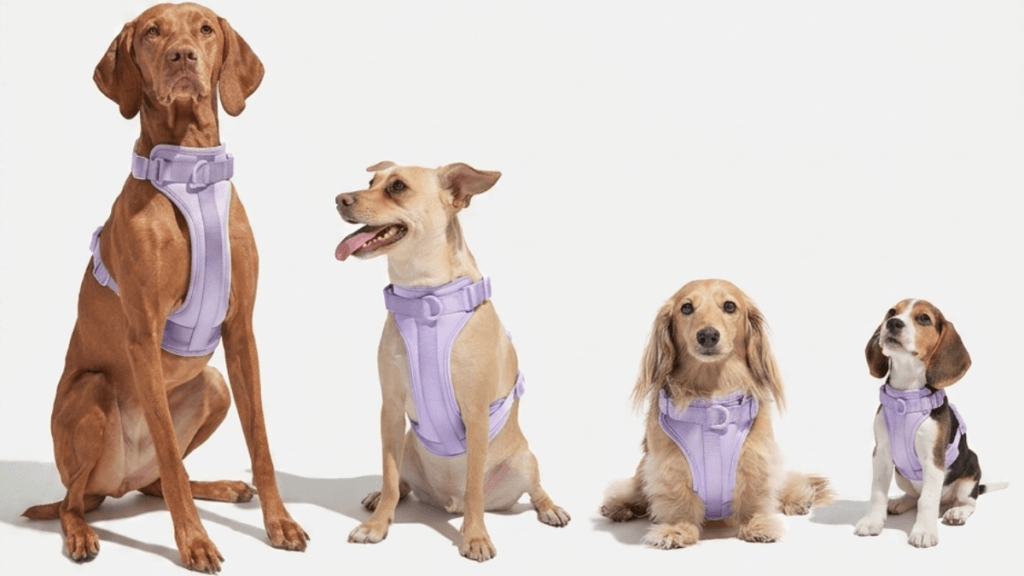
Not all dog harnesses are built for walking. Some are designed for working dogs, some for car travel, some for hiking. A walking harness has a specific set of requirements — it needs to be comfortable enough for daily wear, secure enough to handle a dog that pulls, and easy enough to put on that you will actually use it every day.
The market is full of options at every price point, with different clip positions, materials, and adjustment systems. Most of the differences that get advertised — color options, branding, pattern designs — do not affect how well the harness actually works on a walk. The things that do matter are simpler and more practical than most product listings suggest.
This guide covers exactly what makes a good dog walking harness, how to match those features to your dog’s size and behavior, and what to avoid when buying.
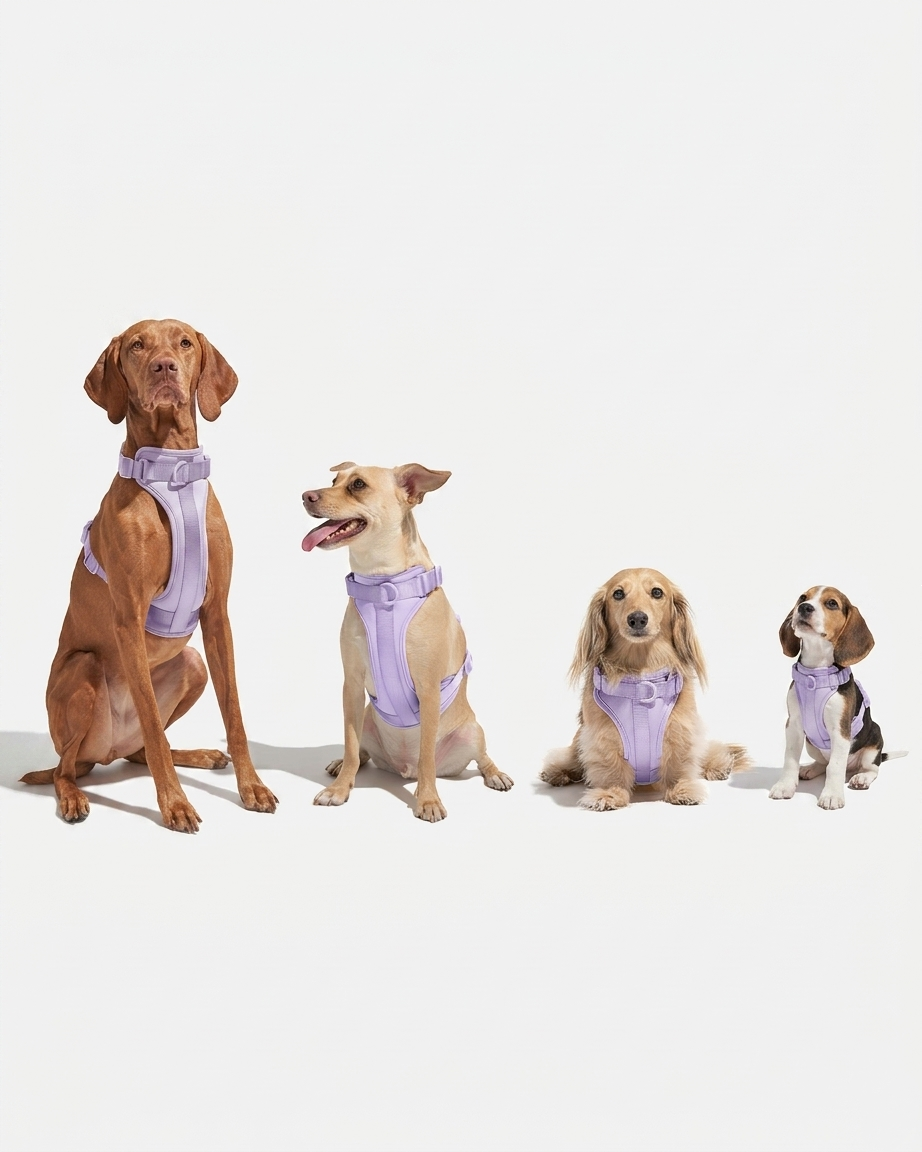
What Makes a Good Dog Walking Harness
A walking harness needs to do several things simultaneously — stay in place, distribute pressure safely, allow natural movement, and give the handler control. These are the features that determine whether it succeeds:
A wide adjustment range
Dogs within the same size category vary enormously. A harness with multiple adjustment points — neck, chest, and belly — can accommodate that variation and stay snug regardless of your dog’s specific proportions. A single-adjustment harness that relies on one buckle to fit every dog in its size range rarely fits any of them well.
Padding at the right contact points
The chest piece and the straps that pass under the front legs carry the most pressure during a walk. Padding at these points prevents chafing and makes the harness comfortable for longer outings. Neoprene is the best padding material for walking harnesses — it is soft, durable, and does not compress flat after a few weeks of use the way thin foam padding does.
A front D-ring for pullers
If your dog pulls on the leash, a front clip harness is the single most effective tool available without resorting to correction-based methods. The front D-ring on the chest redirects pulling momentum sideways rather than letting it go straight forward. For dogs that already walk calmly, a back clip harness is perfectly adequate — but having both options on one harness gives you flexibility as your dog’s behavior changes.
Hardware rated for your dog’s size
Buckles, D-rings, and adjustment sliders need to be appropriate for the forces your dog generates. Zinc alloy hardware is significantly stronger than lightweight metal or plastic alternatives and resists the repeated stress of daily use without deforming or breaking. For small dogs, lightweight hardware is fine. For medium and large dogs, heavier-duty construction matters.
Easy to put on and take off
A walking harness gets used every day. If it takes more than thirty seconds to put on, most owners start leaving it on between walks rather than fitting it fresh each time — which creates its own fit and comfort issues. A quick-release buckle that snaps and locks with a clear click is the standard to look for. Avoid harnesses that require threading the dog’s legs through multiple loops simultaneously.

Harness vs Collar for Walking: Which Is Better?
For most dogs — especially those that pull, lunge, or have any respiratory sensitivity — a harness is the better walking tool. A collar concentrates all leash pressure on the neck and throat. A harness distributes that same pressure across the chest and shoulders, where it causes significantly less strain.
The practical difference is most obvious on dogs that pull consistently. A dog pulling against a collar is applying pressure to their trachea on every lunge. The same dog pulling against a harness is applying pressure to their chest — a much larger, more resilient surface that handles the force without any risk of airway damage.
For a full comparison of the two options, our collar vs harness guide covers every scenario in detail. For most owners whose dogs pull or are still learning leash manners, the harness is the right starting point.
Types of Dog Walking Harness
Walking harnesses fall into a few main categories. Understanding the differences helps you choose the right one for your dog’s specific needs:
No-pull harness (front clip)
The leash attaches to a D-ring on the chest. When the dog pulls, the leash redirects them sideways rather than allowing forward momentum. The most effective everyday walking harness for dogs that pull. Most no-pull harnesses also have a back clip for use once leash manners improve.
Standard back-clip harness
The leash attaches between the shoulder blades. Comfortable and natural for calm walkers, but does nothing to discourage pulling. Good choice for dogs that already walk well or for running and hiking where natural movement matters more than directional control.
Step-in harness
The dog steps into loops that sit around each leg, then the harness clips over the back. Easy to put on dogs that resist having things pulled over their head, but typically only has a back clip and limited adjustment range. Better for calm walkers than for strong pullers.
Dual-clip harness
Has both a front chest D-ring and a back D-ring, giving you the option to use either depending on the walk. The most versatile option for everyday use — front clip for training walks and high-distraction environments, back clip for quieter walks once leash manners improve. This is the configuration on the MoonianPet harness.

Choosing a Walking Harness by Dog Type
Dogs that pull strongly
A dual-clip no-pull harness with a front D-ring is the right choice. Start every walk with the leash clipped to the front ring. Consistent front-clip use combined with reward-based training produces the fastest improvement in leash manners. Once pulling reduces significantly, you can trial the back clip on quieter walks.
Small dogs and toy breeds
For small dogs — particularly breeds prone to tracheal issues like Chihuahuas, Yorkshire Terriers, and Toy Poodles — a harness is not optional, it is a health consideration. Choose a lightweight harness (under 150g for XS dogs) with neoprene padding and a wide adjustment range. See our dedicated guide on harnesses for small dogs for breed-specific advice.
Large and extra-large breeds
For large dogs, hardware quality and chest strap construction matter more than anything else. The forces involved on a 70-pound dog pulling at full effort require zinc alloy hardware and a chest piece that keeps the front D-ring centered under load. See our guide on no-pull harnesses for large dogs for size-specific advice.
Puppies
Start puppies on a harness rather than a collar — their tracheas are delicate and leash manners take time to develop. A lightweight, adjustable harness that can be sized up as they grow is ideal. Re-check the fit every two to four weeks during the first six months, as puppies grow quickly and an ill-fitting harness causes more problems than no harness at all.
Senior dogs
Older dogs benefit from the pressure distribution of a harness over a collar, particularly if they have any neck, spine, or joint issues. Choose a harness with soft neoprene padding that does not put stress on the shoulders during a walk. A back clip is usually more appropriate for senior dogs than a front clip — the turning force from a front clip can be uncomfortable for dogs with reduced mobility.

How to Fit a Walking Harness Correctly
A walking harness only works when it fits correctly. The two-finger rule applies to every strap: you should be able to slide two fingers comfortably underneath the neck strap, chest strap, and belly strap — but not three. Too loose and the harness rotates and loses effectiveness. Too tight and it restricts movement and causes chafing.
Always fit on a standing dog. A sitting dog has a compressed chest, which gives an inaccurate reading of how the harness will feel during a walk. Check the two-finger rule with your dog standing and moving naturally.
For a full step-by-step fitting guide, see our post on how to put on a no-pull dog harness. For sizing before you buy, our dog harness size guide covers chest and neck measurement in under two minutes.
What to Avoid When Buying a Walking Harness
Single-point adjustment
A harness with only one adjustment point cannot accommodate the variation in body shape within a single size range. If it fits one body shape, it will not fit another. Look for at least three adjustment points: neck, chest, and belly.
Thin mesh padding
Mesh padding compresses quickly, especially under the pressure of a walking dog. After a few weeks, it provides little more cushioning than bare webbing. Neoprene padding maintains its structure and softness through months of daily use.
Plastic D-rings on medium and large dogs
Plastic D-rings are adequate for small, calm dogs. For any medium or large dog — particularly pullers — plastic hardware flexes and deforms under load. A metal D-ring that rotates out of position under pulling force undermines the entire no-pull mechanism.
Harnesses that require threading legs through loops
Step-in harnesses that require threading both front legs through separate loops simultaneously are difficult to use on dogs that do not cooperate during dressing. A slip-over-the-head design with a single quick-release buckle takes seconds and works with even the most wriggly dogs.
A Walking Harness Built for Daily Use
The MoonianPet No-Pull Dog Harness is designed specifically for everyday walking — dual D-rings for front and back clip options, 3-point tri-glide adjustment, neoprene padding on the chest and straps, and a quick-release buckle that snaps on in seconds. Available in 5 sizes from XS to XL and 11 colors.
Pair it with the MoonianPet Waterproof Leash for a fully matched walking setup, or save with the Harness & Leash Set.
Frequently Asked Questions
Is a harness better than a collar for walking?
For most dogs — especially those that pull or are still learning leash manners — yes. A harness distributes leash pressure across the chest and shoulders instead of concentrating it on the neck and throat. For breeds prone to respiratory issues, a harness is a health consideration rather than just a preference. For calm dogs that never pull, either works fine.
Can I leave the harness on between walks?
A walking harness is designed for active use, not all-day wear. Leaving it on between walks can cause skin irritation under the straps and creates snagging hazards if the dog is unsupervised. The quick-release buckle on the MoonianPet harness takes seconds to clip and unclip — it is faster to remove it between walks than to manage the issues that come from leaving it on.
How do I know if the walking harness fits correctly?
The two-finger rule: slide two fingers underneath the neck strap, chest strap, and belly strap. You should feel light resistance — snug enough that the straps do not slide around, loose enough that the fingers move through without forcing. The front D-ring should sit flat and centered on the chest. Walk your dog a few steps and check that nothing has rotated or shifted.
What is the difference between a no-pull harness and a regular walking harness?
A regular walking harness typically has only a back clip — the leash attaches between the shoulder blades. A no-pull harness adds a front chest D-ring, which redirects pulling momentum sideways instead of allowing it to go straight forward. Both are walking harnesses, but a no-pull harness has the additional front clip feature specifically for dogs that pull.
How do I measure my dog for a walking harness?
Measure chest girth first — wrap a soft tape measure around the widest point of the chest, just behind the front legs, with your dog standing. This is the primary sizing measurement. Then measure neck girth as a secondary check. Full instructions and the complete size chart are in our dog harness size guide.
Still deciding between a collar and a harness for walks? Our collar vs harness guide covers every scenario. Or if your dog pulls specifically, see our guide on front clip vs back clip harnesses for the full breakdown.
About the Author
Wenyue
Wenyue is the founder of MoonianPet and writes about dog collars, harnesses, waterproof pet gear, and everyday dog care.
Growing up with dogs inspired her lifelong interest in pet care and practical dog gear. Through MoonianPet, she researches dog collars, harnesses, waterproof materials, and everyday solutions that help active dogs stay comfortable during daily adventures.