

When we think about walking our dogs, we usually focus on the route, the weather, and making sure we have enough treats. Rarely do we think about the weight of the gear draped over our dog’s shoulders. But for an everyday walking routine, the weight of a harness matters more than most owners realize. Finding the best lightweight dog harness isn’t just about making things easier for you; it’s about protecting your dog’s joints, preventing fatigue, and ensuring they can move naturally without unnecessary bulk dragging them down.
I learned this the hard way with my own dog. A few years ago, I bought a heavily padded, rugged tactical harness for my active Pomeranian. It looked incredibly durable, and I thought the thick material would protect him on our woodland trails. But within a week, I noticed he was lagging behind on our usual 30-minute neighborhood loop. He started sitting down halfway through the walk, refusing to move forward. At first, I thought he was sick. Then I realized the harness itself weighed nearly half a pound — a significant load for a 12-pound dog. The moment I swapped it for a lightweight everyday harness, his energy returned instantly.
In this guide, we’ll explore why a lightweight harness is essential for daily use, what features you should prioritize, and how to choose the perfect fit for your dog’s specific body shape.

Why Weight Matters in an Everyday Harness
An everyday harness is something your dog wears for hours each week. Over time, even a few extra ounces of unnecessary hardware, thick webbing, or heavy metal D-rings can alter your dog’s natural gait and cause physical strain.
Joint and Muscle Strain
Dogs carry the weight of a harness directly over their shoulders and chest. If the harness is too heavy, they will naturally adjust their posture to compensate, which can put extra stress on their elbows and shoulders. For growing puppies and senior dogs, this strain can lead to long-term mobility issues.
Overheating and Breathability
Heavy harnesses are often made with thick layers of dense material that trap body heat. During summer walks or energetic play sessions, a lightweight harness allows air to circulate freely, keeping your dog’s core temperature regulated and preventing overheating.
Freedom of Movement
A bulky harness can restrict the full range of motion in a dog’s front legs. The best lightweight dog harness allows the shoulder blades to move freely, ensuring your dog can trot, run, and jump without feeling like they are wearing a piece of heavy armor.
Key Features of the Best Lightweight Dog Harness
A lightweight harness shouldn’t sacrifice durability or safety. The trick is finding gear that uses modern, high-strength materials that weigh a fraction of traditional nylon. Here is what to look for:
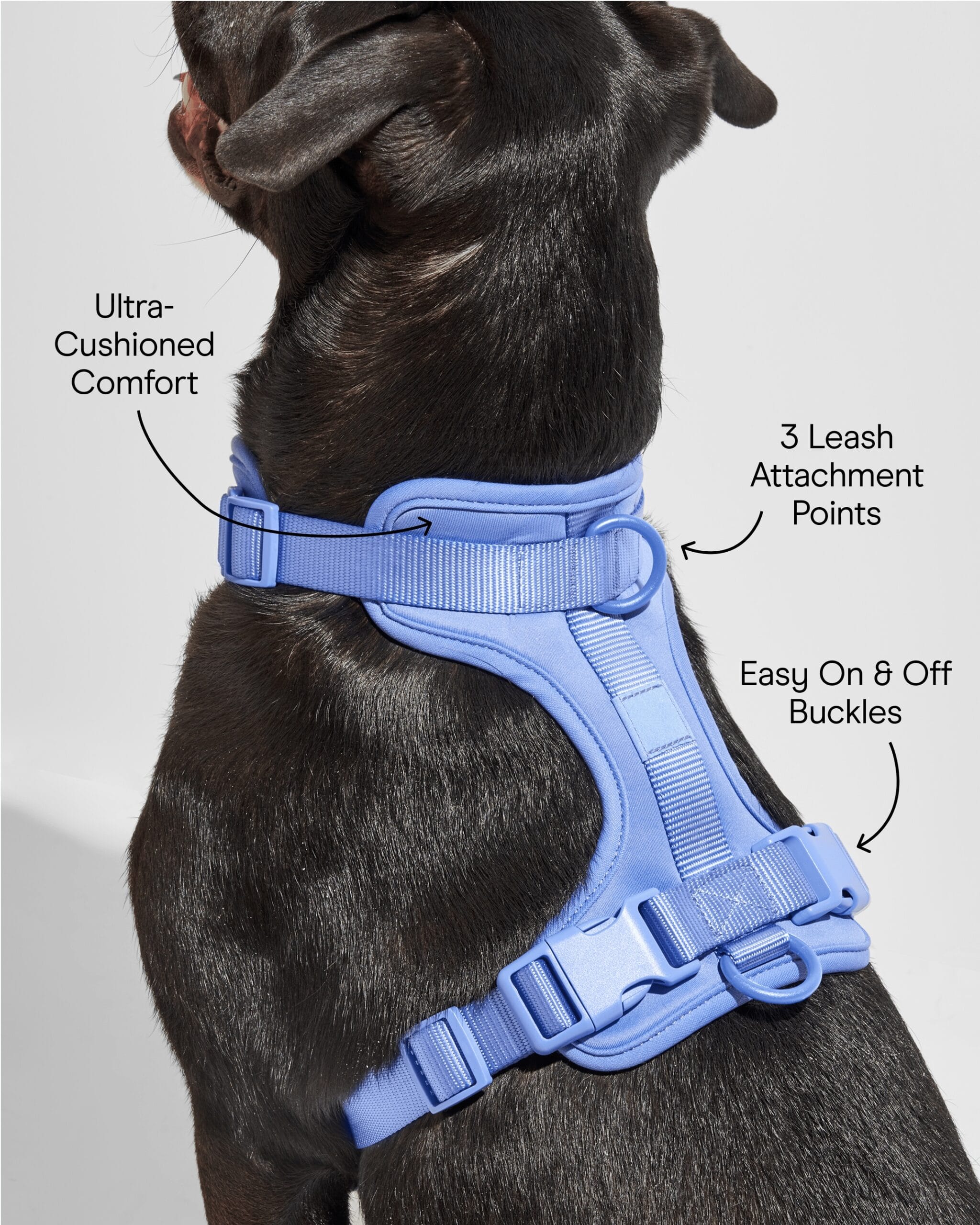
Neoprene Padding
Neoprene is a miracle material for dog gear. It is incredibly lightweight, highly breathable, and offers excellent cushioning without the bulk. Unlike thick mesh or heavy foam, neoprene conforms to the dog’s body, wicks away moisture, and doesn’t compress over time, making it the ideal choice for an everyday harness.
Minimalist Hardware
Look for a harness that uses high-strength, lightweight plastic buckles rather than heavy metal clamps, while keeping the crucial D-rings in lightweight alloy. Every gram counts when it comes to hardware. A streamlined design reduces weight without compromising the security of the harness.
Three-Point Adjustment
A lightweight harness must fit precisely to prevent shifting. Three-point adjustment (at the neck, chest, and belly) allows you to customize the fit to your dog’s exact proportions. This prevents the harness from swinging side-to-side, which can cause friction and add unnecessary movement stress.

How to Choose the Right Lightweight Harness for Your Dog
Not all lightweight harnesses are created equal. You need to match the harness to your dog’s walking habits and body shape.
For Small and Toy Breeds
Small dogs are the most sensitive to harness weight. For breeds like Chihuahuas, Yorkies, and Pomeranians, look for a harness specifically designed for small frames. The straps should be narrow to avoid digging into their small chests. Our small dog harness guide breaks down exactly what these breeds need.
For Senior Dogs
Older dogs often suffer from arthritis or reduced muscle mass. A lightweight harness is crucial here, as heavy gear can exacerbate joint pain and make walking difficult. Look for a design that is easy to put on without forcing the dog to step into loops, reducing the need to bend their potentially stiff legs.
For Pullers
If your dog pulls, you might think you need a heavy-duty harness. But you can have pulling control in a lightweight package. Look for a harness that features a front clip for no-pull training, but uses neoprene padding rather than thick rigid plates to distribute the pressure. See our best no-pull dog harness guide for specific recommendations.

The MoonianPet Lightweight Solution
When designing the MoonianPet No-Pull Dog Harness, our primary goal was to create an everyday harness that felt like a second skin. We achieved this by combining a lightweight webbing core with soft, breathable neoprene padding across the chest and belly straps.
Despite its featherlight feel, it doesn’t compromise on function. The overhead slip-and-clip design makes it effortless to put on, while the three-point adjustment ensures a bespoke fit for any breed. With both front and back D-rings, it functions seamlessly as a no-pull training tool or a casual walking harness, all without weighing your dog down.
For a complete everyday setup, pair it with our Harness & Leash Set. The matching leash is made from PVC-coated webbing, making it completely waterproof, odor-proof, and incredibly easy to clean after a muddy walk.
Frequently Asked Questions
What makes a dog harness lightweight?
A lightweight harness uses modern, high-strength materials like neoprene and thin, durable webbing instead of thick heavy foam or rigid plates. It also utilizes minimalist hardware, such as lightweight plastic buckles for fastening, while retaining sturdy metal only for the crucial leash attachment points.
Are lightweight harnesses safe for pulling dogs?
Yes, as long as they are designed correctly. A harness like the MoonianPet No-Pull harness uses neoprene padding to distribute pressure across the chest, preventing injury even if the dog pulls. The front D-ring provides steering control to stop pulling without the need for heavy, restrictive gear.
Can I leave a lightweight harness on my dog all day?
While lightweight harnesses are much more comfortable, it is generally not recommended to leave any harness on a dog unattended. Harnesses can get snagged on objects during play or when left in a crate. Always remove the harness after your walk to let your dog’s skin breathe.
How do I know if my dog’s harness is too heavy?
Signs of a harness that is too heavy or bulky include your dog lagging behind on walks, refusing to move, a visible change in their posture or gait, or chafing under the legs. If your dog seems noticeably more energetic when the harness is removed, it may be time to switch to a lighter option.
How should a lightweight harness fit?
It should fit snugly but comfortably. You should be able to fit two fingers between the straps and your dog’s body. Check out our complete dog harness size guide for detailed measurement instructions.
Looking for more specific fit advice? See our guide to dog harnesses for small dogs, or if you’re still deciding on your gear, read our collar vs harness guide.

Wenyue
Wenyue is the founder of MoonianPet and writes about dog collars, harnesses, waterproof pet gear, and everyday dog care. Growing up with dogs inspired her lifelong interest in pet care and practical dog gear. Through MoonianPet, she researches dog collars, harnesses, waterproof materials, and everyday solutions that help active dogs stay comfortable during daily adventures.